
The Problem of Suffering: A Response from 1 Peter

Rebecca Skaggs with Thomas Doyle lead us into a biblical and thoughtful look at the reality of suffering.
 The Issue
Why is there suffering in the world? Further, why does it appear that often “good” people suffer when the “wicked” often thrive? Where is God when people suffer individually and collectively? For centuries, both philosophers and theologians have sought to analyze the issue and suggest a coherent and reassuring response to it. In the face of actual suffering, however, these philosophical and theological concepts often fall short.
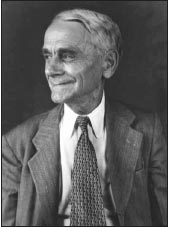
Believers have a particularly difficult task in understanding suffering since they firmly believe that God cares and is able to alleviate suffering yet he often does not. C. S. Lewis, who himself cried out in anguish when his beloved wife died a painful death from cancer,1 frames the dilemma for believers as follows: “If God were good, he would wish to make his creatures happy, and if God were almighty, he would be able to do what he wished.” The logical conclusion follows then that since the creatures are not happy, either “God lacks goodness or power or both.”2 This perspective causes a seemingly irreconcilable paradox.
The problem of suffering is so difficult, that some choose to avoid the issue altogether. Oliver McMahan in his study of the Pentecostal view of suffering provides evidence that “unfortunately, the Pentecostals and charismatics in the United States have not historically allowed the world to observe its grief. [they have] neglected, avoided and even worked hard to deny the experience of pain and grief.”3 He makes the point that an emphasis has been made on miracles, healings, signs and wonders leading to “a parade of power without penance or pain.” According to McMahan, “a painless Pentecost” leads to power struggles, pride, and “puritanical doctrinal disputes.” He notes the obvious absence of accounts of those who were not healed, miracles which did not happen.4 Of course, there have been some Pentecostal scholars through the years who have called for the consideration of the issue of suffering, pain and grief.5
The Problem Considered
Philosophers and theologians have suggested various ways to find meaning. I am not going to comprehensively overview them here, but I have selected a representative few.

Lewis8 acknowledges this same angle—that pain, suffering and death are a result of the ‘fall’. He says, however, that God allows people to experience pain in order to enable us to:
Realize that all is not well with our world.
Recognize our inadequacy and our need for God.
Choose pain so as to surrender our wills to God “not my will…”
From these premises, Lewis draws several conclusions. Among these are:
The present world with its “toys” was never meant “to possess my heart; my true good is in another world and my only real treasure is in Christ.”
Suffering develops great beauty and strength of spirit and therefore should not be eradicated. It is necessary to balance the evil in the world.
The paradox of Christianity is that poverty is blessed and yet should be removed.9
Lewis gives us insight into the inadequacy of philosophy when attempting to cope with the anguish of pain and loss. He chronicles this anguish in his book, A Grief Observed, written after the death of his beloved wife, Joy. McMahan comments, “A Grief Observed represents [Lewis’] journey from the world of analysis into the whirlwind of experience.”10
After Jesus’ death and at his second coming, he identifies himself by his wounds.
God himself suffered the loss and death of his only son. Since it is so important to him, he makes it possible for us to personally participate in that suffering—when we suffer; we mysteriously glimpse part of God himself that is unreachable in any other way.
It is our suffering which most reveals the Man of Sorrows. Wolterstorff explains this idea. “Through our tears we see the tears of God.…God is not only the God of the sufferers but the God who suffers. The pain and fallenness of humanity have entered into his heart. Through the prism of my tears I have seen a suffering God. Instead of explaining our suffering God shares it.”12
Jürgen Moltmann, professor at Tübingen University, Germany, also finds suffering at the very heart of God. In his book, A Broad Place, he explains his own anguish over the annihilations during the holocaust and how it led him to struggle with the question “Where is God?” He finds his answer in his “theology of the cross.”13 Moltmann’s concept is too expansive to summarize here but the main idea is that suffering is the heart of God. In fact, he says that we can be certain that God shares our suffering “because in the heart of God stands the cross of Christ.”14 Hence, according to Moltmann, in the midst of suffering there is hope. In fact, it was his “theology of the cross” which led to the development of his ‘theology of hope’ for which he is renowned.
Suffering in 1 Peter
The term “suffering” has a long history from before the time of the writing of 1 Peter.15 Its various meanings in Hellenistic culture, Judaism, and the New Testament are distinct yet related. Each of these various uses sheds light on its usage in 1 Peter, although like most writers, the author also gives his own meaning to the concept. A general summary is offered here.
 From an analysis of the text of the epistle, it is possible to summarize Peter’s concept of suffering and consider his message both to his original and contemporary readers. The language used by Peter suggests that the suffering of his readers included social alienation and verbal abuse (1:6; 2:13-17; 3:14; 4:14), as well as more formal charges brought into a court of law (e.g. 4:14). The latter form of suffering could have the possible consequence of death. In both cases, however, the suffering is undeserved (2:18; 4:15) and is a result of being a Christian (e.g. 2:18; 4:15).
Since the word for suffering is used 21 times in its various forms in this short epistle, 1 Peter can appropriately be called the epistle of suffering. At the same time, it can also be called the epistle of joy. Indeed, for 1 Peter, suffering and joy are not opposites, like pain and pleasure.16 Rather, they are interdependent; suffering trials and tribulations are inextricably linked with rejoicing with unspeakable joy, “Don’t be surprised when you suffer as though something strange were happening. Rejoice in that you share Christ’s sufferings” (1 Pet 1:6ff; 4:13).
1 Peter suggests a context of meaning which is both useful and significant. Suffering is within the context of God’s broader plan for humanity (1:1-3; 4:19). It was foreknown by God and brought about by the Holy Spirit (1:2).
Within this context, suffering fulfills four main purposes. First, it brings about the genuineness of faith (1:7).
In this sense, then, the author of 1 Peter is stressing that like the fiery process of proving and purification for metal, suffering proves the genuineness of faith.
Finally, our suffering enables participation in Christ’s suffering (1:10- 12; 4:13).
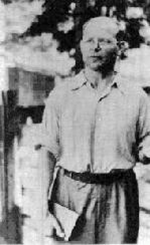
Suffering for 1 Peter is an action, not something to be passively experienced. The word for suffering (pathos) is closely associated with the word “passion,” intense action.22 As Christians, we are “called to suffer,” to be passionate, not only for Christ but to actively share the sufferings of others. This means, according to Burtness, “to embrace” suffering,23 wherever or however one finds it; we are called to embrace the sufferings of Jesus himself as we follow in his steps. For Peter, the words “martyr” and “witness” are closely linked—to be a witness to the sufferings of Christ is to participate in that suffering.24 Bonhoeffer wrote, “When God calls a man, he bids him, ‘Come and die.’”25 Bonhoeffer himself certainly did this. Near the camp where he was executed is a plaque which states, “Dietrick Bonhoffer, witness (martyr) for Jesus Christ among his brothers.”26
This is undoubtedly what Professor Moltmann meant in his lecture at the Society of Pentecostal Studies (Mar. 13, 2008, at Duke University), when he stated that in the wintry anticipation of spring lies the hope of future healing and redemption. He explained that indeed it is the “groaning of creation” which reaches the ears of God, yet within that pain and groaning lies the very hope and anticipation of redemption. In fact, these are the “birth pains of the future divine dynamic.”27
These thoughts from 1 Peter go beyond the analysis of the philosophers, theologians, or sociologists. They suggest a context which can bring light, hope, and even joy to the sufferer; as Wolterstorff has commented, perhaps through our tears we see the tears of God.
PR
Notes
1C. S. Lewis, A Grief Observed (San Francisco: Harper Collins Publishers, 1961); see also N. Wolterstorff, A Lament for a Son (Grand Rapids, MI.: Eerdmans Publishing Co., 1987).
2C. S. Lewis, The Problem of Pain (San Francisco: Harper Collins Publishers, 1996), 16
3O. McMahan, “A Grief Observed: Surprised by the Suffering of the Spirit,” a paper presented at the Church of God Seminary in Cleveland, Tenn.; Mar., 2007.
4Ibid., 5, 12, and 14. Here, McMahan cites materials from the Azuza Revival which indicate this avoidance.
5Ibid., 16-7.
6See T. Koenig who has documented that religion has a positive effect on health (H. Koenig, Michael E. McCullough and David B. Larson, Handbook of Religion and Health (Oxford, Eng: Oxford University Press, 2001).
7V. Frankl, Man’s Search for Meaning (New York: Washington Square Press, 1963). V. Frankl, Man’s Search for Meaning (New York: Washington Square Press, 1963).
8H. S. Kushner, When Bad Things Happen to Good People (New York: Avon Books, 1981).
9C. S. Lewis, Problem, 109.
10Ibid., 109.
11McMahan, 3.
2Wolterstorff, Lament for a Son.
3Ibid., 80-1.
4J. Moltmann, A Broad Place (Minneapolis: Fortress Press, 2008), 190.
5Ibid., 196.
6Wilhelm Michaels, ‘pascho’, TDNT, V, 904-939, gives an extensive history and explanation of the word with its basic forms.
7J. H. Burtness, “Sharing the Suffering of God in the Life of the World: From Text to Sermon on I Peter 2:21”, Int., Vol. 23 (July, 1969), 284.
8E.G. Selwyn, The First Epistle of Peter (New York: Macmillan, 1969), 221; F. W. Beare, The First Epistle of Peter: the Greek Text with Introduction and Notes, 3rd ed. (Oxford: Blackwell, 1970), 190; D. C. Arches and E. A. Nida, A Translator’s Handbook on the First Letter from Peter (New York: United Bible Societies, 1980), 145-6).
9D. E. Johnson, “Fire in God’s House Imagery from Malachi 3 in Peter’s Theology of Suffering (1 Peter 4:12-19)”, JETS, 29:3 (Sept. 1986), 287.
20Ibid., 288-90, for examples and additional information.
21Ibid., 288.
22Johnson, 290, cites J. Moffatt, The General Epistles: James, Peter and Judas (MNTC, New York: Harper n.d.), 57: cf. also Arichea and Nida, 149 that, “’resting on you’ denotes the continuing and constant presence of the Spirit.”
23Burtness, 283.
24Ibid., 283.
25Ibid., 281.
26Bonhoffer, The Cost of Discipleship, trans. by R. H Fuller (New York: Macmillan Co., 1961), 73, cited by Burtness, 281.
27D. Bonhoffer, Gesammelt Schrifften, E. Bethge, ed. (Munich: Kaiser-Verlag, 1959), 11, 529.
28Lecture at SPS, Mar. 13, 2008.
29McMahan, 19.
30McMahan, 20.
About the Authors
Thomas Doyle, M.Div., did his studies in theology at the Church Divinity School of the Pacific. He is a long-standing participant in the Charismatic Renewal of the Catholic and Episcopal Churches. He is presently Director of The Metanoia Ministry, an evangelically-based counseling ministry in the San Francisco Bay area.