Tyndale: Champion for Encountering God through the Bible, an interview with Dirk Smith

The leader of one of the world’s largest Bible publishing and delivery ministries tells us about William Tyndale, who translated the New Testament into English Five hundred years ago, and the trip he made to England to honor the martyr’s work.
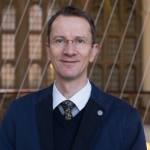
PneumaReview.com: For those of us who have not yet met you, please tell us about yourself and your spiritual journey.
Dirk Smith: When I look back on my life, I can clearly see God’s hand preparing me for things I couldn’t yet understand.
I grew up in a Christian home as a preacher’s son, so I’ve known about Jesus for as long as I can remember. My parents modeled a sincere love for God and His Word, and that foundation has shaped my life in countless ways. At thirteen years old, I accepted Jesus Christ as my Savior and was baptized into Him, and I will always be grateful for that decision.
But like many believers, knowing about Jesus and truly walking with Him are not always the same thing.
Professionally, God has allowed me to serve in higher education, nonprofit leadership, consulting, fundraising, and organizational development. I earned a degree in mathematics from Harding University and later an MBA focused on Organizational Development and Ethics. Looking back, I now see that every chapter was preparing me for the privilege I have today.
Today, I serve as President of EEM (formerly Eastern European Mission). Every day I witness people around the world asking for God’s Word in their own language. That’s what makes EEM so unique. We often say, “These aren’t Bibles looking for people. These are people looking for their Bible.” That simple statement captures the heart of our mission. We aren’t creating demand for Scripture. We’re responding to people who are already seeking it.
Over the years, I’ve become convinced of one simple truth: God is always at work. Our responsibility isn’t to create His work; it’s simply to recognize where He’s already moving and join Him there. That’s exactly what I believe EEM has the privilege of doing every day. We have the opportunity to join God in His work of connecting people with His life-changing Word, and I can’t imagine a greater calling or a greater privilege.
PneumaReview.com: 2026 marks the 500th anniversary of William Tyndale’s New Testament. Who was Tyndale, and how different was the world he lived in?
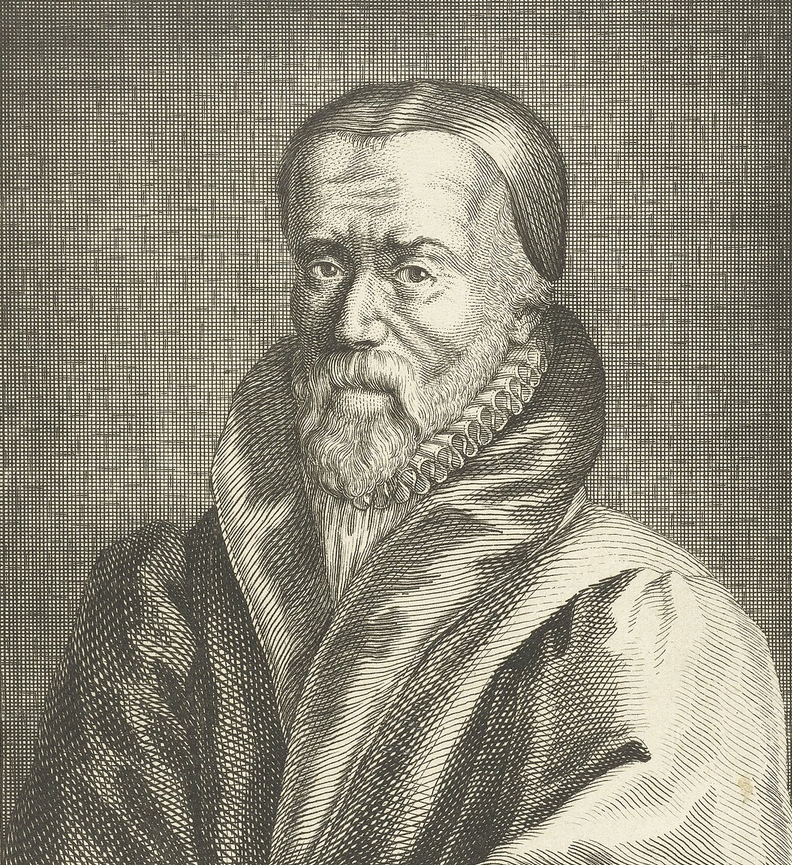
Image: Wikimedia Commons
Dirk Smith: To understand William Tyndale, you first have to understand the world in which he lived.
The early sixteenth century was one of the most transformative periods in history. The Renaissance had rekindled a passion for learning and for returning to the original sources of ancient writings. Johannes Gutenberg’s invention of the movable-type printing press only a few decades earlier had forever changed the spread of ideas. In 1516, the great scholar Erasmus published the first printed Greek New Testament, making the Scriptures in their original language available to scholars as never before. Just one year later, Martin Luther ignited the Protestant Reformation by posting his Ninety-five Theses in Wittenberg, challenging many of the practices of the established Church.
Europe was changing rapidly.
England was not.
The Scriptures available to the Church were in Latin, a language that most ordinary people could neither read nor understand. Access to God’s Word was largely mediated through the clergy, and translating the Bible into English without ecclesiastical approval was illegal. Owning unauthorized portions of Scripture could lead to imprisonment or even death.
Into that world stepped William Tyndale.
When challenged by a religious leader who proclaimed we were better to be without God’s laws than the Pope’s, Tyndale made the statement that would define his life: “If God spare my life ere many years, I will cause a boy that driveth the plow shall know more of the Scripture than thou dost.”
Those were not simply bold words. They became his life’s mission.
Unable to obtain permission to translate the Bible in England, Tyndale fled to continental Europe, where he spent years living as a fugitive. Working from Erasmus’ Greek New Testament and the Hebrew Scriptures rather than the Latin Vulgate, he produced the first printed English New Testament translated directly from the original biblical languages.
Eventually, Tyndale was betrayed by a man he trusted. He was imprisoned for more than a year near Brussels before being convicted of heresy. In October 1536, he was strangled and then burned at the stake. His final recorded prayer was, “Lord, open the King of England’s eyes.”
Remarkably, that prayer was answered. Within just a few years, King Henry VIII authorized the publication of an English Bible, and much of Tyndale’s work became its foundation. It is estimated that more than 80 percent of the King James New Testament reflects Tyndale’s translation. Many of the phrases we still use today, such as “the powers that be,” “the salt of the earth,” and “fight the good fight,” first entered the English language through his work.
Five hundred years later, Tyndale’s story is far more than a remarkable chapter in church history. It reminds us that access to God’s Word has never been something to take for granted.
That is why Tyndale’s legacy continues to matter. His passion was never simply to translate words onto a page. His passion was to remove barriers between people and God’s Word. Five hundred years later, that mission is still unfolding, and it remains one of the great privileges of EEM to help place God’s Word into the hands of people who have been praying for it.
PneumaReview.com: Making the Bible accessible to everyone was something Tyndale was eventually killed for. What did you see and experience as you sought to learn more about his life?
Dirk Smith: It was one of the most profound and humbling experiences of my life.
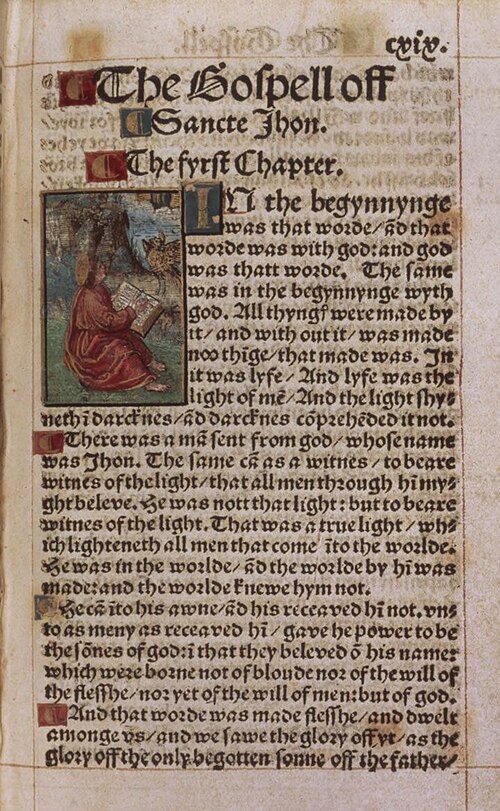
Image: Wikimedia Commons
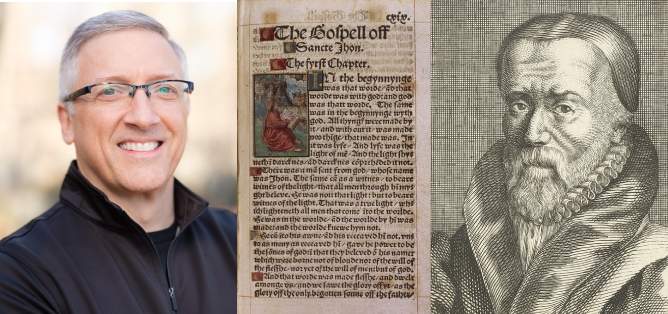
During our time in London, we were given the extraordinary privilege of viewing two of the three surviving copies of William Tyndale’s 1526 New Testament. One is preserved in the British Library, and the other is housed at St. Paul’s Cathedral. To stand only inches away from pages translated by William Tyndale nearly five hundred years ago is difficult to describe.
Those aren’t simply rare books.
They are tangible reminders of extraordinary courage, unwavering conviction, incredible sacrifice, and, above all, God’s faithfulness.
As I stood there, I realized I wasn’t simply looking at history. I was looking at the beginning of a movement that continues to this very day. Those fragile pages survived kings, persecution, censorship, wars, and centuries of history because God was accomplishing something far greater than preserving ink on paper. He was ensuring that His voice would continue to reach people through His Word.
We also visited several places in London connected with Tyndale’s life and ministry. Walking those streets and standing in places where his story unfolded transformed him from a historical figure into a faithful brother in Christ who lived, suffered, and sacrificed so others could know God more fully.
One thought kept returning to my mind throughout our visit.
We are continuing someone else’s story.
It also reminded me that the work has never been about books alone. Tyndale wasn’t simply translating words. He was removing barriers between people and God. He believed every person deserved the opportunity to hear the voice of God in the language of their own heart.
That conviction is just as relevant today.
Every day at EEM, we hear from people who are asking for a Bible in their own language. Their circumstances may be different from those of sixteenth-century England, but the need is remarkably similar. There are still barriers of language, poverty, conflict, geography, and access. There are still people praying for the opportunity to hold God’s Word in their hands.
Standing before those two surviving New Testaments reminded me that we are not beginning a mission. We have the privilege of continuing one that God has been writing for centuries.
I left London with a renewed conviction that the Word of God is still worth every sacrifice. It was worth the cost for William Tyndale. It remains worth our greatest efforts today. And I am deeply grateful that God allows EEM to play a small part in helping answer the prayers of people who are still looking for His Word.
PneumaReview.com: As President of EEM, what does Tyndale’s accomplishment and sacrifice mean to you?
Dirk Smith: For me, the connection is both deeply personal and profoundly inspiring.
William Tyndale gave his life because he believed every person should have the opportunity to encounter God through His Word in a language they could understand. That wasn’t simply his profession. It was his calling. It shaped every decision he made and ultimately cost him his life.
Tyndale never saw the fruit of his life’s work.
He never witnessed English Bibles being openly read throughout England. He never saw the King James Bible, which drew so heavily from his translation. He never knew that the words he painstakingly translated would shape the English language, influence generations of believers, and even help form the biblical worldview that profoundly influenced the founding of America.
He simply remained faithful.
That has become a powerful reminder to me that God’s greatest work is often accomplished through people who never live to see its full impact.
Five hundred years ago, the barriers were government opposition, religious persecution, and the deliberate withholding of Scripture from ordinary people. Today, the barriers look different. They may be language, war, poverty, geography, or the inability to obtain a Bible. But the need remains the same. There are still millions of people longing to read God’s Word in the language of their heart.
That’s why Tyndale’s life continues to resonate so deeply with me.
The methods have changed. The technology has changed. The world has changed.
But the conviction has not.
God’s Word is meant to be understood, and every person should have the opportunity to encounter Him through the Scriptures.
When I reflect on William Tyndale, I don’t primarily think of him as a translator or even as a martyr. I think of him as a faithful servant who entrusted the outcome of his obedience to God.
Five hundred years later, we are still living in the fruit of that faithfulness.
My prayer is that those of us serving today will demonstrate the same humility, the same courage, and the same confidence that God’s Word will continue to accomplish His purposes long after our own work is finished.
PneumaReview.com: What can church leaders today learn from Tyndale and his commitment to make God’s Word available to everyone?
Dirk Smith: I believe Tyndale’s life offers several timeless lessons for church leaders today.
First, never lose confidence in the power of God’s Word.
Tyndale believed that if people could simply read the Scriptures for themselves, God would do what only He can do. He trusted the Word of God more than his own influence, more than religious systems, more than persuasive arguments, and certainly more than his own personality.
I think that’s a much-needed reminder for those of us who preach and teach today.
We can spend an enormous amount of time crafting clever sermon titles, developing creative series, producing polished presentations, and finding new ways to capture people’s attention. Creativity certainly has its place, but it should never overshadow the very thing that transforms lives: the Word of God.
My encouragement to pastors is simple.
Teach the Bible.
Teach it book by book, chapter by chapter, and verse by verse whenever possible.
Sometimes I wonder if Tyndale would remind us that he didn’t give his life so we could become better communicators. He gave his life so people could know God’s Word for themselves.
Second, remember that the mission is never about us.
We live in a culture that often celebrates personalities. Christian leaders can easily be tempted to build platforms, protect reputations, and measure success by the size of an audience or the reach of a ministry. William Tyndale sought none of those things. He simply wanted people to know Christ through His Word.
Jesus described our calling with two simple images: salt and light.
Salt doesn’t draw attention to itself. It simply makes the food better. Light doesn’t call attention to itself. It simply makes the room brighter. When salt and light are doing their job well, they aren’t the focus. Everything around them is better because they’re there.
I believe that’s our calling as Christian leaders.
Finally, remember that the mission is bigger than any one church, ministry, or generation.
Tyndale never saw the full impact of his life’s work. He planted seeds that others would harvest for centuries to come. That should encourage every church leader. Faithfulness isn’t measured merely by what we accomplish during our lifetime. It’s measured by whether we’ve faithfully joined God in a work that will continue long after we’re gone.
God is still drawing people to Himself in every nation, every culture, and every language. The invitation for the Church today is the same as it was in Tyndale’s day: faithfully remove every barrier possible so people can encounter Jesus through His Word.
I believe that’s the legacy Tyndale would want us to pursue. Not building our own names, but faithfully pointing people to the only Name that saves.
PneumaReview.com: Where can readers learn more about Tyndale and EEM?
Dirk Smith: William Tyndale’s story is one every Christian should know. His faithfulness, courage, and unwavering commitment to God’s Word continue to inspire believers five hundred years later. More importantly, his story reminds us that when one person fully surrenders to God, the impact can extend far beyond anything they could ever imagine.
If you’d like to learn more about Tyndale and how his legacy continues today through the work of EEM (formerly Eastern European Mission), I invite you to visit EEM.org. There you’ll find stories of lives being transformed through God’s Word, opportunities to become involved in the mission, and resources that explore both Tyndale’s remarkable life and God’s ongoing work around the world.
You can also follow EEM on Facebook, Instagram, and LinkedIn, where we’ll be sharing videos, stories, historical insights, and updates throughout the anniversary year.
For those who enjoy devotional reading, Bob Burckle and I co-authored The Impossible Dream, a collection of devotional reflections on God’s faithfulness and the mission of making His Word known. It’s available through EEM.org and on Amazon. Every book purchased provides a Bible to someone who has asked and is waiting.
Five hundred years after Tyndale’s New Testament first came off the printing press, his work is still bearing fruit. Every time someone opens God’s Word in a language they understand, every time a church receives Bibles it has been praying for, and every time someone encounters Jesus through the Scriptures, another chapter is added to a story that God began long before William Tyndale and will continue long after we’re gone.
What a privilege it is to know that the Author of that story still invites each of us to be part of it.