Craig S. Keener: Suffering: Its Meaning for the Spirit-Filled Life

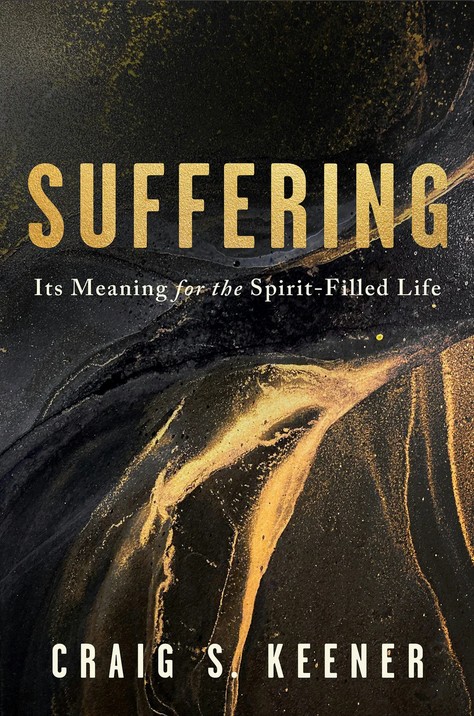
 Craig S. Keener, Suffering: Its Meaning for the Spirit-Filled Life (Baker Academic, 2025), 269 pages, ISBN 9781540969439.
This book originated when Craig S. Keener, F. M. and Ada Thompson Professor of Biblical Studies at Asbury Theological Seminary, was asked by some Christians to prepare the church for the suffering to come (ix, xv). Professor Keener wrote Suffering: Its Meaning for the Spirit-Filled Life with special attention to the Chistian who believes a victorious and mature Christian does not undergo any suffering (ix, xiii). Thus, Dr. Keener’s main message is about the reality of suffering as a fundamental part of the Spirit-filled Christian life (xvi, xv). In order to reach a larger audience, the style of writing is in a “preaching,” rather than an “academic, mode” (xii, xvi). The book has important biblical references and multidenominational global examples, drawn from sources both contemporary and from years past (e.g., 8). He mainly employs his own readable translations from the Greek and Hebrew Bible. Throughout Prof. Keener supports the historical authenticity and authority of the Bible, including the Gospels and letters (xiii, 164).
After Jesus’s model, Prof. Keener looks at early and later church models of carrying one’s cross or learning from the persecuted church (74, ch. 6), observing, “at least 70 per cent of the world’s population lives in countries with significant restrictions on religious freedom” (77-78). Christians are less than one-third of the world’s population yet experience three-quarters of all acts of religious intolerance (77). These are some of the startling statistics that he presents. However, secular media largely is silent about the thousands of faithful Christians genocidally martyred in northern Nigeria or Mozambique, with whom Keener has many close connections (80-88). He warns readers to remember the cost of our faith and willingly commit to pass the daily tests of life (95).
Chapter 7 is somewhat a break in sequence as Dr. Keener adds that a Spirit-filled Christian can be sick or disabled (99). He reminds us that Jesus treated sickness as an enemy (100), as did Francis McNutt many years ago in The Power to Heal (sickness is “in itself an evil and a curse,” 13). Our lives are God’s gift and God is ultimately in charge of when his servants die (100, 103). In the meantime, any miracle is a “kingdom foretaste” as God heals sovereignly (111, 113). We can pray expectantly for healing, but there are exceptions (113-115).
Chapter 8 discusses how the Spirit-filled Christian trusts God for life and ministry and shares possessions with those in need (122, 125): “More than a hundred Bible passages talk about the poor” (127). Christians are about 30 percent of the global population, but one half of the world’s migrants (133).
In “Suffering in God’s will” (ch. 10), Keener refers to hardships with short-term and long-term rewards (169). God’s grace commensurates for all hardship (165). At times, Keener appears overly to welcome suffering when he writes that God works sufferings for our benefit or God works our hardships for good and we should “embrace” trouble (173-75), appearing to forget that suffering has arisen from a fallen world, but then he clarifies that suffering can be used for good but that doesn’t mean God causes these sufferings. He cites Scripture but does not elaborate that we should never suffer for doing evil (183, 86-87). Romans 8:35-39 are important verses for Keener (e.g., 172) (“to the ones loving God, all things work together for good, to the ones being called according to (his) purpose”). The main point Paul makes is that God’s purpose is to conform us to God’s image and furthermore that no one can condemn us or separate us from God’s love, not so much that God uses all suffering for good.
Suffering concludes that all followers of Christ are called to overcome (ch. 11) because suffering is a “normal part of the Christian life” (203, 205). Suffering is temporary, but Scripture promises eternal rewards. For those especially interested in the end times, he closes by focusing on how Revelation as well points to suffering for Christians (204-206).
What makes Suffering such a special book is the many firsthand contemporary and historical global examples of different types of suffering. Keener includes numerous examples from the West, East, and especially Africa. He frequently ends a chapter by exhorting the readers to immerse themselves in God’s Word (as he has done for us in the book) and practice day by day living the costly Christian Spirit-filled life. After reading this book, I do not see how anyone can claim that Spirit-filled Christians do not have to endure suffering. For those who use their resources for only their own comfort and enrichment, Suffering: Its Meaning for the Spirit-Filled Life is essential reading and beneficial to all.
Reviewed by Aída Besançon Spencer
Publisher page: https://bakerpublishinggroup.com/products/9781540969439_suffering
Read Craig Keener’s interview with PneumaReview.com: In the Midst: Biblical Hope and Suffering