Our God is With Us through It All: Interview with Craig and Médine Keener about Impossible Love


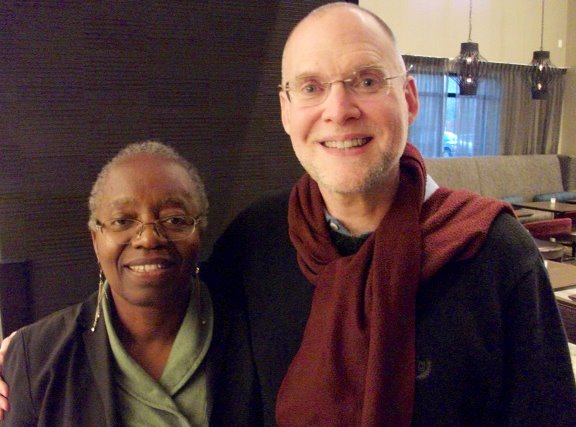
Doctors Craig and Médine Keener speak with PneumaReview.com about their new book, Impossible Love.
PneumaReview.com: Craig, you are a highly respected biblical scholar and a seminary professor. In Impossible Love, you mention that the Presence of God played a very important part in your conversion and that after becoming a Christian you prophesied regularly in church. Do you think that more emphasis on experiencing God should be part of a theological education?
Craig Keener: In an academic setting (at least a specifically Christian one) we can, and I do, talk about the life of the Spirit, but talk alone does not impart the Spirit nor substitute for mentoring in the ways of the Spirit. At the same time, teaching is a spiritual gift, and I believe that those of us who teach can model the life of the Spirit. Somehow the students see it and sense it; it can whet the appetite of students who don’t know about that empowerment and can also encourage those who do. There have also been times when the Spirit moved deeply during a student’s opening prayer and prophecies and other gifts occurred. But the clearest indication of the Spirit’s work is when lives are changed for the long term. The Bible of course is good at that, and I trust that the Spirit is always ready to speak through the Bible. Even if I were teaching Bible in a setting where I could not express my personal faith convictions, which I am not, I trust that God would work in people’s hearts through the Scriptures the way that he desires.
PneumaReview.com: It has been said that God does not waste any experiences in our lives. Craig, in the book you said “I discovered that a broken heart can help us to feel what matters to God, whose heart breaks for the world” (page 23). Please share with our readers some of the positive qualities that your own brokenness has produced in you.
Craig: One of the changes was a much deeper compassion for the broken and greater passion for justice. In the midst of my brokenness, I learned to share the good news not from a position of spiritual superiority but from one broken person to another about what is good news for us both. I found healing and strength in the African-American church, which knows how to deal with pain in a way that a lot of predominantly white North American churches don’t. Also my calling was something that I could no longer even pretend to hope to achieve; only God could make it happen. Things He spoke to me decades ago are happening in my life now; I’m full of gratitude now. But at the time, I could only humble myself beneath God’s hand and trust that, if He wished, He would exalt me in due time. It’s biblically normal to go through testing before fulfilling our callings, and I would guess that is the pattern for most of us. That way when God does choose to lift us up, we can look back and remember and know that it wasn’t us. It’s the faithfulness of our precious Lord.
PneumaReview.com: Médine, your experience in Congo was filled with many difficult circumstances including war, scarceness of resources, and family separation. Which was the most difficult for you to endure?
Médine: I would say family separation; it was easier for us to endure the lack of food, drinking water and other resources while together, but when my two brothers were separated from us, it was very hard. We often had dreams about them at night and during the day we wondered if they were sick, in danger or dead. The day we reunited with each of them was a glorious one.
PneumaReview.com: Médine, Your parents seem to have been a source of strength in your family. What are some of the things that you admire about them the most?
Médine: First, my parents’ faith and relentless seeking of God’s direction in their lives and ours was a great encouragement. Nothing was too small or too big for them to bring before their heavenly Father. Second, their love for each other and for their children in all circumstances. Finally, their ability to forgive their enemies and love all people.
PneumaReview.com: Médine, your parents also seem to have instilled a strong Christian faith in you and your family. How did they do this?
Médine: From the time each one of us was born until the day they entered Heaven, my Mom and Dad prayed for and with us. As far back as I can remember, my parents read the Bible to us, taught us hymns. They were always open to listen to us, answer our questions and walk with us through faith crisis. They also taught us by being human with all their faults and qualities and living their lives in a way that gave glory to God.
 PneumaReview.com: Médine, one of the things that stands out in your story is the important part that dreams, visions, and prophecies have played in your story. Now that you have lived in the United States for a number of years do you think that people in Africa are more open to these kind of supernatural experiences than people in the West and if so, why?
Médine: I think so because our culture is prone to believing in the existence of powers beyond us. Also I believe that because of the blessings of technology and other medical resources in the West that people in Africa do not have, we rely on God for all our needs.
PneumaReview.com: In the book you both share that you have experienced divorce. Some people in similar situations might not share this information. Why did you decide to include it in your book?
Médine: For me it speaks of God redeeming my dream. I always wanted to be happily married and when things turned out so different, so bleak in my first marriage, I thought that I would spend the rest of my life single. Then God in his grace gave me a second chance, a happy marriage; He redeemed that which I thought would not happen again. It is also a testimony to my own brokenness and God’s healing power.
PneumaReview.com: The two of you have endured injustices, betrayals as well as great adversity and delays. Can you point to specific things that contributed to your perseverance in the face of these things?
Craig: Everybody in the Bible—Abraham and Sarah, Joseph, Job, and so on—went through testing. I used to not understand how they could have persevered through it, until I went through serious testing, and then I understood. They were regular people just like us—small people, as Hudson Taylor put it, who serve a very big God. Sometimes faith doesn’t feel like faith—sometimes it’s just hanging on for dear life because letting go isn’t an option. Faith is not about us but about the faithfulness, the dependability of our God.
Médine: Knowing that a) God had our lives in His hands and he was guiding us; b) that his children were praying for us, c) that our love will not allow us to quit so easily.
PneumaReview.com: What counsel would you give to readers who are presently facing impossible circumstances to help keep them from becoming bitter or giving up?
Craig: Weeping may endure for a night, but joy comes in the morning. God holds our future. When you lose everything else, you realize you have what really matters if you have a relationship with Jesus Christ. We have a happy eternity ahead of us, and that life with Him has already started for us now. Sometimes we can forget that if we’re walking with Him, every day is a blessing, because we have what we need most of all—something so many precious people in this world don’t have yet.
Médine: God is with you in your difficult moment even if you do not see or sense him; storms of life will come and they will pass, our God is with us through it all and will take us to the other side of the storm.
PneumaReview.com: What message do you hope that readers will take away from reading Impossible Love?
Médine: God loves each and every one of us. He is faithful and will not abandon his own. Hang in there.
PR
Médine Moussounga Keener, Ph.D. (University of Paris 7), is Community Formation Pastoral Care coordinator at Asbury Theological Seminary and has taught French at Asbury University and Eastern University. She wrote her dissertation related to African American women’s history and has published various articles in Dictionary of African Christian Biography and articles on women in Africa and on other subjects. She co-authored with Craig Reconciliation for Africa, a booklet on ethnic reconciliation used in many countries in Africa. Both in Francophone Africa and in the United States, she has publicly shared her experiences of war and reconciliation, including writing Impossible Love: The True Story of an African Civil War, Miracles and Hope against All Odds (Chosen, 2016) with Craig. Her hobbies include cooking, gardening and putting up with Craig’s humor.
From the back cover of Impossible Love:
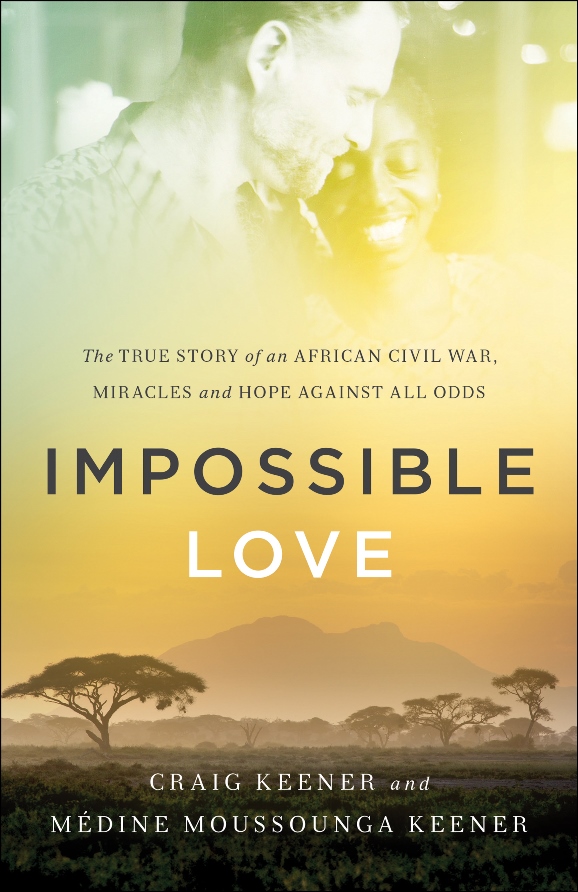
Shy, scholarly Craig Keener first met Médine, a beautiful Ph.D. student from central Africa, through a campus ministry at Duke University. The two became close friends, but it wasn’t until Médine returned home that Craig—coming to terms with his own wounded heart—realized his love for her. But civil war had broken out in Congo. Médine faced terror, disease and devastating hardship—and Craig didn’t know if she was alive or dead.
Separated by continents, cultures and the ravages of war, Craig and Médine never stopped believing that faith, hope and love can surmount even the most overwhelming obstacles. Part romance, part thrilling adventure, their story is an unforgettable, miracle-filled journey of impossible love. You will be amazed by the God whose own great love for each of us will always overcome.
Publisher’s page: http://bakerpublishinggroup.com/books/impossible-love/377550
More from the Keeners about Impossible Love:
Read the Asbury Theological Seminary introduction to the Keeners, including an 8 minute video: AsburySeminary.edu/voices/keeners/. Another video from Asbury Seminary: Impossible Love with Craig and Medine Keener
Frank Viola’s interview with Craig about Impossible Love: http://www.patheos.com/blogs/frankviola/impossiblelove/
 Michael Brown’s interview with Craig and Médine about Impossible Love (including some of Médine’s refugee experiences) is part of the April 7, 2016 radio show: http://www.lineoffireradio.com/2016/04/07/the-amazing-story-of-craig-and-medine-keener-impossible-love-and-the-irrationality-of-anti-semitism/
Mary DeMuth interviews Craig and Médine about their story at: http://www.marydemuth.com/restory15
Caleb Hegg interviewed Craig and Médine in December 2015 about the forthcoming Impossible Love: https://www.youtube.com/watch?v=uT_tiw8M-wc
Dr. Timothy George of Beeson Divinity School interviews Craig and Médine about Impossible Love, with testimonies from Médine and Craig’s conversion from atheism. http://www.beesondivinity.com/beesonpodcast#!/swx/pp/media_archives/99668/episode/62835
Special thanks to John P. Lathrop for putting this interview together for PneumaReview.com.






I am a student at Asbury Theological Seminary, the institution where Dr. Craig Keener is a professor of New Testament studies. I believe this quote from the article so wonderfully summarizes Dr. Keener’s contribution to the seminary community: “teaching is a spiritual gift, and I believe that those of us who teach can model the life of the Spirit.” The seminary world desperately needs people like the Keeners to both teach about the gifts of the Spirit and embody the Spirit-empowered life of holiness and humility. Craig and Médine have both richly contributed to my spiritual formation while at Asbury, and I am overjoyed that others can experience their story through this new book, Impossible Love.