There are innumerable presentations, articles, and books being written on the subject of the Millennials and the Church. These angles include the Church’s lack of connection with the Millennials and the Millennials lack of interest in the Church. Or, more specifically, the approach recently presented in an article by Joe Hepler in Vital Magazine, “Four Ways To Connect With College Students In Church.” While reading this article, I find simple insights that could assist the Church to see from the collegiate Millennial’s perspective. The author is recently out of College himself and offers a unique look at the topic at hand.
The reason for the article is stated clearly in the title, the intent being to connect with college students “in Church.” The practicum offered by Hepler in the first point of his article is on point. It makes sense that if college students are studying at a College or University near a Church of choice, they have some level of interest in academics and growth. Capitalizing on that interest to increase their spiritual formation is noteworthy.
“[A] frequent mistake I have observed is when churches view these students strictly as short-term drop-ins instead of sojourners looking for a spiritual home.”
On Hepler’s second point of connecting with college students in the Church, the methodology and approach used is elementary. The use of small groups and home invitation has been around for a long time. It certainly works for college students, and, is a great reminder for the Church that wants to reach University students. However, Hepler de-emphasizes the importance of programming in discipleship and spiritual formation. He over-emphasizes the personal approach of Jesus and places little emphasis upon programming. It can be easy to downplay the place of programming over relationship. But programming is essential to the process of spiritual formation, especially as it relates to accountability, curriculum, and measurement. Remember, one of the great miracles of Jesus was the feeding of the 5,000 men. Don’t forget that Jesus began that supernatural event with the gift of administration by seating the people in companies of 50. The teaching and subsequent miracle that day was dependent upon the organization of the people and the meal. One of the traits of the discipleship process by Christ and other rabbis in the 1st century was a highly structured way of teaching the law to students. We cannot get away from that today in Youth Ministry.
Image: Inbal Marilli
In the last point that Hepler makes concerning involving college students in leadership positions or roles in the Church, the structure and phrasing of the paragraph is a bit ambiguous. I sensed he had much more to say on this point but the article was rushed at this point. Still, his point is a good one. He uses the statement, “Many will give their hearts and souls to the churches they attend during college, and still many more may stay long after they have earned their degrees.” There are many avenues to developing young adults to lead in the local Church, including those that can be used with a transient crowd such as college students. Hepler seems to be leaning toward patience in discipleship, waiting before involving them. This is definitely the safest way to assure that they are quality leaders of integrity and understand the mission of the Church once they do get involved and lead.
“Invite these students into your home, take them out for lunch or to a sporting event, and include them in family celebrations.”
No doubt Hepler would have much more to tell us about connecting with college students if he were writing at greater length. His unique angle speaks volumes, and it will be great to watch this young author develop in his ministry and writing for the body of Christ. As a reviewer who also works with young people, the article has much to offer pastors in settings that do not have a successful approach to college students. Hepler will surely get them on their way to intentional college student involvement in the Church. I would enthusiastically recommend pastoral leaders to read this article and others that follow from Hepler.
Jeff Grenell, MA (Evangel University), has over 30 years of experience in church, parachurch, and public education focused on ministry to youth. Jeff has served as a local church Youth Leader (13 years), Motivational Speaker at national camps, conventions, seminars, and public and private schools (5 years), the Lead Pastor of a youth church (5 years), University Professor (9 years), and has Coached NCAA basketball, High School, and AAU basketball and soccer (14 years). He is the author of #IfJobHadTwitter: When Hardship Hits The Palace (2017) and founder of Ythology. Instagram. Twitter.
There is a powerful dynamic set in motion when someone takes the first move. It was Thursday afternoon, and I was on my way to a local bakery to pick up a box of goodies for a family I would visit that night. And, yes, I got one of their huge and unbelievably delicious…
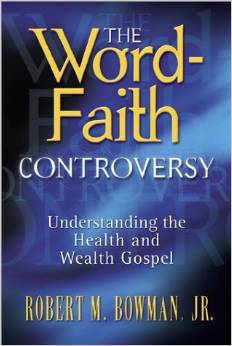
Robert M. Bowman, Jr., The Word-Faith Controversy: Understanding the Health and Wealth Gospel (Grand Rapids: Baker, 2001), 254 pages, ISBN 9780801063442. When I came across Bowman’s book The Word-Faith Controversy, I was very interested in his approach and conclusions because I had earlier done my Th.D. dissertation on nineteenth and twentieth century “faith theologies.”…
Neil Cole, Organic Leadership: Leading Naturally Right Where You Are (Grand Rapids: Baker Books, 2009), 314 pages, ISBN 9780801072383. Organic Leadership presents a way for ordinary Christians to emerge as leaders both inside and outside the church. Cole argues that church leaders often get in the way of members participating fully in the life and…
How should we lead the church? In this Pneuma Review conversation, Dr. Woodrow Walton reveals the humility and anonymity of true servant leadership. Picture if you would a regatta where there are several vessels slicing across a river. Where is the leader of any one of those streamlined vessels? Is it the rower…
Report on the Consultation on Believers’ Baptism Kingston, Jamaica January 2015 4There is one body and one Spirit, just as you were called to the one hope of your calling, 5one Lord, one faith, one baptism, 6one God and Father of all, who is above all and through all and in all. Ephesians 4:4-6 (NRSV)…
In this guest article by Rev. Percy McCray, he offers excellent practical suggestions for strengthening your local community of Jesus followers. It’s the start of a new year and thoughts turn to eating better, getting more organized, or even reconnecting with old friends. But within your New Year’s resolutions, are you considering the health of your church? The following are…
To provide the best experiences, we use technologies like cookies to store and/or access device information. Consenting to these technologies will allow us to process data such as browsing behavior or unique IDs on this site. Not consenting or withdrawing consent, may adversely affect certain features and functions.
Functional
Always active
The technical storage or access is strictly necessary for the legitimate purpose of enabling the use of a specific service explicitly requested by the subscriber or user, or for the sole purpose of carrying out the transmission of a communication over an electronic communications network.
Preferences
The technical storage or access is necessary for the legitimate purpose of storing preferences that are not requested by the subscriber or user.
Statistics
The technical storage or access that is used exclusively for statistical purposes.The technical storage or access that is used exclusively for anonymous statistical purposes. Without a subpoena, voluntary compliance on the part of your Internet Service Provider, or additional records from a third party, information stored or retrieved for this purpose alone cannot usually be used to identify you.
Marketing
The technical storage or access is required to create user profiles to send advertising, or to track the user on a website or across several websites for similar marketing purposes.



 Joe Hepler, “Four Ways to Connect with College Students in Church: How families and individuals can connect and support students away from home” Vital (November 12, 2015).