Fire From Heaven: an interview with Harvey Cox
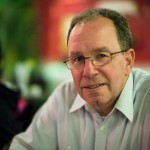
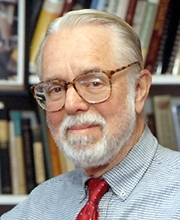
John Lathrop interviewed Harvey Cox at Harvard Divinity School in Cambridge, Massachusetts in 1996 about his book, Fire From Heaven.

What prompted you to write a book about the Pentecostal Movement?
Two things prompted me. One was my discovery which came through my great interest in urban ministry. This discovery was that although the mainline denominations sometimes issue marvelous statements and do great studies of urban life, on the front lines of urban ministry, many of the churches are Pentecostal. This is true both here and in other parts of the world. And I got to know Eldin Villafane, who I value as a very close friend. He is a Pentecostal minister. We actually gave a course together on urban ministry. There were some Pentecostal pastors in the course, and I began visiting some of these churches. I came to believe that the Spirit was really saying something to the entire Christian world through the Pentecostal movement. I also thought that the Pentecostals got bad press. They have been misunderstood and bad mouthed a lot. I wanted to write something that would be more accurate and fair.
The other reason I got interested in Pentecostals grew out of my work in Latin America and other parts of the Third World. I give courses here on Christianity and in the non-western world, especially Latin America. I began to notice many years ago that the Pentecostal movement in Latin American countries was growing very rapidly. I noticed that it was in many ways not just a reflection of North American Pentecostalism; it had its own qualities and strengths. So I decided when I finally bit off writing this book that I would deal with the whole worldwide picture of Pentecostals. People have written things about this or that part of its history or theology or some special study. I really wanted to write a book that would talk about the global emergence of this new stream of Christian vitality. That is how I got started, and I’m glad I did because I had a wonderful time doing that.
As you have studied the Pentecostal Movement, what do you see as some of its strengths?
Well, I think the main strengths of the movement are two. The major strength is that Pentecostalism is solidly based on the direct, personal experience of the Spirit. It’s based on an experience in a time when many churches have an audience format in which the experiential dimension has been lost in either the creedal or the institutional aspects of the church. There is an old Pentecostal saying from way back in the early years of Pentecostalism: “A man with an argument has no chance against a man with an experience.” There is something to be said for that.
The other strength I see is the community. It provides a sustaining, nurturing community for people who have been dislodged in some way, who need this kind of familial context. This is a desperately needed counter measure in a world where community is being disrupted and destroyed.
What do you see as some of the weaknesses of the Movement?
Well, in an odd sense, the weaknesses grow out of the strengths. The major weakness I see is the temptation to manipulate or conjure experience in some Pentecostal settings. Although at its best, Pentecostalism and Pentecostal people and leaders know that you can’t force the Spirit. The Spirit works at the Spirit’s own speed and pace. Nonetheless, there is sometimes an effort to make sure some kind of experience occurs. That’s pushing it. I think there is that danger.
 There is also maybe the anti-creedalism, although I strongly resonate to that. As a Baptist, I’ve never thought that creeds were very useful. I think they are divisive, arbitrary, and very quickly superseded by another controversy. As soon as you have a creed, then you have an argument about what the creed really says. Nonetheless, I think that Pentecostalism needs to develop a critical theology at this stage of its growth, and be more aware of its own history. I think there is a calamitous lack of knowledge of the history of Pentecostalism among Pentecostals. I am astonished to find out how little they know about their own history. Understandable in one sense, the Pentecostal movement started as a millennial movement. Pentecostals didn’t think the history was going to be around much longer, so why bother? Now it is almost a century later and it has a rich and marvelous history that I really enjoy studying. It has some phenomenal figures in history, courageous and inventive people, but this is unknown to many Pentecostal people.
I also believe Pentecostals need to be careful that they are not co-opted into religious and political movements contrary to the core message and vision of Pentecostalism. I think sometimes Pentecostals are pulled into some far right political shenanigans that really do not exemplify the vision that is there at the core of the original Pentecostal message.
I really don’t like to talk about weaknesses. When you study this movement you find there’s been so much criticism and so much dismissive language used toward Pentecostals. If anything, I think my book probably leans a little the other way to balance the record. Although I do have some critical things to say toward the end of the book, but it is appreciative.
Harvard Divinity School offers a course on Pentecostalism. Can you tell us how that came to be?
It came to be because I decided to offer it. In my conversations with Eldin Villafane, I almost kiddingly said about four or five years ago, “Look, we’ve been giving this course on urban ministry. We’re both interested from various angles in Pentecostalism. It seems natural to think about giving a course together on this subject.” We differ on certain important points, but we love and respect each other and can convey that to students. So, since I’m a tenured professor at Harvard, I can offer a course on any subject I want. We had only then to find a way in which Eldin and I could give it together. Eldin listed a course on Pentecostalism at Gordon-Conwell Seminary and at the Center for Urban Ministry. I listed a course on Pentecostalism at Harvard. What we were careful to say was that these two courses meet in the same room simultaneously, and we join each other. He grades the students who enroll through his path, and I grade the ones who enroll through mine. Everything works out fine. We have a nice mix of students.
I thought the mix of Pentecostals taking the course would most come through Eldin’s route. I was wrong. Listing this in the catalogue flushed out a lot of Pentecostals who suddenly felt they had been legitimated because it appeared in the Harvard catalogue. They “came out of the closet.” Many of the Harvard students were from one of the Pentecostal churches: Church of God in Christ, Assemblies, Pentecostal Fellowship, Apostolic Church—we had them all.
What are some of the topics that are discussed in the course?
Well, Eldin and I decided right away that we would not avoid topics that have proved to be controversial. We would take them head on. So we have a whole session on signs and wonders and speaking in tongues. What’s the point of having a whole course on Pentecostalism where you don’t deal with that?
We have a session on the early history of Pentecostalism where we both show that Pentecostalism did not fall out of the sky, and there were movements which fed it into American religious history. This goes against the grain of some Pentecostal thinking where any suggestion that there were predecessors or historical currents that lead to the Azusa revival, for example, were looked at askance.
We deal with the dramatic contribution that women have made and are making in Pentecostalism, and yet the reluctance on the part of certain Pentecostal churches to ordain women. That is a controversial issue. Here at Harvard Divinity School, we have a lot of women preparing for ministry in various churches who are tired of hearing some of the same arguments about why they shouldn’t. What I’m saying is we don’t avoid the debatable issues. We confront them. We disagree as brothers in Christ, and part as friends, but we air these issues and I think that everybody gets something out of it.
How has the course been received?
Very well. The students have generally given it a very positive reception. We schedule it for the evening so people who are serving in one or another capacity in Pentecostal churches who are frequently people who work at another job during the day can come. I found that it’s a more relaxed atmosphere. People come in and it has a little less of the rigid atmosphere of some classrooms. I think the Pentecostal participants bring some of that too. They contribute a flavor as well as their own experience to it. We try to recast it some each time. This will be the first time we will have given the course after my book is available. The paperback edition is coming out in January [1997]. We think we will use that, as well as a couple other things that have come out in the mean time.
How has all of your investigation of and involvement with Pentecostals affected you personally?
Positively. First, I am grateful to have been so warmly received and welcomed in Pentecostal circles. I frequently attend Pentecostal churches now, even though I’m not doing research anymore. I often forgot that I was there for research purposes when I went to some of these churches. I was touched by the Spirit. I learned how to worship and felt that I was praying and being spoken to in ways that don’t happen as much in my own congregation. I belong to a Baptist church. I’m always there when I’m in town on the weekend, but it is pretty conventional. One of the churches that I most enjoy visiting is a black Pentecostal church just five minutes from here. I sometimes take visitors there, people who are visiting Harvard, or have read my book and don’t know anything about this. It is a powerful experience of worship there and part of it is that I feel I am with people who have gotten less than an even handed deal from the world. These are people who have been treated shabbily in many respects. But in this church they know that their standing with God is assured and there is a kind of joy and buoyancy about it that I appreciate a lot. Overall, I think the Pentecostals recognize there is a place for feeling and emotion more than is generally acknowledged in Christian worship. I’m grateful for that.
PR
Preview Fire from Heaven: https://books.google.com/books/about/Fire_From_Heaven.html?id=rIQO6nnUbhkC
This interview first appeared in the March-April 1996 issue of Vista Magazine, which is the official publication of the Christian Church of North America which is now known as the International Fellowship of Christian Assemblies. Used with permission.
Special thanks to Professor Harvey Cox and the IFCA for allowing PneumaReview.com to make this available to our global audience.