Bringing Our Requests to God: An Interview with Sam Storms


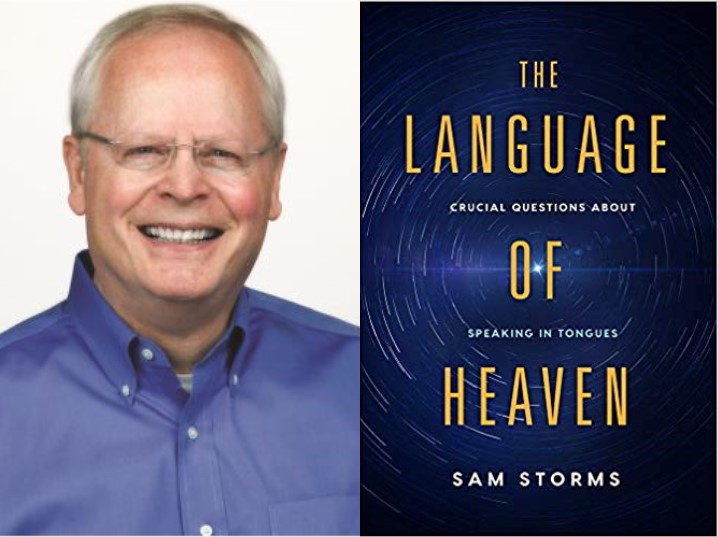
Speaking with us about his book, The Language of Heaven, pastor-scholar Sam Storms discusses the gift of tongues and the blessing it is to individuals and the local church.
Pneuma Review: At this point in church history speaking in tongues is still a controversial subject. What would you say to someone who refers to speaking in tongues as gibberish?
Sam Storms: If a person believes that all tongues speech both in Scripture and today is a known human language spoken somewhere in the world but previously not known by the speaker, then yes, it will come across to them as “gibberish.” It may also sound that way simply because the hearer is not familiar with the linguistic form of the tongues speech. Quite honestly, Mandarin and Swahili both sound like gibberish to me. If I had not been told they were legitimate human languages, I would probably conclude that they were non-sense utterances.
I suspect that some consider tongues speech to be “gibberish” because they fail to recognize that, although unintelligible apart from interpretation, all legitimate tongues speech today carries and expresses genuine, cognitive information. Paul makes this clear in 1 Cor. 14:2, 16, and elsewhere. It may not sound as such, but that doesn’t mean it is lacking sense or fails to communicate meaningful content in some form or other. It may also be that they think it to be “gibberish” because of a long-standing prejudice against contemporary expressions of tongues. Since most evangelicals are persuaded that in order to be of any benefit to anyone all utterances must be intelligible, they will understandably form negative opinions of “speech” patterns that they cannot decipher.
Pneuma Review: According to the Bible, are tongues always known languages?
Sam Storms: No. They certainly were known languages, spoken somewhere in the world, in Acts 2. But there is no reason to conclude that all other instances of tongues speech must adhere to the pattern described in Acts 2. In neither of the other two occurrences in Acts of tongues speech, Acts 10 and 19, were people of different linguistic backgrounds present to hear them. In other words, if all tongues are known human languages designed by God to evangelize people of a different linguistic experience (and this is what many, if not most, evangelicals believe), why were there only believers present in Acts 10 and 19 when people spoke in tongues?
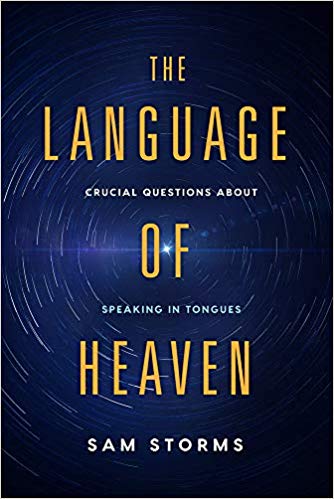
Read the review by John Lathrop.
Pneuma Review: How would you respond to a person who says that tongues is the least of the gifts?
Sam Storms: I would say that this is a misunderstanding of why Paul puts tongues at the bottom of his lists. He does so for at least two reasons. First, it is a gentle, but unmistakable, rebuke of the Corinthians who were insisting that it was the most important gift. Second, Paul subordinates tongues to other gifts only because apart from interpretation it is of no benefit to others in the church. But as he says in 1 Cor. 14:5, when it is accompanied by interpretation it is just as important and as effective in building up the body as is prophecy.
Pneuma Review: What are the main benefits of speaking in tongues?
Sam Storms: Praying in tongues enables us to bring our requests to God when we’ve run out of things to say. We are finite. Our minds eventually go dry and empty. But praying in tongues is the way in which the Spirit can articulate our prayers to the Father when we feel inadequate to do so. Also, tongues is a way in which we can sing our praises to God (1 Cor. 14:15) as well as give thanks to him (1 Cor. 14:16). Paul declares that when a person prays in tongues he builds up himself, and that is a good thing (see also Jude 20). The fact that he doesn’t proceed to tell us precisely how praying in tongues builds us up spiritually is no reason for us to deny the gift or suppress its use.
Pneuma Review: In your book you say that when the gifts of tongues and interpretation are used in a church service that the interpretation that comes forth should be a word to God not a word from God. You base this on the words Paul uses to describe tongues, he refers to them as prayer, praise, and thanksgiving. Why do you think that some churches still practice tongues and interpretation as a message from God?
Pneuma Review: Many who have attended Pentecostal or Charismatic churches have heard various members of the congregation sing in tongues all at the same time. The Bible does not directly address this situation. In your opinion is this an acceptable practice?
Pneuma Review: What advice would you give to a pastor who is trying to lead their church into a fuller expression of the gifts of the Spirit, including tongues, in their church services?
Sam Storms: Become extremely familiar with Paul’s instructions in 1 Corinthians 14. Don’t ever think that by following Paul’s guidelines that you are quenching the Spirit. Don’t force any spiritual gift on anyone. In fact, encourage the practice of the gifts in small groups rather than in the corporate assembly, as there is more time, more freedom, and less self-consciousness in small groups (i.e., people are less fearful of what others may think and thus more courageous to step out in faith and take risks).
Pneuma Review: As you have demonstrated in a number of places in your book there is really no scriptural support for the viewpoint known as cessationism. Why do you think some Christians still adhere to this viewpoint?
I also think fear is a huge factor. People are afraid of being lumped in with those who are extreme and manipulative and perhaps have abused tongues. Tongues and other gifts are also unfairly associated with certain expressions of charismatic belief, such as the Word of Faith and Prosperity gospel movements. And people don’t want to be identified with the latter. And then of course there are a few texts (such as 1 Cor. 13:8-12) that they still believe teach that tongues would simply “die out” soon after the close of the biblical canon.
I would also say that people are afraid of what they don’t understand, and they don’t understand what they’ve never experienced. To this I would add the unfounded fear that if they yielded to the Spirit and his impartation of certain gifts, they will lose control. The desire to maintain their public image as sophisticated and self-controlled exerts a huge influence on what they will or won’t do.
PR
Read John Lathrop’s review of Sam Storms, The Language of Heaven: Crucial Questions About Speaking in Tongues (Lake Mary, FL: Charisma House, 2019).