Why blow the shofar if nothing is changing?

A reader writes to Kevin Williams about his article, “The Call of the Shofar” that appeared in the Winter 2001 issue of the Pneuma Review and was later excerpted in the email newsletter.
I rarely have time to peruse the material in your electronic newsletter but now the article by Kevin Williams caught my attention. I wonder if you can pass on this note to him.

Image: Wikimedia Commons
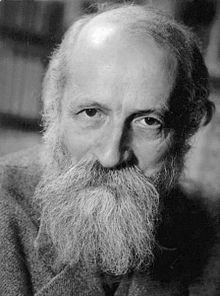
There is a revealing story about the meaning of the Shofar in a book by Martin Buber called Hundert Chassidische Geschichten. The book was published when the Nazis came to power in 1930 and it reflects the aspiration to write in a way too clever for the powerful to understand the resistance. The story is called The Window. It is the last one in the collection and it goes something like this:
In the time when rabbi Menachem lived in the land of the Israel it happened that a fool went and stood up on the top of the Mount of Olives to blow the Shofar. A rumor spread quickly amongst the bewildered crowd that this was the Shofar blast that announced the day of Redemption. When the rumor reached rabbi Menachem’s ears he opened the window, took a look at the world around him and said: “But nothing has been renewed there.”
I am not sure if the wording is quite correct. This is my translation from the Finnish version that came out just a few months ago. There must be an early translation into English available. Anyway, I think the point (apart from the reference to the Nazis) is that there is no point in blowing the shofar if no change happens around you.
Yours,
Arto from Helsinki, Finland
Response:
Dear Arto,
What a pleasure to hear all the way from Helsinki. The closest I’ve ever been to your country was Sweden, back in 1977. I found the Scandinavian people warm and wonderful and I should like to return there one day. If I may greet you, “Hej!”
I was not familiar with this story from Hundert Chassidische Geschichten, but certainly appreciate you passing it along to me. I also appreciate your interpretation of the midrash—the story.
I too would offer my interpretation, if you will indulge me. It was somewhat reminiscent of our own experience with the advent of the year 2000. There were many well-intentioned, and often seemingly well informed people “sounding the alarm,” that the world that we knew was going to come to a screeching halt on January 1. Like the “fool” in your story, they led many astray and multitudes into wild expenditures attempting to avert certain disaster.
I think the God of all creation knows us all too well when he refers to humankind as sheep. We do like to be herded along with the crowd. This same spirit of the “fool” in your story had many here in the United States convinced that this last Rosh Hoshannah was absolutely going to sound the heavenly shofar announcing the return of the Messiah and the Rapture. Just as in your story, there were many in the crowd “bewildered.” Yet the alarm came to nothing.
Time and again throughout our Christian history, men and women of some reputation have risen up to sound the alarm, mislead many, and form cults—only to turn out to be a false teacher or prophet.
Rabbi Menachem may well represent those believers who are not mislead by every wind of doctrine, and a voice of sound biblical judgment amidst nervous chaos. This fictional rabbi recognized, as many true believers know, when true redemption comes, and the last trump sounds, the world will indeed be a changed place, leaving only the fools behind.
Thank you, Arto, for taking the time to write. May the Lord’s blessing be upon you. Write again sometime!
In Messiah,
— Kevin Williams