Ed Silvoso has written a number of books, two of his best known works are: That None Should Perish, and Anointed for Business. He is the founder and president of Harvest Evangelism and is the leader of the Transform Our World Network. In this current volume he focuses on the church and how it can be used by God to transform the world.
The title of the book comes from the Greek work that is frequently translated as “church” in the New Testament. From other reading I have done, I know that some writers say that the word “church” means “those who are called out” and others say that it means “the assembly.” Silvoso, drawing on the secular meaning of the word, points out that there is also a governmental authority meaning in the word. This particular meaning is vitally important to the content of the book. The church has authority to transform the world because God, through the gospel and the power of the Holy Spirit, has given the church authority to do so.
Ed Silvoso
Ekklesia contains seventeen chapters. Most of these chapters are devoted to providing a fuller understanding of key biblical truths: the Gates of Hades, the Gospel, Proclamation, the Cross, the Great Commission, Cooperation With God, New Testament Baptisms, How to Baptize a Nation, the Ekklesia’s Social Agenda, the Incarnation, What God Loves the Most, Spiritual Authority, and the Ekklesia’s Operational Methodology.
The book draws from both biblical texts and more contemporary examples of the church in action. Silvoso mentions the activities of believers from a number of different places around the world including the Philippines, Thailand, Mexico, and the United States. Throughout the book he supplies specific details of what Christians have done in order to impact their part of the world.
Silvoso makes a strong case for doing ministry in the marketplace.
This book has a number of very commendable qualities. For example, it has a big vision; the author is focused on reaching nations, which is definitely something on the heart of Jesus (Matthew 24:14). It also advocates for the full participation of all of the people of God in ministry, which is a subject that the apostle Paul wrote about in Ephesians 4. In addition, the book makes a strong case for doing ministry in the marketplace, that is, in the business world, out in the public square. Some of the contemporary examples that Silvoso supplies demonstrate that the people of God are using their jobs to impact their culture. One thing in the book that I particularly enjoyed was the four-step strategy of ministry that the author set forth to impact the marketplace. These four steps come from Jesus’ instructions to the seventy in Luke 10. The four steps are: bless the lost, fellowship with them, minister to them, and proclaim the kingdom of God (page 33).
The church can impact the world!
Though I do not agree with everything in this book, there is much to be gained from reading it. The author cites significant gains for the kingdom in various places in the world; these may serve as an encouragement to those seeking to make a difference in their part of the world and may supply some ideas for them to implement. Some of the kingdom progress that is being seen around the world is due to the cooperation of believers not only in the same local church but also the cooperation of believers from different local assemblies. This book may be of particular interest to pastors and other Christians interested in making a difference in their part of “the field” (the world). The church can impact the world!
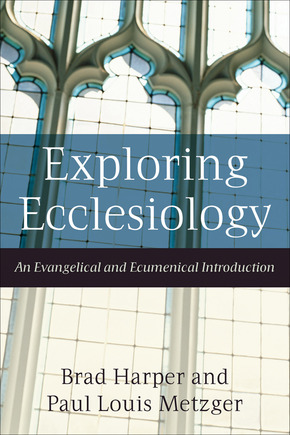
From the Conversations with Readers department appearing in the Spring 2011 issue. A Reader writes about a review that appeared in the Winter 2011 issue: In his review of Brad Harper and Paul Louis Metzger, Exploring Ecclesiology: An Evangelical and Ecumenical Introduction (Brazos, 2009), Wolfgang Vondey writes, “At least in their understanding of…
Jack W. Hayford, “Practicing What We Preach” Ministries Today (Nov/Dec 2003), pages 22–27. Jack Hayford sees the church in a moral crisis. “Favoritism, greed, shoddy morals and shady ethics have found a comfortable home in the church. At the same time, both inside and outside the church there is a rise in intolerance towards…
How should we lead the church? In this Pneuma Review conversation, Dr. Victor H. Cuartas describes how to expand the vision of the local church to reach the world. Introduction God’s plans for His beloved Church are marvelous. One of the most important aspects in the life of the church is leadership. Leadership…
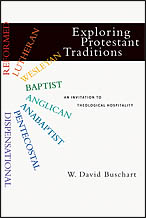
W. David Buschart, Exploring Protestant Traditions: An Invitation to Theological Hospitality (Downers Grove: InterVarsity Press, 2006), 373 pages, ISBN: 083082832X. This book skillfully explores a number of contemporary Protestant traditions by tracing their historical and ecclesiastical backgrounds, their theological and hermeneutical methods, and their characteristic beliefs. Buschart offers the reader “an invitation to theological…
Doug Strong and Jess Bielman, Workshop of the Holy Spirit: An Invitation to Theological Education (Eugene, OR: Cascade, 2022), 152 pages, ISBN 9781532689093. Doug Strong and Jess Bielman offer this short volume intent on reimagining and reoffering an ancient medieval metaphor (the “workshop”) for contemporary practices of theological education that are integrative of the life…
Tim Keel, “Naked in the Pulpit: How my preaching became an act of intimacy” Leadership Journal (Winter 2005). What a scary thought: being vulnerable to your congregation. Yet, this is the approach that Tim Keel suggests we pastors should take—a valuable suggestion indeed. Too often I find myself being more concerned with the passing…
To provide the best experiences, we use technologies like cookies to store and/or access device information. Consenting to these technologies will allow us to process data such as browsing behavior or unique IDs on this site. Not consenting or withdrawing consent, may adversely affect certain features and functions.
Functional
Always active
The technical storage or access is strictly necessary for the legitimate purpose of enabling the use of a specific service explicitly requested by the subscriber or user, or for the sole purpose of carrying out the transmission of a communication over an electronic communications network.
Preferences
The technical storage or access is necessary for the legitimate purpose of storing preferences that are not requested by the subscriber or user.
Statistics
The technical storage or access that is used exclusively for statistical purposes.The technical storage or access that is used exclusively for anonymous statistical purposes. Without a subpoena, voluntary compliance on the part of your Internet Service Provider, or additional records from a third party, information stored or retrieved for this purpose alone cannot usually be used to identify you.
Marketing
The technical storage or access is required to create user profiles to send advertising, or to track the user on a website or across several websites for similar marketing purposes.



 Ed Silvoso, Ekklesia: Rediscovering God’s Instrument for Global Transformation (Bloomington: MN: Chosen Books, 2014, 2017), 272 pages, ISBN 9780800798444.