Gone with the Wind and the Famous Key to Atlanta

When Margaret Mitchell’s Gone with the Wind was released in 1936, it took the nation—and much of the English-speaking world—by storm. At more than 1,000 pages, the novel told the story of a fictitious Georgia family caught in the tragedy of the Civil War. Mitchell’s timing was perfect.
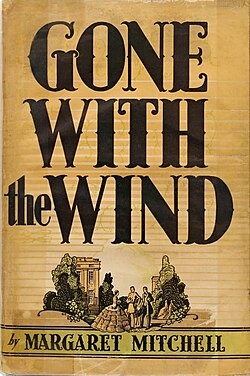
Image: Wikimedia Commons
More than 3,000 Civil War veterans were still alive, and many devoured the book. The public was hungry for an authentic American story; and although the plot was fictional, readers could verify its historical details down to the smallest fact.
I was only six years old at the time (I am 95 today). I paid little attention to my family’s conversations about it, but I couldn’t escape their excited chatter.
Margaret Mitchell was a respected reporter for the Atlanta Journal. Working alongside her was the book’s historical consultant, Wilbur Kurtz, a fellow Atlantan and one of the nation’s leading Civil War authorities. Kurtz lectured at battlefields and taught history at Georgia universities. At Mitchell’s request, he carefully edited the manuscript for historical accuracy—a key reason for the book’s runaway success. Thanks to him, the major wartime facts were reliably portrayed.
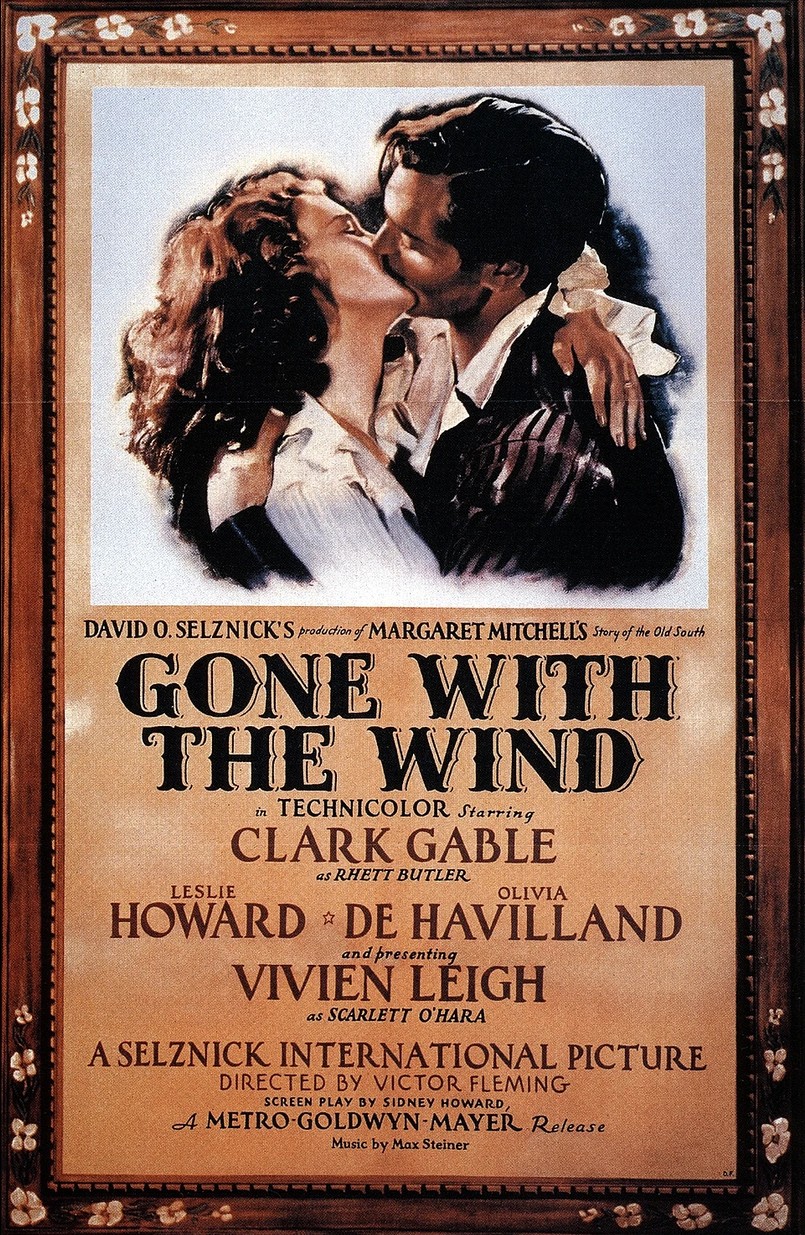
In 1939, when Metro-Goldwyn-Mayer filmed the story, the studio brought Wilbur Kurtz to Hollywood as its historical advisor. If you watch the movie today, the opening credits acknowledge his vital role. An artist as well as a historian, Kurtz could quickly sketch an antique farm tool, weapon, or period garment when the crew needed details. He was indispensable.
The story’s backdrop is dramatic: During the Civil War, Union General William T. Sherman led his campaign through Georgia, overseeing widespread destruction. He directed much of the burning of Atlanta from Copen Hill, an elevated site within the city limits where my church, Glazner Memorial Church, was later built.
One priest at a Catholic church defied Sherman. Standing in the doorway, he warned the troops that burning his building would consign them all to eternal Hell—with no escape. The soldiers backed down, obeying the priest rather than their general. The church was spared.
Though Georgia was Sherman’s primary target, the campaign’s impact reached far beyond—to Texas and throughout the Confederacy. The burning of Atlanta, which destroyed more than 4,000 buildings, delivered a devastating blow.
When Gone with the Wind premiered in Atlanta in 1939, Southern patriotism surged. Veterans, schools, stores, and public spaces celebrated the story, and history helped drive the book’s popularity.
I arrived in Atlanta from Miami in the summer of 1949 to begin my ministry at Glazner Memorial Church on Copen Hill and study at the University of Georgia—more than a decade after the film’s release. Both Wilbur and Margaret were still alive and often in the news. Unknowingly, I moved into the Kurtz’s neighborhood and soon became close friends with them, frequently visiting their home.
It was a joy to serve as Annie Kurtz’s pastor. My wife, Laurie, and I spent many happy hours with her. Annie shared wonderful personal stories about Margaret Mitchell, the book, and the famous movie.
Our conversations ended abruptly. On August 16, 1949, Atlanta radio stations announced the tragic news: Margaret had been struck and killed by a car on Peachtree Road, near her home. I later visited the accident site and still keep the newspaper clipping with her photo and obituary. Though we never met, I greatly admired her writing. Her death was mourned across the nation and the English-speaking literary world.

Image: Wikimedia Commons
Wilbur passed away in 1967. Soon afterward, while visiting Annie, she placed a Confederate minie ball in my hand. “Wilbur found this by our front step,” she explained. “It was probably fired during the Battle of Atlanta. I want you to have it—keep it safe!” Forty years later, I obeyed her wish. That bullet, tagged with Wilbur’s note, now rests under glass in my home.
Wilbur and Annie were a delightful couple. Annie had a wonderful sense of humor and brought laughter wherever she went. Wilbur was a walking encyclopedia of historical facts who could surprise you even in casual conversation.
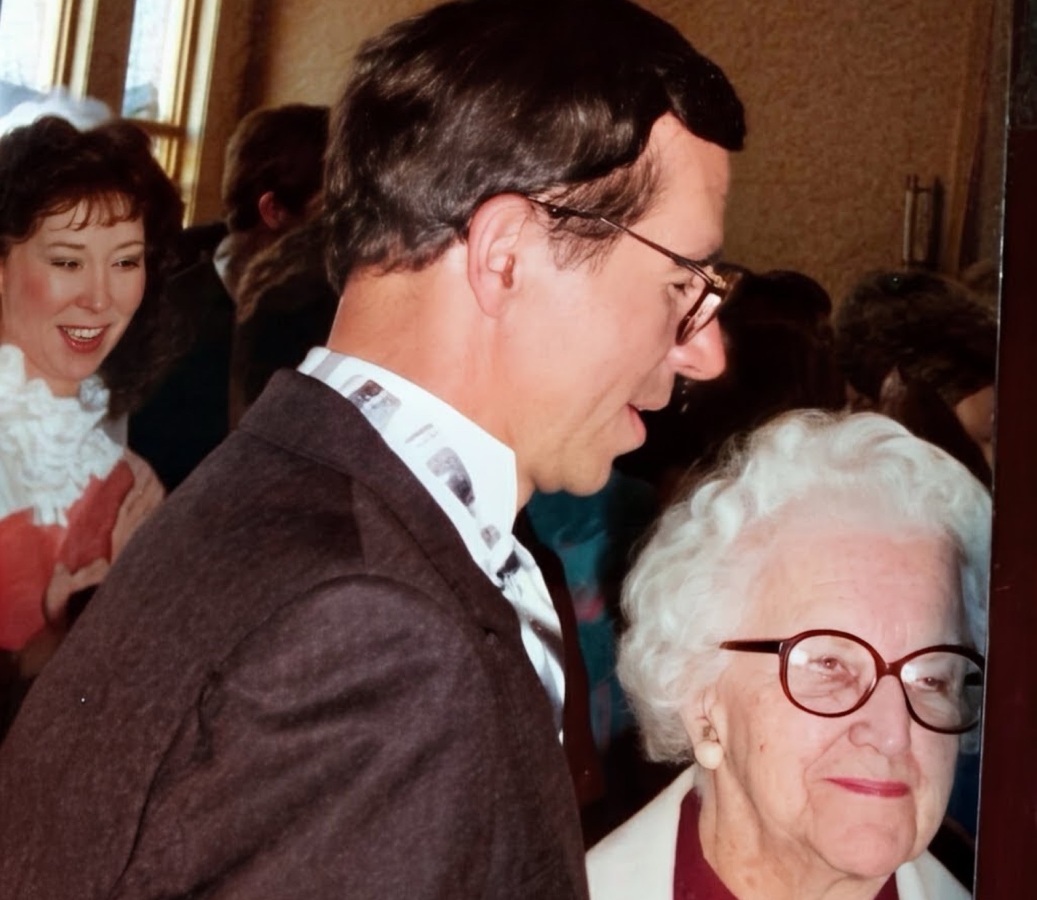
After Wilbur’s death, Annie moved to a high-rise retirement home in Buckhead. During lunch there, we stood in line with a group of ladies waiting for the dining room doors to open. Suddenly, Annie pulled me aside and said loudly, “Let’s wait! This always reminds me of feeding the bears at Yellowstone!” The room fell silent except for a few insulted “growls.” Annie was oblivious—she would never knowingly offend anyone. To her, life was laughter.
On another occasion, when a friend scolded her for buying a new painting because she had no wall space, Annie replied, “Then I’ll put it under the bed!” When told there was no room under the bed either, she declared, “Then I’ll buy another bed!” And she did.
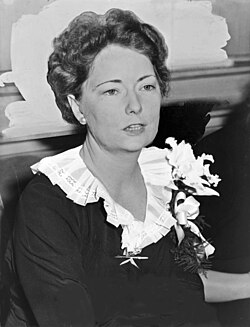
Image: Wikimedia Commons
During those years, Margaret Mitchell became a legend worldwide. Although I never knew her personally, I knew many on the Atlanta Journal-Constitution staff who had worked with her, including Andy Sparks, editor of the Sunday Magazine, and the talented columnist Celestine Sibley. They were a fascinating group.
In 1970. Andy Sparks asked me to write an article, and I contributed a story about my great-great-grandmother, Marie Catherine du Moline Carrin, who brought French culture from Paris to the Florida wilderness in the 1860s.
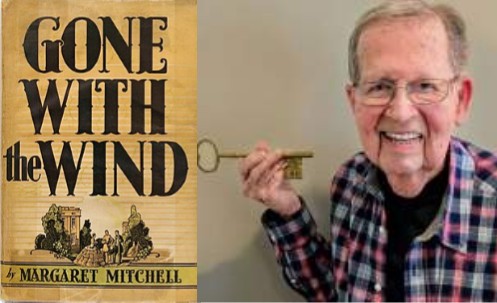
 On one of my last visits to Annie’s home, she picked up a large bronze key and said, “When Wilbur returned from Hollywood, the City of Atlanta gave him this ‘Key to the City.’ This is the original key—I want you to have it!” Shocked but grateful, I accepted. That was nearly fifty years ago. I have safeguarded this historic souvenir ever since.
I thank God for the privilege of preserving these treasures and the memories they carry—of Gone with the Wind, Margaret Mitchell, Wilbur and Annie Kurtz, Andy Sparks, and other remarkable Atlantans. The book holds a special place in my life and library, and the Key to Atlanta is a special treasure. I see it often and thank God for the flood of historic memories it brings.
PR
From Charles Carrin Ministries monthly newsletter, Gentle Conquest (July 2026). Edited by Cecile Carrin McGuire. https://www.charlescarrin.com Used with permission.