
The Cross Divides the Saved and Lost by God’s Power

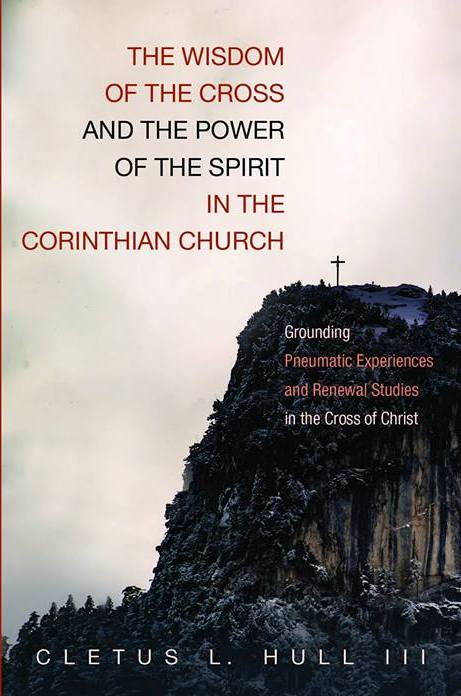
It is the power of God that uses all that the Cross of Christ represents to separate those that are being rescued from those that are lost. This excerpt from Cletus Hull’s book, The Wisdom of the Cross and the Power of the Spirit in the Corinthian Church, is an exegetical study of First Corinthians 1:18-21.
Employing numerous antithetical parallel statements, [Paul] begins writing about how the crucified Lord, in the wisdom of God, divides humankind into two groups. Mihaila observes, “for Paul, the cross is the great divider, acting ‘as an eschatological discernment,’ separating τοῖς ἀπολλυμένοις from τοῖς σῳζομένοις (1 Cor. 1:18).”[1] The present tense participles, ἀπολλυμένοις (those who are perishing) and σῳζομένοις (those who are being saved), provide the meaning of life’s continuum to accept or reject Christ. Additionally, the present participle denotes the process of salvation in the believer. Salvation is both instantaneous and continues forward in life. Literally, perishing means “to be ruined or destroyed.”[2] Therefore, a choice not for the cross is interminable destruction. Anthony Thiselton remarks that “two ‘worlds’ confront each other at the foot of the cross”[3], as the kingdom’s salvific entrance into humankind reveals the dividing line between the perishing and those who are saved. Paul utilizes similar language in his second letter to the Corinthians when he writes, “for we are the aroma of Christ to God among those who are being saved and among those who are perishing” (2 Cor. 2:15). The metaphor of aroma becomes symbolic of the meaning of the cross to the Corinthian church. The message of the cross brings judgment, as it divides humanity into two specific groups. Thus, the fullness of their salvation will not be completed until the eschaton.
The cross led to the ensuing topic of δύναμις power (1 Cor. 1:18). He writes a similar comment in a non-polemical context in 1 Thess. 1:5 which states “because our message (λόγος) of the gospel came to you not in word only, but also in power (δύναμις) and in the Holy Spirit and with full conviction.” Gräbe suggested, “the concept of power belongs to the heart of Paul’s message. It is the apostle’s deepest conviction that the gospel has a decisive effect on people’s lives.”[4] The word δύναμις revealed the basic meaning of “being able” and “capacity.”[5] Walter Grundman in TDNT notes that “the δύναμις θεοῦ is the power of God, and therefore the power of salvation, which is at work in history, and specifically in the Christ event.”[6] Δύναμις “describes the effect of Paul’s divine message on this world,”[7] and as a result, an understanding of the power of God in the cross conveyed the joie de vivre in the theology of the cross.
Paul use of γέγραπται in the present tense locates an event that occurred in the past but has present and continuous consequences. In 1 Corinthians 1:19, Paul quoted Isaiah 29:14 from the LXX, as the OT context unveiled that judgment by Assyria foresaw a fall of the hypocrites in Israel. He wrote “I will set aside” rather than “I will hide” which the LXX contained.[8] This change of meaning fit his purpose for citing the OT prophet.
Fee notes that “Paul sees this Isaiah passage as now having eschatological fulfillment.”[9] Paul handled this OT content illustrating that just as the wise people of Israel were destroyed, so also the Greek wisdom came to naught when contrasted with the power of the cross. Ciampa and Rosner writes, “Paul uses Isaiah 29:14 to announce that God’s eschatological judgment and salvation are taking place among the Corinthians.”[10] The parallelism in the Isaiah text strengthens the themes of God’s judgment on sin and human depravity (cf. Isa. 6:9-10; 29:9-10; 42:18-20; 63:17). Certainly, Paul’s quote is an appropriate choice in connection to the Corinthian concept of wisdom.
A comparison of the verses from the LXX and Paul’s letter reveal their similarities.
1 Corinthians 1:19
Ἀπολῶ τὴν σοφίαν τῶν σοφῶν
καὶ τὴν σύνεσιν τῶν συνετῶν ἀθετήσω
Isa. 29:14b
Ἀπολῶ τὴν σοφίαν τῶν σοφῶν
καὶ τὴν σύνεσιν τῶν συνετῶν κρύψω
Identical vocabulary has been underlined
Interestingly, the apostle amends the final word of the passage from ἀθετήσω to κρύψω. Harm-Jan Inklaar notes, “by using ἀθετήσω the text points out that something definitive has happened that overrules the authorities of the age.”[11] The apostle sarcastically depreciated the value that the Greeks placed upon wisdom as he developed this comparison conveying the point that in both circumstances, humans exalted “godless thinking.”[12] In addition, he followed a method similar to certain OT passages. For instance, several times, the OT knitted σοφίᾳ and σύνεσι in a joint arrangement.[13] Both Exodus 31:3 and Deuteronomy 4:6 employed wisdom and prudence within their respective contexts in the manner that he noticed the two virtues as functioning. H.H. Williams writes, “the wisdom that is being judged in Isa. 29:14 is human wisdom and understanding that does not include God’s revelation.”[14] The Isaiah text establishes why Paul rebuffs the σοφίᾳ λόγου , rather preaching the λόγος of the cross. Therefore, God resided above humankind’s highest wisdom and prudence.
PR
This excerpt from The Wisdom of the Cross and the Power of the Spirit in the Corinthian Church: Grounding Pneumatic Experiences and Renewal Studies in the Cross of Christ (Pickwick, 2018) is used with permission.
Read the third excerpt from The Wisdom of the Cross and the Power of the Spirit in the Corinthian Church.
Healing and Salvation in the Cross of Christ
Further Reading
https://twitter.com/WisdomofCross
Publisher’s Page: https://wipfandstock.com/the-wisdom-of-the-cross-and-the-power-of-the-spirit-in-the-corinthian-church.html
Preview: https://books.google.com/books?id=qCB0DwAAQBAJ
Notes
[1] Mihaila, The Paul-Apollos Relationship and Paul’s Stance Toward Greco-Roman Rhetoric: An Exegetical and Socio-Historical Study of 1 Corinthians 1–4, 18.
[2] Roy Ciampa and Brian Rosner, The First Epistle to the Corinthians: Pillar New Testament Commentary [PNTC] (Grand Rapids, MI: Eerdmans, 2010), 91.
[3] Anthony C. Thiselton, First Corinthians: A Shorter Exegetical and Pastoral Commentary
(Grand Rapids, MI: Eerdmans 2006), 45.
[4] Gräbe, The Power of God in Paul’s Letters, 240.
[5] Walter Grundmann, “δύναμις, κτλ,” in Theological Dictionary of the New Testament, eds. Gerhard Kittel and Gerhard Friedrich, trans. and ed. Geoffrey W. Bromiley, Vol. 2 (Grand Rapids: Eerdmans, 1968), 284.
[6] Ibid., 309.
[7] Gräbe, The Power of God in Paul’s Letters, 239.
[8] Barrett, A Commentary on the First Epistle to the Corinthians. Harper’s New Testament Commentary, 52.
[9] Gordon Fee, The First Epistle to the Corinthians. The New International Commentary on the
New Testament (Grand Rapids, MI: Eerdmans, 1987), 73.
[10] Ciampa and Rosner, The First Epistle to the Corinthians: Pillar New Testament Commentary, 93.
[11] Harm-Jan Inkelaar, Conflict over Wisdom: The Theme of 1 Corinthians 1–4 Rooted in Scripture (CBET 63; Leuven: Peeters, 2011): 199.
[12] John Ruef, Paul’s First Letter to Corinth (Middlesex, England: Penguin Books, 1971), 12.
[13] Marvin Vincent, Word Studies in the New Testament (New York, NY: Charles Scribner’s Sons, 1919), 191.
[14] Williams, H.H. Drake, ed. The Wisdom of the Wise: The Presence and Function of Scripture within 1 Cor. 1: 18-3:23 Vol. 49. (Leiden: Brill, 2001), 57.