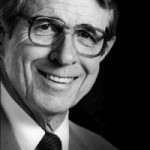

Prophetic Ministry: an interview with John Paul Jackson

Do you think that the Christian church as a whole is becoming more receptive to prophetic ministry?
 Yes, I do believe that is happening. I say that for several reasons, four of which I’d like to address here. The first is obvious to me personally—I am speaking in many more denominational settings. Ten years ago, theological boundaries would have precluded most from speaking on the topic of prophetic ministry, but this year alone, I will be speaking in Baptist, Nazarene, Lutheran, Methodist, Anglican, Episcopal and Church of Christ churches or conferences, in addition to Pentecostal and Charismatic churches.
Second, the interest level on this topic is no longer superficial. Pastors are admitting that they themselves have had a variety of supernatural spiritual experiences. As a consequence, they are asking some tough and probing theological questions. With these questions comes a heightening demand for intellectual integrity and consistency between recognizing that the Holy Spirit’s gifts are available today and applying that belief to current church life. In other words, if it is for today, how is it meant to function in order to aid the church?
Finally, there is the newfound recognition that three separate issues have to be addressed in any gift, especially the prophetic gift. I call these the Three Pillars of Prophetic Ministry: the prophet and the man, the prophet and the gift and the prophet and the church.
The prophet and the gift espouses that gifting is not instantaneous. People do not stand before world leaders the day after their gifts are bestowed. Moses waited 40 years; Samuel waited 25 years; and even Jeremiah, who the Lord said was not too young, waited 17 years before his first prophetic utterance. During the interval between the gifting and the releasing, the gift must be studied. Biblical, spiritual knowledge must be gained to help lay the foundation for any future task the Lord might give. The novice must learn the difference between the gift of prophecy and the gift of being a prophet, as well as the differences between a trance and a visitation, a dream and a vision, a translation and a transportation. All these things are described in Scripture and happened in Scripture—what if they happened again?
The prophet and the church reveal the heart of God for the church and that the prophetic, or revelatory, gift is for the church’s edification. Here the novice learns the role, purpose and function of the church, as well as the role, purpose and function of the prophetic minister in the church. These two must parallel in order for us to see the fullness of God’s Kingdom advance on Earth as it is in Heaven. It is the church that will make known the manifold wisdom of God, and the revelatory person is one of the many aids in accomplishing this.
Does prophetic ministry need to be pastored?
All people need pastors, and prophets are people. Those who are revelatory have similar personality traits. (By revelatory I mean those who take what is not and transform it into something that is.) This revelatory list would include artists, sculptors, musicians, writers, actors, etc. The prophetic word, as well as the painting, song, statue or book, is grasped in God’s spirit world and translated into a design that exists in this world. Until they mature, prophetic people are very sensitive, very creative and very emotional, and they are primarily centered on how their gifts can best be used. They feel that everyone has the same focus they do—them.
Obviously, with maturity this changes, but for some reason, we pastors hesitate to correct prophets or even allow them to mature. Somehow we need to look at prophetically gifted people as people. They have the same issues all of us do. Pastoring can take place when we understand the issues of the Three Pillars of Prophetic Ministry. Both Jeremiah, whom God chose as a prophet before he was conceived, and Samuel, who was around 5 or 6 when God spoke to him, had to wait years before their gifts were mature enough for God to speak consistently through them.
Even in the most highly gifted people, the weight of the prophetic gift will crush a weak spiritual foundation if we are not submitted to pastoral oversight. It is no wonder that Paul cautioned Timothy not to lay hands on a novice too soon, “lest being puffed up with pride he fall into the same condemnation as the devil” (1 Timothy 3:6).
I grew up going to church, my grandfather was a pastor and my father pastored for a number of years. I have served on three church staffs, planted four churches and pastored a fifth. My life of pastoring and being pastored has done more to mature my gift than any other training I could have received. Men I highly respect are still pastoring me.
Why are there frequent problems between church leaders and prophetic people, and who bears the larger responsibility for these difficulties?
I am a firm believer that we who, at maturity, will be oracles of God must bear the brunt of the responsibility for the current gulf between church leadership and prophetic ministry. How can we demand the church change, or do anything at all, if we are not willing to change ourselves first?
Too many prophetic individuals are closer to being characters than having character. We prophetic people must learn that our character speaks more loudly than our words. We must also learn that we will have very few difficulties with church leadership when our character is greater than our gifts and we prove that we love people more than our gifts.
What qualities does a prophetic person need to have in order to gain the support and respect of church leadership?
I believe there are three distinctives that separate the average from the stellar—those who want to be recognized from those who are. We prophetic people must keep in mind that respect and support are earned; love is freely given.
First, we have to demonstrate that we actually are spiritual and not just acting like we are. Paul told the Galatian church that if they were truly spiritual, they would have spiritual fruit (Galatians 5). We need to inspect our fruit to ensure that we are doers of the Word and not hearers only. Spiritual fruit is obvious, and when we have it, others will always see it. This is the first way our gifts make room for us.
Second, we have to love others more than we love our gifts. If we do not, we will never be able to keep quiet when God tells us something about another person, place or event. If we love our gifts, we will always sacrifice others so our gifts might be seen. This will cause even our closest friends not to trust us, because they know we will talk about them as well.
Three, we must establish a history of accuracy in our prophecies. In other words, we must have prophecies that come true and words that are accurate. Until then, we are demanding to be recognized and given authority today based on prophecies for tomorrow. When we have true character and gifting, there will be no problem with the pastor and other leaders’ support and respect. Further, we need to recognize that if the Lord does not give us detailed level of revelation, He is telling us something.
What counsel would you give to church leaders who want to incorporate and foster the prophetic ministry in their church?
From my experience, the following eight points will greatly aid the pastor and leadership in fostering prophetic ministry. There are probably 50 other points I could add to this list; however, these will start the ball rolling.
1. No gift is born mature. Be patient, knowing that where the oxen are, there will be a mess. In a variety of ways, teach your congregation about this gift. It is important that they know what to expect and what not to expect from those learning to use their gifts.
2. Do not value gift over character. When their gifts are working, this is very hard to do. Always demand that character be displayed through the Holy Spirit’s fruit in their lives. His fruit will be easily seen in their finances, their marriage and their children.
3. Demand that those with revelatory gifts have a life in Scripture. A systematic Bible study of some type is very good. A prophetic malady seems to be that often, gifted individuals will have ADD or ADHD and will probably hate to read. So plan on having verbal as well as visual training. You may be shocked at how intelligent prophetically gifted individuals actually are.
4. Require them to study their gifts so their terminology will be consistent. For example, an angelic visitation is just that—it is not merely the feeling that an angel was in the room. In the same way, a vision is a vision, not just a person’s imagination.
5. Require them to exercise their gifts both inside and outside church walls. Otherwise, they will become spiritual mutants by the inbreeding of revelation.
6. Do not yield to their demand for the microphone or pulpit time. The prophets of old addressed the king (pastor/leadership), and the king addressed the people. Few prophets were also kings. Remember, God has called you as the pastor and leader to lead the people; He called the prophet to be the prophet. Only with your approval should they publicly prophesy.
7. Have a safe place for them to express their revelations. In this setting, allow them to be wrong without consequences—they are being trained. For the most part, they need to learn how to communicate what they see or sense. It is more than just having a revelation; in order for action to be taken on a prophetic word, there must also be interpretation, application and clear proclamation. Developing these attributes takes training and that takes time spent in a safe environment.
8. Keep track of prophecies. Let the people know when they come to pass. As the prophetic word matures, you may find it good to share the word with the people so that when it happens, faith is exponentially developed in the whole church, and they are reminded that God is with them. As you keep track of prophecies that are released to the congregation, also track error in the word. Was the error in the revelation, interpretation, and application or in how it was delivered? When you do this, you may be surprised at how much this will build the people’s faith in prophetic words, as well as their faith that the leadership can be trusted to keep them safe. I must also add that to the degree the incorrect word was released is the degree the person who prophesied needs to repent. For example, if it was spoken only in front of leadership, then the repentance or forgiveness is needed only at the leadership level.
How can this be lovingly communicated in the church?
Hunger for the things of God makes all true and vibrant things from God palatable. I believe that if the church can see a model of prophetic ministry that has integrity, character, love, humility and teachability, as well as leadership that holds the accountability and the maturation process in balance, they will embrace revelatory giftedness. Moses was an example of this.
Moses was a highly gifted man. He saw the glory of God, talked with Him face-to-face, was used to perform mighty signs and wonders—and yet, when God told him that he had found favor, he still asked the Lord to show him His way, that he might know Him (Exodus 33:12–13).
No matter what our gifts are or how gifted we are, we need to know the ways of God. Too many of us know about Him; few of us actually know His ways. The journey into understanding the prophetic, and helping those who are prophetic understand themselves, includes teaching people the ways of the Spirit, which are the ways of God, who is Spirit. We do this so that we might know Him and find favor in His sight.
The church must realize that prophetic ministry has a maturation process. We give the pastor time to mature, as well as the teacher and evangelist. We actually have seminaries and Bible schools that do this. We even allow the apostle time to be trained and matured. However, for some reason, many churches do not allow the prophetic voice the same privileges.
We at Streams Ministries have developed a vast array of training materials on the ways of God and prophetic ministry. Over the years, we have trained more than 50,000 students in more than a dozen nations. Our materials have been translated into nine different languages. I have seen thousands of individuals who have gifts, but I am no longer impressed by their gifts. I am impressed with those who have character as well as gifting. If I had to make a choice between a highly gifted person without character and a person who had great character and no gift, I would choose the person with character and no gift every time.
Having said that, I must also say that the journey to discovering true, genuine and honorable prophetic ministry is a journey that will take you right into the center of God’s being. In this place, His Spirit searches for deep things to reveal to us. They are secrets only those who yearn to know His ways will find, for all revelation comes from Him and through Him and goes back to Him. By this, the cycle is completed, and He brings to pass what He said He would—in other words, our will has become His. In finding true prophetic ministry, you find God’s desire for His Kingdom to come and His will to be done on Earth as it is in Heaven. It is a remarkable, paradoxical journey. It is more difficult than you can think and more wonderful than you can imagine.
PR
© 2007 John Paul Jackson, Streams Ministries International. All rights reserved. For more information, visit www.streamsministries.com.