An expert in European Pentecostal history, Geir Lie, introduces readers to his in-depth look at Pentecostal pioneer T. B. Barratt and the early emphasis of Pentecostals that has often been forgotten.
The history of Thomas Ball Barratt (1862-1940) and his role in the origins of not only the Pentecostal movement in Norway, but in most countries within Western Europe, is fairly well known among Pentecostal scholars. The purpose of this article is partly to challenge a previous claim that Norwegian Pentecostalism in its initial stage did not reflect the missionary tongues concept. What is implied by that claim is that speaking in tongues was not the most characteristic feature of the early Pentecostal movement, contrary to what many tend to believe. In fact, tongues speech was generally understood to be secondary to and arising out of what could be characterized as a millenarian belief system.
Early Pentecostals believed Christ’s imminent return would be preceded by a world-wide revival, and the gift of missionary tongues would function as a tremendous evangelistic tool.
It is common knowledge among Pentecostal scholars that Charles F. Parham, who gave notoriety to the initial-evidence Spirit baptism teaching in the USA, preached a millenarian message. Christ’s imminent return would be preceded by a world-wide revival, and the gift of speaking in tongues (not understood as glossolalia but instead as xenolalia) would function as a tremendous evangelistic tool, as it implied speaking existing human languages. Tongues speech was actually the very key to spreading the Gospel effectively to all corners of the world, which, in turn, would usher in the return of Christ. The understanding of tongues as an eschatological sign and as a legitimization of the missionaries’ end-time message, however, only lasted through 1908-9 as several returned to their home country in disappointment and failure, although Parham never abdicated from this doctrine. From about 1909, tongues were redefined as a ‘heavenly language’ (now understood as glossolalia), although God, exceptionally, might give somebody a human language they had never learned naturally (xenolalia), as was the case with the 120 believers on the Day of Pentecost. This redefinition of the purpose of tongues speech was not published from the rooftops, though, and gradually people seemed to forget that the concept of missionary tongues was no minority position, but rather, the accepted belief by all the early Pentecostals.
In addition to strongly suggesting that the missionary tongues concept was also taught by Barratt during the first stage of his Pentecostal experience, this article will challenge the identification of the millennial thesis to have originated with Robert Mapes Anderson in his first edition of Vision of the Disinherited in 1979. This is a serious challenge since Anderson’s thesis was considered groundbreaking among American academicians. This same claim was set forth as early as 1928 in a Norwegian book entitled Dommedagsventing by author Thorstein Gunnarson. As the originator of Anderson’s millenarian thesis, Gunnarson should be duly credited.
Geir Lie is an educator and archivist of Northern European Pentecostal history. Geir was the editor of Refleks: med karismatisk kristendom i fokus (from Scandinavian and English speaking authors) throughout its publication life, 2002 through 2009 (1:1; 1:2; 2:1; 3:1; 4:1; 4:2; 5:1; 5:2; 6:1; 7:1; 8:1). He is the author of E.W. Kenyon Cult Founder or Evangelical Minister (Refleks Publishing, 2003) and editor of Norsk pinsekristendom og karismatisk fornyelse: Ettbinds oppslagsverk (Norwegian Pentecostalism and Charismatic Renewal: One-Volume Dictionary, Refleks Publishing, 2007). See also his article, "E.W. Kenyon and Dispensationalism" that appeared in the January 2008 issue of Cyberjournal for Pentecostal-Charismatic Research.
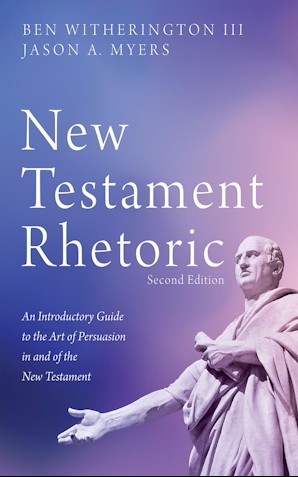
Ben Witherington III, New Testament Rhetoric: An Introductory Guide to the Art of Persuasion in and of the New Testament (Eugene: Cascade Books, 2009), x + 274 pages. Ben Witherington III is a Professor of New Testament at Asbury Theological Seminary, as well as St. Andrews University. In this text, Witherington addresses the issue that…
The Kingdom and the Power. The Pneuma Review has received permission to reprint chapters from this important work that asks: “Are Healing and the Spiritual Gifts Used by Jesus and the Early Church Meant for the Church Today?” The Spring 2010 issue will continue this series with Kingdom and the Power editors Gray Greig and…
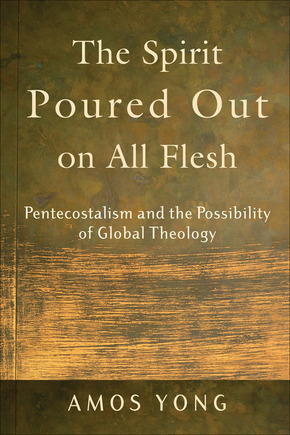
An extended review of Amos Yong, The Spirit Poured Out on All Flesh: Pentecostalism and the Possibility of Global Theology (Baker Academic, 2005). Reviewed by Tony Richie. Read the shorter review in the Winter 2007 issue. The oft overused term “instant classic” is, of course, an oxymoron. To become a true classic takes…
Although the concept called spiritual mapping is mainstream in the independent charismatic movement, this new arms race against the devil is not without controversy. Professor Larry Taylor offers a biblical challenge to this practice in his paper “Worldviews in Conflict: Christian Cosmology and the Recent Doctrine of Spiritual Mapping” which will be appearing serially…
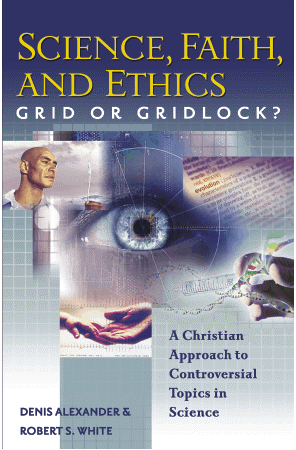
Denis Alexander and Robert S. White, Science, Faith, And Ethics: Grid or Gridlock? (Peabody, MA: Hendrickson, 2006), xii + 190 pages, ISBN 9781598560183. Molecular biologist Denis Alexander and geophysicist Robert White are committed to both their Christian faith and their scientific fields, which is a characteristic to be emulated by both sides. Since they affirm…
To provide the best experiences, we use technologies like cookies to store and/or access device information. Consenting to these technologies will allow us to process data such as browsing behavior or unique IDs on this site. Not consenting or withdrawing consent, may adversely affect certain features and functions.
Functional
Always active
The technical storage or access is strictly necessary for the legitimate purpose of enabling the use of a specific service explicitly requested by the subscriber or user, or for the sole purpose of carrying out the transmission of a communication over an electronic communications network.
Preferences
The technical storage or access is necessary for the legitimate purpose of storing preferences that are not requested by the subscriber or user.
Statistics
The technical storage or access that is used exclusively for statistical purposes.The technical storage or access that is used exclusively for anonymous statistical purposes. Without a subpoena, voluntary compliance on the part of your Internet Service Provider, or additional records from a third party, information stored or retrieved for this purpose alone cannot usually be used to identify you.
Marketing
The technical storage or access is required to create user profiles to send advertising, or to track the user on a website or across several websites for similar marketing purposes.