Discover the heritage of John Wesley that runs deep in Holiness and Pentecostal movements.
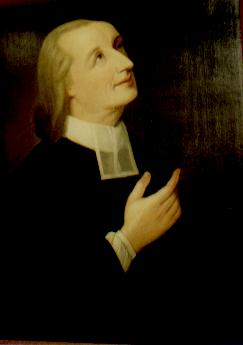
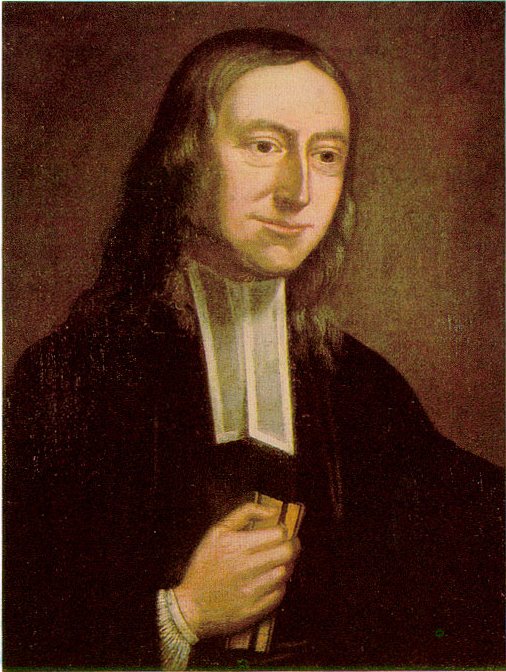
Pentecostalism is what some might call the forgotten legacy of John Wesley. In nearly 100 years the movement has become the fastest growing body of Christians on the face of the planet. Pentecostalism is growing at a rate of 13 million a year, 35,000 a day, and has nearly a half billion followers. It is the second largest Christian group after Roman Catholicism. There are Pentecostals in almost every denomination and every part of the world. The largest Protestant church in the world is a Pentecostal church in Korea, the Yoido Full Gospel Church, which has over 240,000 in weekly attendance. All of this would not have been possible without their theological and ministerial connection to John Wesley. This article will attempt to briefly discuss the historical development of Pentecostalism by making a special application of John Wesley’s contribution.
There has been a lot of research that has shown the connection between the Wesleyan-holiness movement and Pentecostalism. 1 Much of this research has attempted to show that John Wesley is the grandfather of Pentecostalism.2 Wesley placed a strong emphasis on the person and work of the Holy Spirit. He believed that the Spirit played a unique role in entire sanctification. Wesley’s doctrine of Christian perfection was crucial to the theological roots of Pentecostalism. It was the idea of a second work of grace (sanctification) that opened the door for theological discussion about the possibilities of a third work of grace: the Baptism of the Holy Spirit.
Wesleyan Sanctification
Pentecostalism is the forgotten legacy of John Wesley.
Shortly after his memorial sermon, “On the Death of George Whitefield,” preached on November 18, 1770, Wesley entered into a unique alliance with John Fletcher that shifted the direction of Methodist history.3 Fletcher worked closely with Wesley and soon became one of the most influential leaders in early Methodism. Fletcher is perhaps best noted for his Checks to Antinomianism (1771), which defended the theological views of John Wesley and the early Methodism. Wesley was so impressed by Fletcher’s piety and theological prowess, that Fletcher became his “authorized interpreter and designated successor.”4 In Fletcher’s writings we begin to see a paradigm shift take place. Fletcher placed a strong emphasis on the role of the Holy Spirit in Christian perfection. He used Pentecostal language to describe the Spirit’s work with phrases such as “baptized with the Spirit” and “filled with the Spirit.”
John Fletcher
As a result of Fletcher’s influence, Wesley’s latter sermons “highlighted the Methodist phenomenon as inaugurating a “Pentecostal Church’ in the world.”5 The distinct contribution that Fletcher made upon Wesley’s theology was the concept of a “Pentecostal Church,” which helped Wesley articulate and defend the extraordinary work of God that was happening through the Methodist movement. Wood notes that Wesley’s latter sermons focused on a Pentecostal theme because he believed that the Methodist revival in his day was the first sign of a new Pentecost. He believed that a new Pentecostal Church was being re-established on the earth that would be the fulfillment of the first Pentecost.6 The external evidence of the outward work of the Spirit resembled the first Pentecost and demonstrated that God was indeed with the Methodists as they spread universally throughout the world. Wesley’s concept of a “Pentecostal Church” demonstrates a growing interest in the universal work of the Spirit and marks a further shift in Wesley’s doctrine of the Holy Spirit.
Fletcher helped Wesley articulate and defend the extraordinary work of God that was happening through the Methodist movement.
Holiness Movement
Both Wesley and Fletcher’s writings were widely spread among early Methodists and became distributed widely in the later Holiness movement. The Holiness Movement of the 1800’s served as the major catalyst for the spread of the doctrine of entire sanctification. The Movement emphasized sanctification as a second definite work of grace, which is distinct from salvation. Various terms were used to describe this experience beyond conversion including, “Christian perfection,” “entire sanctification,” “second blessing,” and “higher Christian life.”
Wesley believed that a new Pentecostal Church was being re-established on the earth that would be the fulfillment of the first Pentecost.
The Holiness Movement helped spread the message of the “second blessing” throughout North America and Europe through camp meetings and conventions like the National Holiness Association. These camp meetings were literally held in many of the major cities and states across the United States. Many of the holiness people were prolific writers and theologians who promoted the spread of the doctrine of entire sanctification in their writings and teachings. Although the Holiness Movement was made up of various denominations, Methodism played an important role in the beginning of the Movement. In the late 1800’s the Movement began to split into various independent Holiness churches. Despite divisions, all of them agreed on the prominent role of the Holy Spirit in entire sanctification.
Fletcher used Pentecostal language to describe the Spirit’s work with phrases such as ‘baptized with the Spirit’ and ‘filled with the Spirit.’
The Holiness Movement helped contribute to the shift from an emphasis on entire sanctification to a growing emphasis on Spirit Baptism. The change did not take place overnight, but was the result of various Christian groups who sought to find new ways of appropriating and articulating the role of the Holy Spirit in Christian experience. There are several key leaders that contributed to the emphasis on Spirit baptism and sanctification.
Revivalist Charles Finney was a powerful preacher and teacher in the mid 1800’s. He was practicing law when he experienced a dramatic conversion, after which he gave up everything to pursue the call to preach. Finney soon emerged as the new leader of evangelical revivalism. His revivals burned through major urban areas like Philadelphia, New York City, Boston, and Rochester. His fame brought him international attention, which eventually took him to England.
Wesley believed that the Methodist revival in his day was the first sign of a new Pentecost.
He was influenced by the Wesleyan theology of Christian perfectionism, which developed from the teaching of John Wesley. “One of Finney’s theological innovations was his increasing tendency to identify the “baptism of the Holy Spirit” as a means of entering into entire sanctification.”7 He identified entire sanctification with the baptism of the Holy Spirit, which connects him to both Wesleyan-holiness and later, Pentecostal thought.8
Today many Pentecostals do not even know about their connection to John Wesley.
His work on perfectionism was sparked by the problem of converts who became backsliders after his revivals. Holiness made it possible for the believer to live a life for God that was free from sin. He thought that believers needed the baptism of the Holy Spirit to empower and perfect them in order that they might live in accordance to the will of God. He emphasized the need for purity and power. He argued that it was the duty of Christians to be filled with the Spirit.
1. It is your duty because you have a promise of it. 2. Because God has commanded it. 3. It is essential to your own growth in grace that you should be filled with the Spirit. 4. It is as important that you should be sanctified. 5. It is as necessary as it is that you should be useful and do good in the world. 6. If you do not have the Spirit of God in you, you will dishonor God, disgrace the church, and be lost. 9
Finney drew on Wesley’s doctrine of Christian Perfectionism by adding an emphasis on the baptism of Spirit, which helped make the shift for the later development of the Pentecostal movement.
The Holiness Movement helped contribute to the shift from an emphasis on entire sanctification to a growing emphasis on Spirit Baptism.
Another influential holiness teacher was Phoebe Palmer who taught that sanctification was attainable in an instant. She was a Methodist lay preacher, revivalist, and Christian feminist. She developed an “altar theology” where she reduced the process of sanctification into an instantaneous event. She reasoned that if her body were a living sacrifice, by laying her all on the altar, then God would sanctify her. She developed a three-step process for entire sanctification: 1. consecrating oneself to God; 2. believing God keeps his promise to sanctify the consecrated; and 3. bearing witness to what God has done. She wrote the following books The Altar Covenant (1837), The Way of Holiness (1843), and Entire Devotion to God (1845), which promoted her views of sanctification.
Phoebe Palmer also popularized the idea of Pentecostal Spirit baptism.
She also popularized the idea of Pentecostal Spirit baptism. Based upon the “Promise of the Father” from Acts 1:4, she taught that Christians should wait for the promised Holy Spirit of Pentecost, which was available to both men and women. Although she never spoke in tongues, her emphasis on Pentecostal Spirit baptism helped prepare the way for the later emergence of the Pentecostal Movement. As a result of Finney and Palmer’s teaching, an emphasis on Spirit baptism began to take precedence over earlier views of sanctification. The Holiness teaching set the stage for the Pentecostal revival that started in 1906.
Azusa Street and Beyond
Finney argued that it was the duty of Christians to be filled with the Spirit.
It was at the Azusa Street mission in Los Angeles, California where Pentecostalism found its fullest expression. Black minister William Seymour came under the influence of holiness teaching around 1900 while he was living in Cincinnati. In 1903 he moved to Houston, Texas where he came into contact with Charles Fox Parham. Parham was a holiness teacher who began to teach that the Bible evidence of the baptism of the Holy Spirit was speaking in tongues. Parham established a Bible school to train students in the “Apostolic Faith.” Seymour listened to lectures through the door by sitting in the hallway because he was black.10
Parham worked tirelessly to promote the Pentecostal message. He started bible schools to train ministers, and orphanages, and began writing The Apostolic Faith. While studying the Acts of the Apostles, Parham and his students became convinced that God wanted to pour out a second Pentecost on them that would follow speaking in tongues. One night with about 120 people gathered in the upper room of the mansion, Agnes Ozman asked Parham to lay hands on her to receive the gift of the Spirit. When Parham reluctantly agreed, she began to speak in tongues, making her the first person in the Pentecostal movement to speak in tongues.11 This became the spark that ignited the flames of the Pentecostal message.
Everyday, there are 35,000 new Pentecostal/charismatic believers.
Although he had not personally experienced it, Seymour accepted Parham’s teaching of being baptized with the Spirit with the evidence of speaking in tongues. In 1906, Seymour was invited to help black holiness pastor, Julia Hutchins in Los Angeles. She did not receive Seymour’s Pentecostal message and would not allow him to assist her or teach in the church. Seymour was then invited to the home of Richard Asberry at 214 Bonnie Brae Street. After months of prayer and fasting, Seymour and several others experienced the baptism of the Spirit with the evidence of tongues. The prayer meeting soon outgrew the little home and they moved to an old abandoned African Methodist Episcopal Church on Azusa Street. They cleaned up the building and began to have services there. An amazing revival ensued.
While studying the Acts of the Apostles, Parham and his students became convinced that God wanted to pour out a second Pentecost on them that would follow speaking in tongues.
Many people came and were influenced by the Pentecostal message of receiving the baptism of the Holy Ghost. As the influence of Azusa began to sweep through the United States, men and women came from all over the country to hear the Full Gospel message (salvation, sanctification, and Spirit baptism). Literally thousands experienced sanctification and Spirit baptism with the evidence of speaking in tongues. From Azusa Street, the Pentecostal message literally spread around the world.
Many denominations were directly impacted and influenced. Frank Bartleman traveled the east coast spreading the message of Pentecost. G.B. Cashwell preached the Pentecostal message throughout the southeast, influencing numerous denominations including the Church of God (Cleveland, TN), the Freewill Baptist Church, and the Fire Baptized church. Pentecostalism’s influence was not limited to the United States; believers took the message throughout the world by evangelism and missions. The doctrine of sanctification and Spirit baptism was an essential part of the ministry, mission, and message of the early Pentecostal church.
Holiness-Pentecostal Churches
From Azusa Street, the Pentecostal message literally spread around the world.
There are several major Pentecostal denominations, which are both Wesleyan-holiness and Pentecostal. These churches maintain an emphasis on three works of grace (salvation, sanctification, Spirit Baptism). The largest of the three is the Church of God in Christ, which was founded in 1897 by two ministers C.H. Mason and C.P. Jones in Memphis, TN. C.H. Mason was the true leader and quickly took the reigns of the new group. Mason was filled with the Holy Ghost at Azusa Street and returned to Memphis to spread the message of Pentecost throughout the south.
In the beginning, the COGIC was an interracial denomination, but in 1913, many of the white ministers broke off to form the Assemblies of God. Mason continued to work on both sides of the racial lines, but the group eventually became mostly Afro-American. The COGIC is the largest black Pentecostal denomination in the world with nearly 8 million members worldwide. The church has two schools, All Saints Bible College in Memphis and C.H. Mason Theological Seminary in Atlanta.
Mason was filled with the Holy Ghost at Azusa Street and returned to Memphis to spread the message of Pentecost throughout the south.
The next largest of the Holiness-Pentecostal churches is the Church of God (Cleveland, TN), which has nearly 6 million members throughout the world. It was first known as the Christian Union, and was led by Richard G. Spurling. In 1896, a holiness revival broke out at the Shearer schoolhouse near Camp Creek, NC. During the revival, believers experienced sanctification and Spirit baptism with the evidence of speaking with other tongues. In 1903, a Quaker bible salesman named A.J. Tomlinson became the leader of the new movement and the name was changed to the Church of God. Under his leadership the church began to grow and moved to Cleveland, TN. Tomlinson began preaching Pentecostal doctrine as early as 1907, but was not filled with the Holy Spirit until 1908 in a revival meeting, which was led by G. B. Cashwell.
There is no telling what will happen when the church rediscovers Wesley’s doctrine of the holiness.
In 1923, Tomlinson was removed as overseer due to alleged misappropriation of funds. Tomlinson took 2,000 members and founded the Church of God of Prophecy, which has the same basic beliefs. The Church of God is the larger of the two. F.J. Lee took his place as general overseer and under his leadership, the COG continued to grow. The Church of God has a worldwide constituency with missionaries in many parts of the world. It maintains Lee University and several colleges and the Church of God Theological Seminary.
The Pentecostal Holiness Church is one of the oldest Pentecostal denominations in the world. It was organized in 1898 in Anderson, South Carolina under the name Fire-Baptized Holiness Church. It was the result of a number of Holiness associations. This group was strongly influenced by Methodist polity and Holiness doctrine of entire sanctification. The PH Church retains the office of bishop and is divided into conferences. It has two colleges: Emanuel College in Franklin Springs, GA and Southwestern College in Oklahoma City. It also has Holmes Theological Seminary in Greenville, South Carolina, which is one of the oldest Pentecostal schools in the world. The PH Church is in over 40 states and 90 countries, and has nearly 3.5 million members worldwide.
Pentecostalism Today
An emphasis on Spirit baptism and spiritual gifts has taken precedence over the holiness message, which played such an important role in the development of Pentecostalism.
Today many Pentecostals do not even know about their connection to John Wesley. In fact, the doctrine of sanctification is seldom heard in Pentecostal churches anymore. An emphasis on Spirit baptism and spiritual gifts has taken precedence over the holiness message, which played such an important role in the development of Pentecostalism. Pentecostals should revisit their holiness roots if they are going to continue to be a dynamic movement. Steven Land says that, “Had there been no eighteenth century Wesleyan and nineteenth century Holiness movements there would have been no twentieth century Pentecostalism; and Pentecostalism is at any rate inexplicable without this theological heritage.”12 The message of sanctification anticipates charismatic dimensions of the Christian faith because purity always precedes power.
Lessons for Today
“Had there been no eighteenth century Wesleyan and nineteenth century Holiness movements there would have been no twentieth century Pentecostalism; and Pentecostalism is at any rate inexplicable without this theological heritage.”
— Steven Land
In conclusion, John Wesley played an important role in the development of the Holiness-Pentecostal movements. His emphasis on the person and work of the Holy Spirit in sanctification paved the way for later theologians to develop the doctrine of a Pentecostal Spirit baptism. His doctrine of the sanctification has a distinct contribution to make in the contemporary ecumenical movement. The significance of rediscovering Wesley’s emphasis on the Holy Spirit and sanctification can bridge gaps between Wesleyan movements and Pentecostals, and create a forum for dialogue between Protestants and Roman Catholics. There is no telling what will happen when the church rediscovers Wesley’s doctrine of the holiness.
PR
Notes
1 There are a number of books and articles that have discussed the theological connection between the Holiness movement and Pentecostalism. A few of them are: Donald Dayton, Theological Roots of Pentecostalism (New Jersey: Hendrickson Publishers, 1897); D. William Faupel, The Everlasting Gospel: The Significance of Eschatology in the Development of Pentecostal Thought (Sheffield, England: Sheffield Academic Press, 1996); Steve J. Land, Pentecostal Spirituality: A Passion for the Kingdom (Sheffield, England: Sheffield Academic Press, 1997); and Vinson Synan, The Holiness- Pentecostal Tradition: Charismatic Movements in the Twentieth Century (Grand Rapids, Michigan: Wm. B. Eerdmans Publishing Co., 1997).
2 Steven J. Land, Pentecostal Spirituality, p. 35.
3 Larry Wood, The Meaning of Pentecost in Early Methodism: Rediscovering John Fletcher as Wesley’s Vindicator and Designated Successor (Scarecrow Press, 2003), p. 9.
4 Ibid, See chapter 5: “Wesley’s Authorized Interpreter and Designated Successor,” pp. 75-94.
5 Wood, p. 10.
6 Wood, p. 68.
7 Vinson Synan, The Holiness Pentecostal Tradition: Charismatic Movements in the Twentieth Century (Grand Rapids, Michigan: Wm. E. Eerdmans publishing Co., 1997), p. 15.
8 Henry H. Knight III says that the holiness message and an emphasis on the Holy Spirit are major points of continuity between Phoebe Palmer and Charles Finney and both Wesley and Pentecostals. “From Aldersgate to Azusa: Wesley and the Renewal of Pentecostal Spirituality.” Journal of Pentecostal Theology 8 (April, 1996), pp. 82-98.
9 Charles Finney states in his Lectures on Revivals of Religion (Virginia Beach, VA: 700 Club Press, 1978), p. 108.
11 S.E. Parham, The Life of Charles F. Parham: Founder of the Apostolic Faith Movement (Joplin, MO: Hunter Printing Co., 1930), p. 52.
12 Steven Land, Pentecostal Spirituality, p.49.
This article is Chapter 11, “Wesley and the Pentecostals” from Rediscovering John Wesley (Cleveland, TN: Pathway Press, 2004) by Winfield Bevins. Used by permission of the author.
Pentecost and Harvard. Sounds odd, doesn’t it? If we allow stereotypes to prevail, the two seem to be in direct contradiction to each other. Harvard has a reputation of being a very wealthy school with high academic standards. Pentecostals, on the other hand, at least in the past, were viewed largely as uneducated and from…
Keith Augustus Burton, The Blessing of Africa: The Bible and African Christianity (Downers Grove: InterVarsity Press, 2007), 294 pages, ISBN 9780830827626. The recent increase of books about the African continent might seem almost mind boggling for readers interested in learning about Africa and its relevance to Christian theology. Just where does one begin? Thankfully,…
From the Messianic Foundations series by Kevin Williams. A look at the life-changing reality of Messiah, the Living Water, who indwells every believer. Imagine a cold, icy winter, the kind that seeps into the marrow and makes the body shiver. Walking along the streets, you exhale, and your breath freezes in the air; you inhale,…
David Pawson, Word and Spirit Together: Uniting Charismatics and Evangelicals (London, Sydney, Auckland: Hodder and Stoughton, 1998), 159 pages. Originally published as The Fourth Wave in 1993, the second edition of this volume features a new title that captures the importance of holding together the mutual emphases of Word and Spirit against the backdrop…
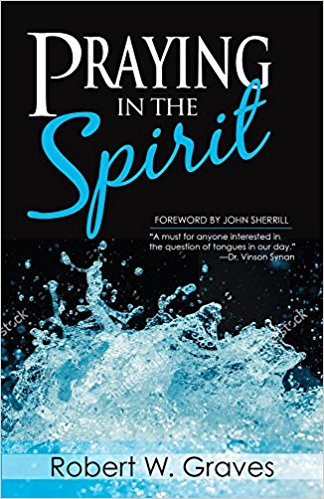
Robert W. Graves, Praying in the Spirit (Tulsa, OK, Empowered Life, 2017), 280 pages, ISBN 9781680310870. Praying in the Spirit was first released in 1987. Now, thirty years later, it has been re-released in an updated and expanded edition. Robert Graves is eminently qualified to write about this subject because of his longstanding connections to…
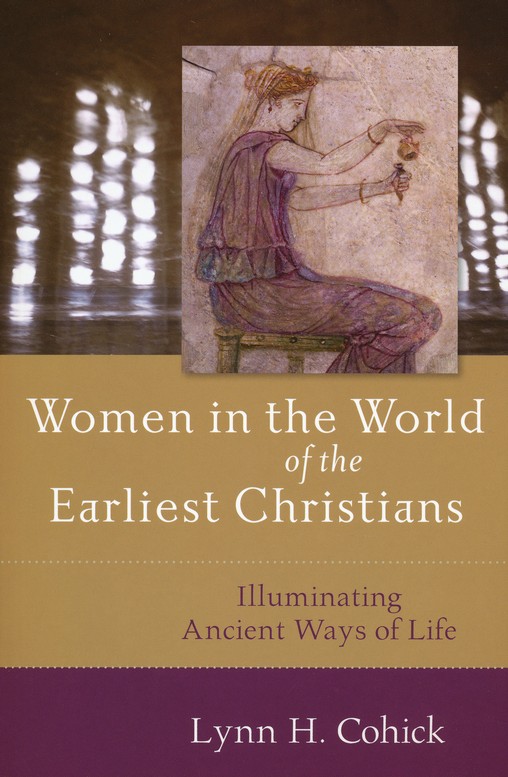
Lynn H. Cohick, Women in the World of the Earliest Christians: Illuminating Ancient Ways of Life (Grand Rapids, MI: Baker Academic, 2009), 350 pages, ISBN 9780801031724. Lynn H. Cohick, associate professor of New Testament at Wheaton College, illuminates the cultural, religious, and social roles of Greco-Roman women in the second temple period. She has examined…
To provide the best experiences, we use technologies like cookies to store and/or access device information. Consenting to these technologies will allow us to process data such as browsing behavior or unique IDs on this site. Not consenting or withdrawing consent, may adversely affect certain features and functions.
Functional
Always active
The technical storage or access is strictly necessary for the legitimate purpose of enabling the use of a specific service explicitly requested by the subscriber or user, or for the sole purpose of carrying out the transmission of a communication over an electronic communications network.
Preferences
The technical storage or access is necessary for the legitimate purpose of storing preferences that are not requested by the subscriber or user.
Statistics
The technical storage or access that is used exclusively for statistical purposes.The technical storage or access that is used exclusively for anonymous statistical purposes. Without a subpoena, voluntary compliance on the part of your Internet Service Provider, or additional records from a third party, information stored or retrieved for this purpose alone cannot usually be used to identify you.
Marketing
The technical storage or access is required to create user profiles to send advertising, or to track the user on a website or across several websites for similar marketing purposes.


 Pentecostalism is what some might call the forgotten legacy of John Wesley. In nearly 100 years the movement has become the fastest growing body of Christians on the face of the planet. Pentecostalism is growing at a rate of 13 million a year, 35,000 a day, and has nearly a half billion followers. It is the second largest Christian group after Roman Catholicism. There are Pentecostals in almost every denomination and every part of the world. The largest Protestant church in the world is a Pentecostal church in Korea, the Yoido Full Gospel Church, which has over 240,000 in weekly attendance. All of this would not have been possible without their theological and ministerial connection to John Wesley. This article will attempt to briefly discuss the historical development of Pentecostalism by making a special application of John Wesley’s contribution.