Strangers To Fire: When Tradition Trumps Scripture, reviewed by John Lathrop

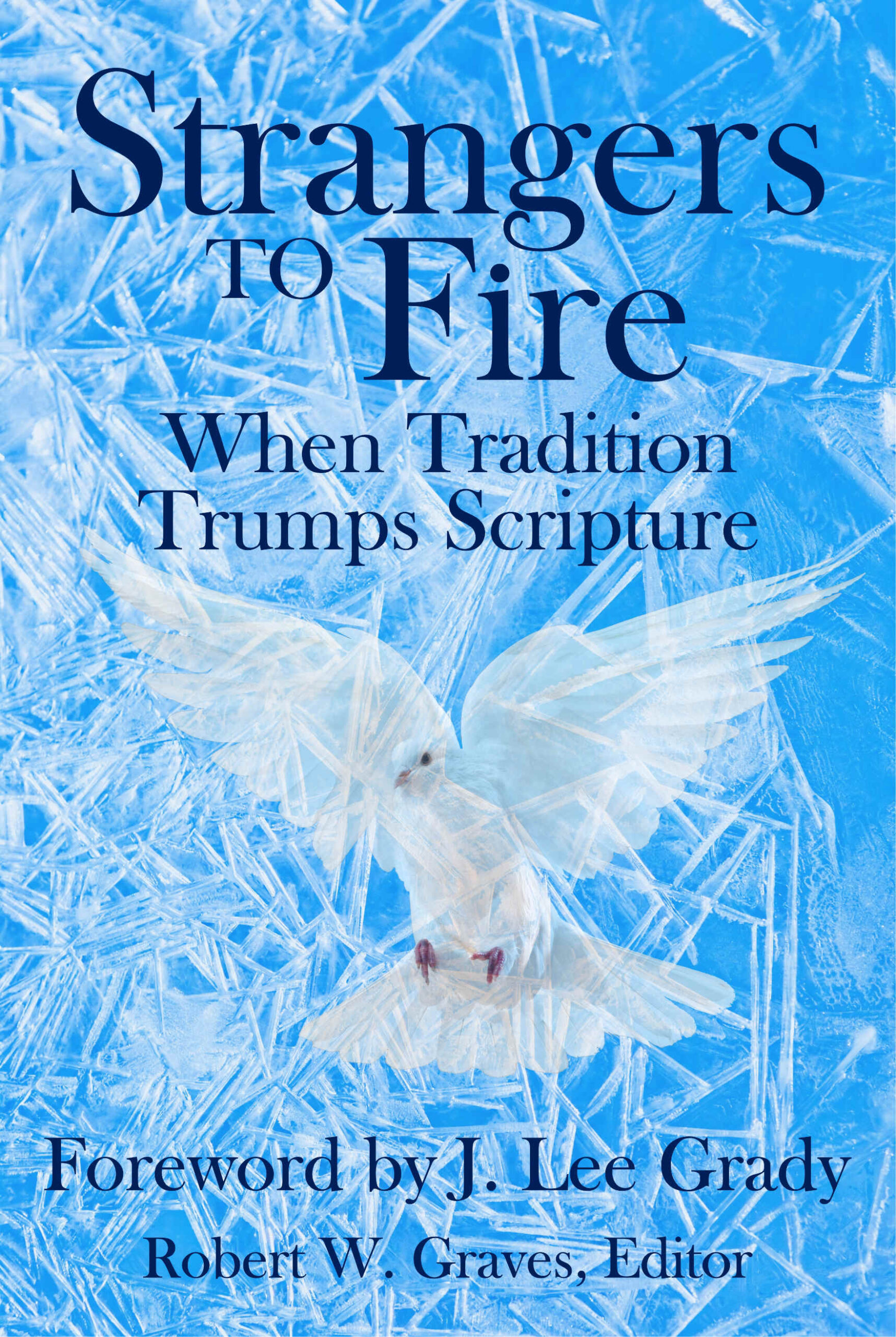
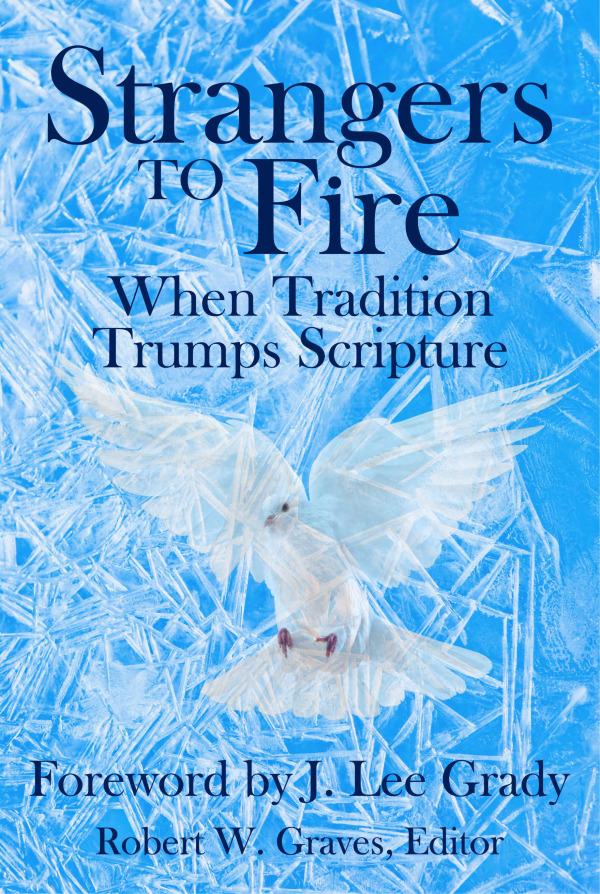 Robert W. Graves, ed., Strangers To Fire: When Tradition Trumps Scripture (Woodstock, GA: The Foundation for Pentecostal Scholarship, 2014), 604 pages, ISBN 9780996044509
If you are a person who stays current with regard to books related to the work of the Holy Spirit, the first part of the title of this book may sound familiar to you. If you find this to be true, it is probably because there was a book published in 2013 that had a somewhat similar title. I am, of course, referring to John MacArthur’s book, Strange Fire. MacArthur’s book was very provocative, indeed antagonistic, toward Pentecostal and Charismatic Christians. The book attracted a lot of attention and drew responses from key Christian leaders from both inside and outside of the Pentecostal/Charismatic movements. The preface of Strangers To Fire tells us that Strange Fire was the impetus that caused this current volume to be published (xxvii). Strangers To Fire was published to address and correct some of the issues that were raised in MacArthur’s book. In fact, some of the chapters were written in direct response to Strange Fire.
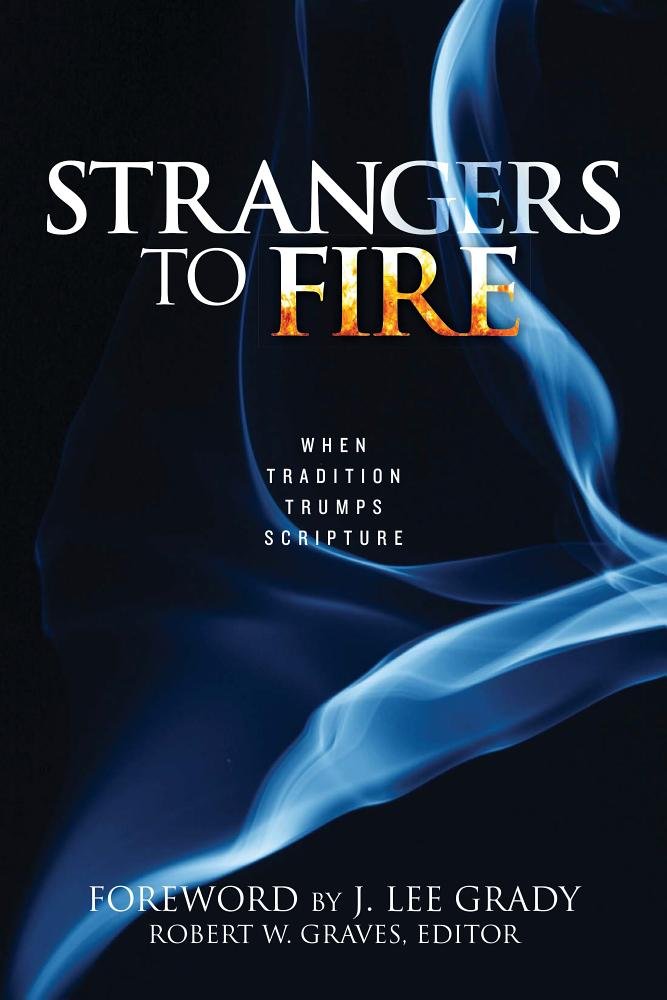
The introduction states that this volume consists of thirty-five chapters of which the first seven were written in direct response to MacArthur’s book (xxxi). These chapters make up Part One of the book. The majority of direct responses to Strange Fire were previously published online by Charisma News and PneumaReview.com. Part Two of the book, “Classic Replies to Cessationism and the Misuses of the Charismata,” consists of chapters drawn from other books and publications written between 1968 and 2013 (xxxi). While these additional chapters were not written in direct response to MacArthur’s book, they do touch on issues pertinent to his book, indeed to the cessationists’ view in general. The afterword of Strangers To Fire states the purpose of the book. “It is our fervent prayer that this anthology may aid in the release of cessationists so they might be able to pray the biblical prayer, ‘Lord, I believe; help thou mine unbelief’ (Mark 9:24 KJV)” (523).
The contributors to this work are: Stanley M. Burgess, Randy Clark, Ronald Cottle, William De Arteaga, Jack Deere, Paul Elbert, Andrew T. Floris, Robert W. Graves, Gary S. Greig, Wayne Grudem, James Hernando, Melvin L. Hodges, Eddie Hyatt, William K. Kay, Craig S. Keener, Robert Menzies, J. P. Moreland, Douglas A. Oss, Cecil M. Robeck Jr., Jon M. Ruthven, Mark Rutland, Omer Jaye Sharp, Gary Shogren, Sam Storms, Horace S. Ward, and David A. Womack. A quick look at their biographical information will demonstrate that they are highly educated people, many with earned doctoral degrees.
It should be noted up front that this is not just a “tongues” book. Pentecostals and Charismatics are frequently known for speaking in tongues but that is not the only, or even the main, emphasis of the book; the issue at hand is much larger. To be sure the subject of speaking in tongues is covered in the book but other works of the Spirit, such as prophecy, healing, and miracles, are also covered. The writers seek to defend, and I believe succeed in defending the contemporary manifestation of all of the gifts of the Holy Spirit.
One of the great strengths of this work is its variety. The subject of spiritual gifts is approached from biblical, theological, and historical points of view. These chapters that make up this volume demonstrate that spiritual gifts, in particular gifts such as tongues, healing, prophecy, and miracles, continued beyond the days of the apostles and that we should expect all of the gifts of the Holy Spirit to continue until the Lord’s return.
Some of the issues that are addressed at various points in this book include: the cessationists belief that some of the gifts of the Spirit will pass away “when that which is perfect is come” (1 Cor. 13:10 KJV), which they believe is a reference to the completed New Testament, that the supernatural works of the Holy Spirit were necessary at the beginning of the church to get it going but that they are not needed now, and that the acceptance of contemporary prophetic words makes allowance for an alternative source of authority that rivals Scripture. Cessationist interpretations are identified and addressed. Facts are marshaled to support the continuationist view of spiritual gifts. Scripture is employed in the articulation of the continuationist position as are appeals to the experiences of Christians at various times in church history. This book is thus not an emotional reaction to MacArthur’s book, rather it is a reasoned response to it and the cessationist position in general.
This is a rather long book; however, the font size and the formatting make it very readable. For the most part, I think the text is direct and will be accessible to most readers. The one exception is Paul Elbert’s chapter “Face to Face: Then or Now? An Exegesis of First Corinthians 13:8-13.” The subject of this chapter is very important to the discussion of spiritual gifts but the contents are very scholarly and contain a significant amount of Greek along with mention of some of the more technical aspects of Greek. This is valuable, but if like me, you are not proficient in New Testament Greek you may find this chapter somewhat weighty reading.
The last section of the book, the postscript, is very practical. It issues a call for action, a call to those who have not yet been filled with the Holy Spirit to enter into that experience. The writer offers specific information to help those who are interested in being filled with the Spirit. He gives Scripture references that show that being filled with the Spirit frequently takes place in the context of prayer. He also gives them the Lord’s assurance that He will give the Holy Spirit to those who ask Him (Luke 11:13). Additional counsel is given to help people understand how to cooperate with the Holy Spirit in order to receive the initial physical evidence of speaking in tongues. If one still encounters difficulty in receiving the infilling of the Spirit there may be a hindrance in the way. A few potential hindrances are listed and counsel is given about how to deal with them.
This book demonstrates that Pentecostal/Charismatic Christians do have a sound biblical theology to support the contemporary exercise of all of the spiritual gifts that are mentioned in the New Testament. I believe that this book would serve well as a textbook in a theology course that deals with Pneumatology. Robert Graves is to be commended for assembling this collection of articles in one volume. I believe that Pentecostals/Charismatics and cessationists could all benefit from reading this book. May God use it to accomplish its stated purpose to “… aid in the release of cessationists so they might be able to pray the biblical prayer, “Lord, I believe; help thou mine unbelief” (Mark 9:24, KJV) (523) and to facilitate an even greater outpouring of the Holy Spirit among those who have already entered into the experience of the charismatic gifts of the Spirit.
Reviewed by John P. Lathrop
Further Reading:
Interview with the editor: PneumaReview.com speaks with The Foundation for Pentecostal Scholarship President, Robert Graves, about their first published book, Strangers to Fire: When Tradition Trumps Scripture.
Read the review of Strangers to Fire from Tony Richie and further reflections by Jon Ruthven.
“Are Pentecostals offering Strange Fire?” The panel discussion at PneumaReview.com about John MacArthur’s Strange Fire.