
Anglican Pentecostal Perspective on Charismatic Leaders Fellowship 2016
The yearly Charismatic Leaders Fellowship met at Oral Roberts University from February 22nd to the 25th. This group has functioned as a discerning and analytical element of the Charismatic Renewal. In the past, for instance, the group dealt with such issues as the mass deliverance meetings that were fashionable in the 1970s, and the discipleship controversy.

This year the accent was on Church unity and the growing ecumenical dialogue across churches and denominations. J. C. Church, pastor of Victory Church in Columbia SC, began the conference with a presentation about America’s cultural decline and the Church’s responsibility to form a united front to reverse this trend before God’s judgement falls on the nation.
Next, the African American evangelist and pastor, Brondon Mathis, brought a hopeful message about revival through round the clock prayer meetings. He described how his church, inspired by the International House of Prayer pattern, has brought revival and a radical decline of crime, to Columbus, Ohio.
Then Matteo Calisi, a prominent Catholic Charismatic layman from Italy and a person who regularly graces CLF meetings, reported on the ongoing breakthroughs in Pentecostal-Roman Catholic dialogue and reconciliation. Calisi is especially enthusiastic about Pope Francis’ ecumenism, for instance, his willingness to ask forgiveness for past Catholic persecution of Pentecostals and other Protestants. Pope Francis recently asked forgiveness from the Calvinists in France, the Hussites of Austria and the Check Republic, and Italian Pentecostals for their suffering and persecution from Catholics. Some readers would be aware of Calvinist and Hussite persecution, but few would know that the Italian Pentecostals suffered grievously under the Fascist dictatorship of Benito Mussolini. Sadly, the Catholic Church refused to speak a single word of protest – unlike its continuous attempts to shelter the Jews.

In fact, as the Rev. Calisi reports, Pentecostal-Roman Catholic relations are at an all-time high. The Pope has directed that Catholic evangelization be suspended towards Protestant Believers, but rather focus on the unchurched. As Calisi added more details of the ongoing Catholic-Pentecostal reconciliation, I recalled how different all this is from when I was a boy in Catholic school – we thought all Protestants were doomed to hell – and they returned the favor!
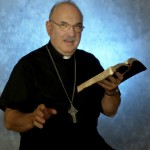
After this upbeat presentation we had a jarring counter-point given to us by Fr. Timothy Cremeens, an American Orthodox priest and dean at the Cathedral of the Orthodox Church in America in Wilkes-Barre, Pennsylvania. Fr. Cremeens is a person well connected with the Greek, Ukrainian and Russian Orthodox churches in America and overseas. He bluntly stated that Orthodox-Roman Catholic or Orthodox–Protestant dialogue of any sort will go nowhere. The recent meeting of the Russian Orthodox primate with Pope Francs in Cuba was all political show and no substance.
The Orthodox clergy and laypersons, here and abroad, are dismayed, horrified and aghast at the moral and doctrinal apostasy of the churches in the West. Others of us at the CLF conference agreed with that assessment of the Western churches. For the Orthodox churchmen, “dialogue” and “reconciliation” means the Western churches must repent, and return to the Eastern Orthodox group of churches – you may chose Greek or American or Russian Orthodox, but make sure to bring some incense.
Fr. Timothy is charismatic himself. He recognizes the unfortunate failure of the Orthodox churches to dialogue with and engage the Charismatic Revival. In his view, this lack of communication is a failure by both sides. The Western charismatics are too often enamored with their own interpretations and belief that they have a sure and clear communications channel with the Holy Spirit. That arrogance has led, in Fr. Cremeens’ view, to many errors in theology and practice. The Eastern Churches, on the other hand, have had continuous experience with the gifts of the Spirit operating in both laypersons and clergy (these churches never fell into the heresy of cessationism). Eastern Orthodoxy values close spiritual direction for Spirit- gifted persons in order to avoid doctrinal and prophetic errors. But Fr. Cremeens is also disappointed and distressed that the Eastern Churches have not been diligent in flaming the sparks of revival into a broad based movement, like the Charismatic Renewal of the West, but molded and disciplined by its own traditions of discernment and doctrinal orthodoxy.
I was included in the lineup of speakers and gave a presentation which dove-tailed with the troubling assessment of Fr. Cremeens. My point was that the Western churches had fallen into doctrinal disarray because they had defined heresy as doctrinal error solely, and not understood that the Bible used the term “heresy” as pertaining to a religious group or sect. Further, that the biblical heresies of the Pharisees, Sadducees, and Gnostics had continuously reoccurred in Church history and stalled or check-mated revival – a pattern that has gone largely unrecognized. My description of this process dated back to my work Quenching the Spirit (1992) and Forgotten Power (2003). I promised the CLF participants that I would have a new work focusing on these “discernment heresies” by next year (please pray that it be so).
For many of us at the CLF the most memorable time was our participation in the ORU mid-week chapel service led by The Rev. Dr. William Wilson, president of ORU. In most people’s mind a chapel is supposed to be a small church where a hundred person wedding party can barely fit. Not the ORU chapel. It is a beautiful modern building that can seat 4,000. There must have been upwards of 3,700 at the service we attended – the downstairs was packed. This was not only a glorious worship event led by ORU students, but Dr. Wilson’s sermon, and invitation for inner healing was one of the best I have heard in years. It was on a rarely cited “hero of faith” (Hebrews 11) Jephthah, one of the Judges of Israel, whose story is found in Judges 11 and 12. The point of the sermon was that neither poor lineage nor rejection by others should limit a Christian’s faith in God and achievements in life.

Later, Dr. Wilson came to address our evening session. He expressed his esteem and admiration for the now graying leaders of the Charismatic Renewal. He then looked straight at me and said, “You have no idea how much good Quenching the Spirit, has done at ORU. It is one of my favorite books, and has been used here in many courses.” He had no idea how much he blessed me and improved my morale at that moment. Carolyn and I had come out of a year’s struggle and frustration in getting my latest book, Agnes Sanford and her Companions, out and were feeling tired and forgotten by the churches. He accepted a copy of my new book (see picture) and promised me to read it. (Please pray that he find the time soon, and that it be recommended, spread and utilized at ORU as Quenching the Spirit had been.)

In the question and answer period Dr. Wilson was asked how is it that after fifty years ORU has maintained it Spirit-filled faith and not drifted into apostasy and liberal forms of theology as other Christian universities have done. He answered that every faculty member is required to either have a prayer language, or actively seek one, and that this keeps the institution grounded in the Spirit of God. Wow! In my research I had noted how the best intentions and most rigorous doctrinal statement at the time of foundation of a seminary or Christian university is no protection from drift into theological liberalism and apostasy. But here was the secret!
Without much discussion, the CLF group decided we would return to ORU for next year’s meeting. If you are a church leader (you don’t need to be gray-haired like us) please inquire as to how to join us.
P.S. Digression:
Carolyn and I had an extra day at Tulsa before another church engagement. By happenstance we spent some time at the Philbrook Museum of Art. It is a beautiful building and a glorious museum filled with great works of art, including many specifically Christian works – and little of the nonsense that is called modern art. Go see it and refresh your spirit if you are passing by Tulsa.