
The Full Picture of Passover


Learn a First-Century Jewish perspective of Passover from Messianic teacher Kevin Williams.
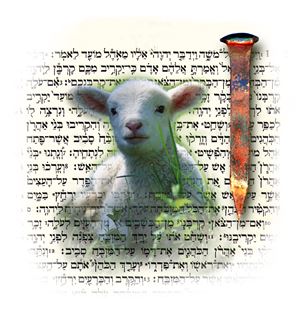
Artwork by Steve Grier © 1997 RBC Ministries. Used by permission.
Within the overall context of Passover, the details for the Christian to experience are few. We know little of a typical four hour celebration meal. Little of the preparatory cleaning that goes into making a house “kosher” for Passover. We know virtually nothing about the elements on the Seder plate or the ceremonial “four cups,” though the traditions go back to the second Temple period and were observed by Jesus and his disciples. We might know that you eat “matzah ball soup” during Passover because leavened products are forbidden by the Law of Moses, but beyond that, our knowledge is slim at best.
There are 28 references to Passover in the New Testament, and scant little information on the Last Supper except as recorded in just a few verses. There is the complete history of the first Passover recorded for us in the book of Exodus, and over 100 references in the Old Testament to the God who “brought you out of Egypt,” all of which allude to the miracles of the Almighty and His unique and awesome lessons revealed in the Passover. But what does the average non-Jew really know about such things?
Colossians 2:17 refers to the sabbaths, festivals, and new moon observances as “things which are a mere shadow of what is to come; but the substance belongs to Christ.” This has often been interpreted as a discouragement from investigating the traditions or observances of these God ordained times and seasons. Personally, I feel this style of interpretation has unfairly robbed believers of much of their biblical heritage and separated them from a legacy that is theirs to claim.1 In Lenski’s The Interpretation of St. Paul’s Epistles to the Colossians, to the Thessalonians, to Timothy, to Titus and to Philemon, he draws a poignant conclusion to Colossians 2:17.
We should not think slightingly of the shadow. It was no less than the Divine promise of all the heavenly realities about to arrive. The shadow proved the actuality and even the nearness of the realities, for only an actual body and one that is not far away casts a shadow.2
If we can accept, for the moment, the concept that the shadow points out something near and perceivable, then the “sabbaths, festivals and new moon observances” Paul references should be able to point out a great deal about the character and will of God. These Jewish observances should be able to give us a fuller vision of who God is.
 We have a fair grasp of the Passover lamb, and that Jesus is the typification of that lamb,3 but what about Passover? For a decade I have had the immense privilege of leading entire congregations through the Seder (meal), and watched as ancient traditions once considered dead and legalistic become living reality in the lives of believers. I have also known one family to become so enthused after experiencing a Passover Seder, as to completely change their lives, enroll in seminary, move to Israel, and go into Jewish ministries. And I have watched still others being transformed from men and women who were hesitant toward the Jewish people, to embracing them with a love exemplified by Jesus himself.
The enormity of the task, explaining Passover, is beyond the scope of this article. The subject consumes shelves of books. For our benefit, we shall focus on two things: the paschal lamb, and the unleavened bread—and as our lesson unfolds, we’ll find how the two became one.
 Imagine if you can, that you are there. Mentally transport yourself back two thousand years to Jerusalem, at the time of Passover. Being one of the three pilgrim festivals when all men were to make sacrifices at the Temple, the city is bustling. The streets and markets are alive with sound, mercantile exchange, and anticipation. God’s Passover is at hand!
On Nisan 10 in the Hebraic calendar, the sacrificial lambs were lead into Jerusalem through the Sheep’s Gate.4 These were the animals raised specifically5 to be purchased for the required Passover sacrifices.
Speak to all the congregation of Israel, saying, “On the tenth of this month they are each one to take a lamb for themselves, according to their fathers” households, a lamb for each household … Your lamb shall be an unblemished male a year old; you may take it from the sheep or from the goats. You shall keep it until the fourteenth day of the same month, then the whole assembly of the congregation of Israel is to kill it at twilight.
(Exodus 12:3-6).
If you were the patriarch of your home, the father or grandfather, you were required to go to the Temple and purchase one of these young animals for your household.6 You would walk to the Temple Mount and find an available Levite to assist you. He would walk the flocks looking for just the right sheep or goat. When he would find a yearling he felt was suitable for you, he would announce, “Behold, the lamb.”7
 After making your purchase, you would pick up this frail creature and carry it home. For the next three days, it would live with you in your house. This was so you could inspect it thoroughly for blemishes, diseases, bruises, and the like. If any of these were found, the lamb was disallowed for sacrifice.8 Generally, however, they had been carefully scrutinized by the Temple priests, and suitability was not a problem.
 The animal became a resident and a pet. Imagine seeing your children playing with the lamb as it jumps and happily wags it’s stump of a tail. The youngsters squeal with delight as they laugh and play. You feed it, care for it, and within three days he comes to accept you as family. He feels safe and settles down at night, sleeping contentedly.
The 14th of Nisan comes and you have a sad obligation. It is ordained by God that this lamb, now the beloved pet—healthy, spotless, and innocent—must die. With a heavy heart, you pick up the lamb again. He doesn’t kick and squirm like he did the first time you met.9 You were a stranger then, now he trusts you. You exit the house as the children, who only the night before were playing and frolicking with the woolly one, now wail behind you, tears streaming down their faces. Your household popularity has sunk to an all time low. You mutter to yourself hopefully, “someday they’ll understand,” but you’re not even sure you understand. You do it because God requires it.
 Once again, you make the trek to the Temple, climbing its ramps and entering its grand bronze gates. Musicians play and the priestly chorus sings Psalms 118 as you approach the brazen altar. “Bind the festival sacrifice with cords to the horns of the altar. You are my God, and I give thanks to You; You are my God, I extol You. Give thanks to the LORD, for He is good; For His lovingkindness is everlasting.”10 You bring the lamb down from your shoulders, it’s brown eyes looking at you innocently. Even now, you see it as the carefree giver of love and devotion, the friend and playmate of your children. Even now, at the threshold of its demise, he trusts you completely. Your pulse thumps along the veins of your temples with guilt and your throat squeezes tightly as you try to hold back a flood of tears. “I’m sorry,” is all you can choke out as the priest’s knife slices his throat and blood spills out into the bowl below. You watch as that innocent lamb, so full of life a moment ago, slips away into darkness. The bowl of blood is swiftly taken away and the limp body removed. You follow, watching as it’s body is quickly and prepared for the altar, stretched out on a scaffold not unlike those the Romans crucify men on outside the city walls.11 Great care is taken not to break any bones.12
A priest returns to you in a while, with the roasted meat. Still distraught emotionally, you leave the Temple, casting a glance toward the Kidron Valley. There the blood of the millions of lambs have formed a stream. Somewhere in that sanguine river is the life of your lamb, shed for you. This visage emblazons itself on your brain as you continue home. If you were unpopular before, stealing the lamb away from home, it was now going to get worse. The family had to eat their newfound, beloved pet. A thought obsesses you on your way home, knowing that you’re going to have to face the horrified faces of your children, “The cost, O God, is too great.”
 Indeed, the cost is great. This story of one man and his family is the shadow in which we walk. It is the essence of Passover. The lamb was required so that death would pass-over.
“And when your children say to you, ‘What does this rite mean to you?’ you shall say, ‘It is a Passover sacrifice to the LORD who passed over the houses of the sons of Israel in Egypt when He smote the Egyptians, but spared our homes.’ And the people bowed low and worshiped.” (Exodus 12:26-27)
But Paul, as we have already read, says this shadow has a reality, a substance which is the Messiah.
In fact, it is stated that a specific portion of this festival bread, the afikomen, is the representation of the Passover lamb. Passover: It’s Observance, Laws, and significance declares, “In our days, the afikomen is symbolic of the portion of Pesach meat consumed by each Jew,”14 and elsewhere, “Some rabbis15 are of the opinion that the afikomen is eaten in commemoration of the Pesach offering.”16
Is it, therefore, merely coincidence that Jesus identified himself as the matzah during His last Passover on earth?
“And when He had taken some bread and given thanks, He broke it and gave it to them, saying, ‘This is My body which is given for you; do this in remembrance of Me’” (Luke 22:19).
We are reminded of Jesus’ words, “I am the bread of life; he that comes to Me shall never hunger…”17 Leaven represents sin in Scripture, and by identifying himself as the unleavened bread, Jesus reminds us of his sinless nature. Like the lamb in our story, he was innocent—no blemish in either could be found.
But many other traditions have developed around the matzah bread as well. The rabbis have set down very specific regulations concerning the appearance of the matzah. If it is to be found suitable for use in the first place, it must be striped, as was Jesus, for the prophet Isaiah says, “And by His stripes we are healed.”18
Likewise, the baking process intentionally makes the matzah appear bruised, as was Jesus. “But he was wounded for our transgressions, he was bruised for our iniquities…”19
Matzah must also be pierced, as was Jesus, for the prophet Zechariah says, “They shall look upon Me whom they have pierced.”20
 This is certainly enough evidence to connect the Passover lamb with the Messiah, and the Messiah with Passover. There is also a further tradition that points to the connection between the Messiah and the matzah. At every Passover table, the matzah bread is presented in something called a matzah tosh. This is a unique “bag” which even the rabbis cannot agree upon its origin or significance. In his book Christ in the Passover,21 Moishe Rosen believes that this tradition, along with the following tradition have their presence due to the first century church’s influence, Jewish believers who were still active in all aspects of Israel’s religious life.
The matzah tosh is a square or round fabric bag, displayed very prominently on any Passover table. It is a single bag, but is divided into three separate compartments. Imagine three file folders together and you’ll have a clearer picture. A whole piece of matzah bread is place inside each layer or pocket, comprising three pieces in all. At the appropriate time, in a service still a mystery to the sages and rabbis of Judaism, the middle matzah is removed. It is broken, wrapped in linen, symbolically hidden or buried, ransomed, and revealed again. This center piece of unleavened bread which is broken is the second mysterious tradition. It is called, not by a Hebrew name but a Greek name, the afikomen, which literally means, “he came.”
 As the matzah tosh infers, there is something unique about the middle matzah. Could it be the middle personification of the unified Godhead: the Father, Son, and Holy Spirit? Christ, who is represented in every way in the matzah bread, was also broken, buried, ransomed, and then revealed again, and as the name afikomen testifies, He came!
Jesus, speaking as a prophet, took the bread, broke it, and told his disciples that it represented his body, broken for them. Could they imagine that 40 years later, with the destruction of the Temple, that this ritual of the matzah tosh and the afikomen would become the standard observance in Jewish homes for centuries to come? Did he know that his own brethren of the flesh, and the multitude generations to follow would substitute the lamb for the bread—the two becoming one?
 The pictures for us are many and they are only a few out of the entire observance that is Passover. They all speak of Messiah, of his character and of his sacrifice. They are ever present in the Christian observance of communion, though often veiled by two thousand years of separation from Jerusalem and our Jewish, biblical heritage. They are shadows, to be sure, whose reality is Christ. The cost was great, but the revelation of Messiah resurrected, eternally rewarding, is greater still.
Of course, the resurrection took place on the Feast of Firstfruits to fulfill Leviticus 23:11, but … that is another story!
PR
Notes
All Scripture references are from the New American Standard Bible unless noted otherwise.
1 Romans 11:17-24 refers to Gentile (Hebrew, goyim, literally, nations) believers as being grafted into the root, the root of Israel—or if you like—Biblical Judaism. The calling or goal of Biblical Judaism has always been to prepare and welcome the coming of the Messiah and thereby the restoration of the created to the Creator. Certainly Gentile Christians are not natural Israel, they are not the natural branches, but they are grafted in, and therefore, free and able to draw on all the nourishment the rich root can provide.
2 p. 126.
3 Isaiah 53:7; John 1:36; Acts 8:32; 1 Peter 1:19; Revelation 5:6, 8, 12 ff.; 6:1.
4 Nehemiah 3:1, 31; 12:39.
5 In Alfred Edersheim’s The Temple (Grand Rapids: Eerdmans Publishing), he notes that just outside Bethlehem was a priestly community called Migdal Eder, a community of Levitical shepherds in charge of raising these lambs. He poses the concept that these may have been the shepherds to whom the angelic host appeared proclaiming the birth of The Lamb, Jesus the Messiah.
6 You could attempt bringing in a sheep or a goat that you had raised yourself, but this was not commonly done nor approved of.
7 Dr. John Fisher, Messianic Services for the Festivals and Holy Days, (Palm Harbor, FL: Menorah Ministries, 1992), p. 211. See also John 1:21, 36.
8 As was Jesus inspected (Matthew 27:11-27)
9 Isaiah 53:7
10 Psalm 118:27-29 here, though the entire Psalm would have been sung. Likewise Psalms 113-117.
11 John 19:16-18
12 Exodus 12:46, John 19:33
13 “Common Era,” what is commonly referred to as A.D. (abbreviated from the Latin, Anno Domini, translated, in the year of our Lord).
14 Passover: Its Observance, Laws and Significance (Brooklyn, NY: Mesorah Publications, Ltd., 1994), p. 77, parenthesis mine.
15 Moshe ben Nachman (1194-1270) chief among them.
16 Passover: Its Observance, op. cit., p. 77.
17 John 6:35
18 Isaiah 53:5
19 Isaiah 53:5
20 Zechariah 12:10
21 Moishe Rosen, Christ in the Passover (San Francisco, CA: Jews for Jesus).