
Power Ministry In The Epistles

Walter R. Bodine, “Power Ministry In The Epistles: A Reply to the Evangelical Cessationist Position.”*
In his review of four books favorable to the so-called “signs and wonders” movement Tim Stafford voices an objection that is frequently raised. It is the assertion that “… the New Testament epistles show such slight interest in miracles … .”1 The implication often drawn, though not explicitly by Stafford, is that this indicates the temporary nature of the “sign gifts” (i.e., healing, miracles, prophecy, tongues, interpretation of tongues), a view usually known as the “cessationist position.”2 Otherwise, as this line of reasoning goes, we would expect more attention to them in the epistles.
I wish to argue here that this is not the case at all. First of all, I doubt that it is fair to speak of a “slight interest” in miracles in the epistles. At least five epistles devote explicit attention to the gifts of the Spirit (Romans 12:3-8; 1 Corinthians 12-14; Ephesians 4:1-16; 1 Thessalonians 5:19-22; 1 Peter 4:10-11). Wherever the gifts are detailed, those that are regarded from the cessationist viewpoint as temporary are intertwined with those that are regarded as permanent. No distinction is drawn or implied in the New Testament,3 and the space devoted to the subject is hardly insignificant.
I recognize that the emphasis of the epistles is elsewhere. Their primary concern is with building faith and character. They were written to believers by people who had ministered to them and who deeply cared to see them spiritually established so as to be able to live productively within the Christian community and in society. In other words, the epistles had a primary focus; and it was other than that of supernatural gifting. It was on character development and godly living. This does not call into question the continuance of any of the gifts any more than it questions the ongoing reality of other functions of believers which are likewise not emphasized in the epistles. Such would include, for example, evangelism, relief to the poor, social action against oppression, etc.
The truth of the matter is that many activities were an integral part of the life of the Early Church and were assumed, although not emphasized, by the writers of the epistles. Here are some examples of this point with specific reference to the miraculous working of the Holy Spirit in believers’ daily lives.
Lengthy instructions were given to believers as to how they might properly participate in the communal ministry of the Spirit (1 Corinthians 12-14). The release and miracles of the Spirit were an integral part of the life of a church to which an entire epistle was written to stabilize their faith in Christ, with only one passing reference being made to these miracles (Galatians 3:5). Indeed the very proclamation of the gospel was a supernatural work of the Spirit through the messengers, so that those who heard were in fact hearing the Lord Himself speak (Ephesians 2:17, 4:20-21; 1 Peter 4:11). The attesting signs which accompanied the message delivered were to the recipients both a confirmation (Hebrews 2:3-4) and a foretaste of the coming age (Hebrews 6:5).
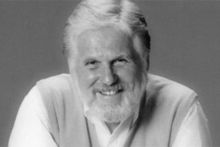
It would seem most fitting to read the Epistles in light of this a foreview in the Gospels and Acts, and to allow the Epistles to carry their own emphasis. They have a different purpose. I can illustrate by an experience of mine which is similar. John Wimber* is an acknowledged advocate of the present operation of all of the gifts of the Spirit. I have heard him expound his understanding at length in conferences. His books, Power Evangelism and Power Healing, offer a straightforward statement.10 Yet, when I visited two meetings of his church in November of 1985 and heard him preach on both occasions, he did not mention the miraculous in either message. He pastored the people in the morning from 1 Peter as to how to respond to suffering and exhorted them in the evening from Psalm 5 to godly living. Prayer for the sick and looking to God for the gifting of His Spirit were an accepted part of the life of his church, and Wimber’s purposes in those services were elsewhere. So it is, I believe, with the epistles.
With reference to the writers whose works are reviewed by Stafford and to the circles in which they move, I believe that the label “signs and wonders” movement is no longer an adequate description, if it ever was. This is true, at least, of the churches with which I am most familiar, especially those of the Vineyard, in which other emphases have more recently emerged. Healing and other gifts of the Spirit were indeed a prominent emphasis (along with worship), perhaps the most prominent, during the last decade [the 1980s]. It is still a bedrock conviction that the full range of the Spirit’s activity described in the New Testament is intended to be operational throughout the Church age (though at His discretion and under His control) and is vital to the ministry God wants to grant and we all need. I believe that the affirmation of the gifts of the Spirit during the last decade was a word from God, specifically to His evangelical children to help them catch up in this area with their Pentecostal, charismatic Catholic, and charismatic mainline Protestant brothers and sisters who had already led the way.11
I want to acknowledge that there have been excesses and mistakes in these movements both in teaching and in practice.12 This is characteristic of renewal movements throughout Church history.13 It has never, however, justified the wholesale rejection of the miraculous gifts of the Spirit; and it does not today.
I also recognize that a Christian who opens up to the experiential presence and working of the Holy Spirit does not thereby enter into a life of consistent exuberance. The contrary often seems to be the case. The filling of the Spirit can be quite unsettling. Yet the disturbance that comes is a good one which makes for accelerated sanctification. It is worth far more than the price it exacts to grant the Holy Spirit access to one’s entire being.
Lastly, I want to affirm a higher priority than the recovery of the gifts of the Spirit. I refer to the oneness of the entire body of Christ. Jesus prayed twice for this in His longest recorded prayer (John 17:21, 23), and the answer to that prayer, though it is nowhere near visible on the horizon,27 is long overdue. The Greek word translated “unity” is used only twice in the New Testament,28 and these two occurrences, when read back-to-back, underscore that the responsibility to maintain a manifested oneness among all true believers in Jesus Christ has never been superseded by any of the lesser issues the Church has found itself addressing.
These passages call on Christians “to preserve the unity of the Spirit in the bond of peace … until we all attain to the unity of the faith and of the knowledge of the Son of God …” (Ephesians 4:3, 13, NASB). The entire paragraph in which these verses are embedded (Ephesians 4:1-16) makes it eminently clear that the relationship all believers have to one another because of their common relationship to Christ is to be nurtured and demonstrated during the very time while they are dealing with differences. The charismatic question is no exception to this. While I believe that a great deal is at stake in this question, I believe that even more is at stake in the oneness of the Lord’s Church. If this is so, at the very least, it would make it incumbent on charismatics to no longer aggressively push their position on others and on non-charismatics to no longer ostracize charismatics. Such behavior on both sides is clearly contrary to a text like Romans 14:3, as well as to all of Romans 14:1-15:7. It is time for both of these groups to get down to the hard work of “putting up with one another in love” (Ephesians 4:2, literal translation).29 I have no doubt that in such a context troublesome theological and practical issues will be much more easily resolved. More importantly, even during that process, the Church will have the benefit of its richly varied membership; and those looking on from outside will finally have an opportunity to catch a glimpse of what the Church was intended to be, something Jesus specifically had in view in His prayer in John 17:21 and 23.
PR
Notes
* I wish to thank John Wimber, who powerfully introduced me to the present work of the Holy Spirit; several friends who gather periodically in my home to talk theology and who critiqued an earlier version of this paper (William Abraham, Rich Milne, David Naugle, and Paul Strube); and Jmel Wilson, who followed my frequent revisions with faithful typing help.
1 Tim Stafford, “Fruit of the Vineyard,” Christianity Today (November 17, 1989), p. 35.
2 The issues raised here are of concern to evangelical Christians, so I address my remarks to that audience.
3 A more consistent position, if one should wish to exclude certain gifts from the present scene, would be to consign all of them to the first century, though there is no warrant in the New Testament for this either. An example of this approach may be found in Gene A. Getz, Sharpening the Focus of the Church (Wheaton: Victor, 1984), pp. 153-65.
4 In 1 Cor. 14:39 and 1 Thess. 5:19-20 Paul specifically enjoins his readers not to suppress the exercise of tongues and prophecy. In contrast to the subtle nuances which must be coaxed out of the biblical text to marshal a case for cessationism, here are straightforward commands on the other side in the case of two of the disputed gifts. This is significant within evangelicalism, where the Bible is championed as the sole basis upon which theology is to be established. In light of texts such as these, it seems to me that the cessationist position brings upon itself Barr’s critique of Protestants who celebrate the Bible’s authority but refuse to allow the biblical text to speak in contradiction of a prevailing hermeneutic (James Barr, Holy Scripture: Canon, Authority, Criticism [Philadelphia: Westminster, 1983], pp. 31-32).
5 I hasten to say that such passages as Rom. 10:13-15; 2 Cor. 5:18-20; 2 Tim. 4:1-5; and 1 Pet. 2:9-10, 3:15 clearly indicate good news that is to be shared. It could be said that all of these references, except the ones in 1 Peter, refer to leaders and not ordinary Christians. I do not believe they should be read that way, any more than I believe that certain gifts of the Spirit were the sole province of the Apostles. Miraculous gifts did authenticate the Apostles (2 Cor. 12:12), but they also accompanied other believers (Acts 6:8, 8:6, 9:17-18 [22:13], 14:3; 1 Cor. 1:7; more on this below). My point here is simply that there is no direct command to witness in the epistles, the purpose clause in 1 Pet. 2:9 being the closest to such, whereas there are several such commands with reference to spiritual gifts.
Another common misunderstanding among evangelicals regarding the gifts of the Spirit is the notion that, when they are present, they always operate to the fullest possible degree, e.g., that someone endowed with the gift of healing could heal anyone at any time. If this were the nature of the gifts, then I would readily agree that they have passed away, for I neither know nor have heard or read of anyone with such ability. I do not believe, however, that this is the way Spirit gifting operates today, or has ever operated in the past (see Rom. 12:6; 2 Tim. 1:6; and see Wayne Grudem’s chapter in this book, objection no. 26 [Editor’s Note: published in Pneuma Review Fall 2000). Evangelical professors of homiletics acknowledge this implicitly every time they critique a sermon delivered by a gifted preacher who is in training under them and point out mistakes in the sermon. Again, many courses are in place in evangelical seminaries to teach gifted pastors how to shepherd and help them mature in their gifting. If other gifts operate at less than a perfect level and must be cultivated, then the same should also be granted for healing, prophecy, etc.
6 I do not wish to claim too much on this point. It should not be said that the presence of the miraculous will assure that others will come to faith, for this is not necessarily the case (e.g., Jn. 11:45-53; 12:9-11, 17-19, 35-40). Also, there is a penchant for signs which does not go to the level of genuine faith (Jn. 4:48, 1 Cor. 1:22). Nevertheless, the proclamation of the gospel, ever central to the church’s mission, should, from the perspective of the New Testament, be accompanied by the manifestation of the gracious power of God (Matt. 10:7-8, Acts 4:29-30, 1 Cor. 2:1-5). Even as the gifts of the Spirit can be subverted from their ordained purpose, so can the Bible. Jesus made this very point when He spoke to religious leaders about how they diligently scrutinized the Bible, as though it were the source of their lives, instead of using it as an avenue into an experiential relationship with Himself, the one to whom the Bible bore witness (Jn. 5:39-40). Both gifts and Bible were given, not as ends in themselves, but as aids to bring us to Him who is our true and only end. Just as the Church would be impoverished without the Bible, so is the evangelical wing of the Church that has obstructed the work of the Holy Spirit impoverished thereby.
7 As Walter Grundmann’s remarks suggest (“dunamis,” TDNT, vol. 2, p. 311): “Paul fits the same pattern [of Jesus and the disciples]. His work is done “in the power of signs and wonders, in the power of the Spirit” (Rom. 15:19). In the preceding verse this power is attributed directly to Christ… . This power is expressed on the one side in miracles: “in the power of signs and wonders.” There are many references to these in the epistles: “the signs of an apostle … signs, wonders, and miracles,” 2 Cor. 12:12; God “working miracles among you,” Gal. 3:5; his activity in Thessalonica did not take place “in word only, but also in power and in the Holy Spirit,’ I Thes. 1:5.”
8 In discussing the meaning of the “greater” works in this verse, Carson concludes that the expression has to do with the fuller witness to who Jesus is through the Church after the death, resurrection, and exaltation of the Lord (D. A. Carson, “The Purpose of Signs and Wonders in the New Testament,” in Power Religion: The Selling Out of the Evangelical Church [Chicago: Moody, 1992], pp. 108-10). I like his explanation. Perhaps Paul had a similar thought in mind when he wrote of the surpassing glory of the church’s ministry in 2 Cor. 3. The only problem I see with Carson’s discussion of Jn. 14:12 is that, in the process of wrestling with the meaning of the word “greater,” he omits consideration of the first part of the verse, which plainly states that believers are to carry on the ministry that Jesus began, doing the very works that He had done (see appendix 2 in this book). I must add that I have never felt that “signs and wonders” was an apt label for the movement under discussion.
9 It should be remembered that many of the epistles were being written while the events recorded in Acts were going on, i.e., that which was the ongoing experience of the churches did not call for special notice in the epistles. Karl Gatzweiler noted this fact (“Der Paulinische Wunderbegriff,” in A. Suhl, ed., Der Wunderbegriff im Neuen Testament [Darmstadt: Wissenschaftliche Buchgesellschaft, 1980], pp. 403-405, n. 52): “As examples … we cite I Thess. 1, 5; 2, 13; I Cor. 2, 4-5; 2 Cor. 6, 7; 13, 3; Col. 1, 29; 2 Tim. 1, 8. In all these places Paul speaks of the proclamation of the gospel which was accompanied by divine power, by the power of the Spirit. The gospel is God’s power which is displayed among men. For the reader, who already knows that the apostle worked miracles alongside the proclamation of the gospel (cf. 2 Cor. 12, 12; Rom. 15, 18-19), it suggests miraculous events also be understood as self-evident among the notions of “might” and “power” which accompany the proclamation of the gospel.”
10 John Wimber with Kevin Springer, Power Evangelism (San Francisco: Harper & Row, 1986); Power Healing (San Francisco; Harper & Row, 1987). See also Kevin Springer, ed., with Introduction and Afterword by John Wimber, Power Encounters Among Christians in the Western World (San Francisco: Harper & Row, 1988). John Wimber and Kevin Springer, Power Points (San Francisco: Harper Collins, 1991) may be consulted for an overview of Wimber’s broader theology, with a practical emphasis.
11 Space and time do not allow me to document this statement. I believe it is a fair summary of the progress of this movement, at least in the broadest strokes, in the United States in the present century [Editor’s note: this essay was copyrighted in 1993]. In contrast to some evangelicals, I personally have no hesitation in acknowledging the presence of true faith on the part of many Catholics and mainline Protestants. If my statement is fair, then it would be well for evangelical Christians to ponder its implications. My statement would suggest that, in the following order, the poor (who constituted the larger part of the pentecostal movement, at least initially), Catholics, and liberals (evangelical terminology for mainline Protestants) more readily recognized and made room for the renewing work of the Spirit of Jesus than did evangelicals. If this is true, then it suggests that there is something deeply wrong with the system of evangelical theology. It is unthinkable that a theological system could occasion an error of this magnitude while being otherwise unflawed. I make this observation humbly, for I was a part of the evangelical resistance to the Spirit for twenty years, though with decreasing fervor over that time period. It was only when the Lord granted me a deep emotional healing in 1985 that I was finally able to acknowledge what had already taken place within me gradually over the space of that twenty years, what Kraft has described as a shift in worldview (Charles H. Kraft, Christianity with Power: Your Worldview and Your Experience of the Supernatural [Ann Arbor: Servant, 1989], a book which is refreshingly candid about the author’s own struggles with the issues he addresses). I have recounted my change of conviction briefly in “Overtaken by Reality,” Ministries Today (March/April, 1992), p. 8.
12 See my essay “Sickness and Suffering in the New Testament” in Wrestling with Dark Angels: Toward a Deeper Understanding of the Supernatural Forces in Spiritual Warfare, eds. C. Peter Wagner and F. Douglas Pennoyer (Ventura: Regal, 1990), pp. 241-42 regarding the unfortunate treatment of tongues in pentecostal and charismatic circles. That Paul found it necessary in his first letter to the Corinthians to devote significant attention to correcting an overemphasis on tongues (1 Cor. 14) is suggestive that this gift may be especially subject to misuse. Even given this, however, he still concluded his discussion, as already mentioned, with a cautionary command that the gift be allowed to function, thereby indicating that the value of the gift is worth the effort required to keep it within its proper guidelines.
13 This aspect of the history of revivals is treated helpfully and discerningly in John White, When the Spirit Comes with Power: Signs and Wonders Among God’s People (Downers Grove: InterVarsity, 1988), especially in chapter nine, “How Safe is Spiritual Power?”
14 Clinton Arnold, Powers of Darkness (Downers Grove: InterVarsity, 1992).
15 Ken Blue, Authority to Heal (Downers Grove: InterVarsity, 1987).
16 Richard Foster, Prayer: Finding the Heart’s True Home (San Francisco: Harper Collins, 1992).
17 Michael Green, I Believe in the Holy Spirit (Grand Rapids: William B. Eerdmans, 1975).
18 Wayne Grudem, The Gift of Prophecy in the New Testament and Today (Westchester: Crossway, 1988).
19 See note 10 above; Charles H. Kraft, Defeating Dark Angels (Ann Arbor: Servant, 1992).
20 George Mallone, Those Controversial Gifts (Downers Grove: InterVarsity, 1983); id., Arming for Spiritual Warfare (Downers Grove: InterVarsity, 1991).
21 Ed Murphy, A Handbook of Spiritual Warfare (Nashville: Thomas Nelson, 1992).
22 David Pytches, Come, Holy Spirit (London: Hodder & Stoughton, 1985; published in North America as Spiritual Gifts in the Local Church, Minneapolis, MN: 1985); id., Set My People Free (London: Hodder & Stoughton, 1986).
23 Especially Peter Wagner, How to Have a Healing Ministry in Any Church (Ventura: Regal, 1988). See also by Wagner, Engaging the Enemy: How to Fight and Defeat Territorial Spirits (Ventura: Regal, 1991); Prayer Shield: How to Intercede for Pastors, Christian Leaders and Others on the Spiritual Frontlines (Ventura: Regal, 1992); Warfare Prayer: How to Seek God’s Power and Protection in the Battle to Build His Kingdom (Ventura: Regal, 1992).
24 See note 12 above.
25 Tom White, The Believer’s Guide to Spiritual Warfare (Ann Arbor: Servant, 1992).
26 Don Williams, Signs, Wonders, and the Kingdom of God: A Biblical Guide for the Reluctant Skeptic (Ann Arbor: Servant, 1989).
27 I am aware of stirrings in this direction in New England, on the northwest coast, and in the Austin area and know there are likely more of which I have not heard. I am hopeful to see such beginnings multiplied and integrated.
28 Apart from an unlikely variant in Col. 3:14.
29 I am grateful to Howard Hendricks for first calling my attention to the literal meaning of this phrase, as well as for many other valuable practical lessons.
Some Scripture quotations are direct translations by the authors and contributors. Scripture quotations, unless otherwise indicated, are from the HOLY BIBLE, NEW INTERNATIONAL VERSION (Copyright © 1973, 1978, 1984 International Bible Society, used by permission of Zondervan Bible Publishers). All italicized words and phrases in Scripture quotations are added by the authors for emphasis and clarification.
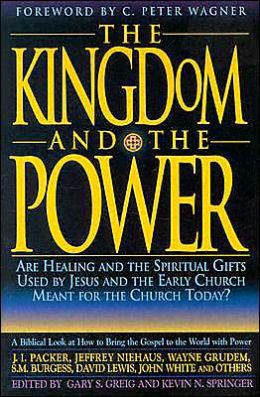
This chapter is from Gary S. Greig and Kevin N. Springer, eds., The Kingdom and the Power: Are Healing and the Spiritual Gifts Used by Jesus and the Early Church Meant for the Church Today? A Biblical Look at How to Bring the Gospel to the World with Power (Ventura, CA: Regal Books, 1993). Used with permission.








PneumaReview.com would gladly update Dr. Bodine’s biographical information. Do you know how to contact him?
PneumaReview.com would gladly update Dr. Bodine’s biographical information. Do you know how to contact him?