Choosing Peace in a World of Ragebait

On September 10, 2025, the nation was stunned when popular conservative activist Charlie Kirk was assassinated in Utah. In the months that followed, a deeply disturbing trend emerged. Social media was flooded with posts that did not merely report the tragedy, but openly mocked it. What should have been a moment of sober reflection became, for many, an opportunity for cruelty.
Sadly, this behavior was not confined to one side of the political spectrum. Some time later, liberal actor and director Rob Reiner was also murdered. Predictably, the cycle repeated itself. This time, some conservatives, including President Trump, responded with their own cheap shots. Tragedy had become tribal ammunition. Human lives were reduced to talking points.
These events should not be brushed aside as isolated lapses in judgment. They should be seen for what they are: a wake-up call.

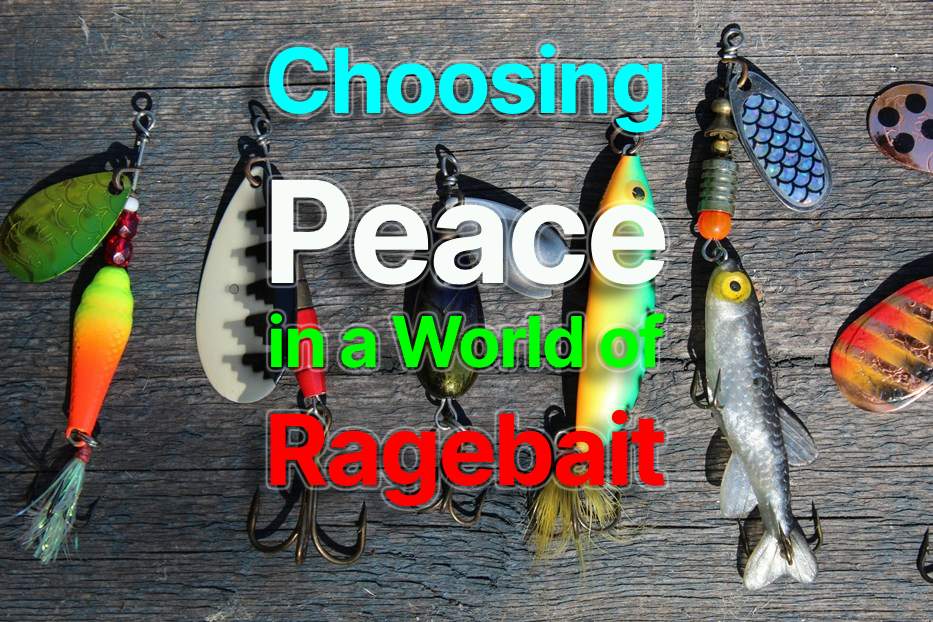
We are living in a cultural moment where outrage is currency, and where the quickest path to attention is often the most inflammatory one. Social media, for all its benefits, has become a breeding ground for what is commonly called “ragebait.” These are posts and headlines carefully crafted to provoke emotional reactions rather than thoughtful consideration. And too often, we are taking the bait.
It should go without saying that social media is the last place anyone should rely on for accurate, balanced news. Yet for many, it has become the first and often only source of information. In that environment, speed is rewarded more than accuracy, and emotional impact is valued more than truth.
Ragebait thrives on distortion. It relies on selective clips or quotes presented as though they tell the whole story. It uses emotionally charged headlines designed to provoke outrage before facts are ever examined. Critical context is routinely omitted, whether that be prior events, policy details, or the broader circumstances surrounding a situation.
Motives are assumed rather than demonstrated. One-sided accounts are amplified without any effort to engage primary sources. Statistics, when they are used at all, are often presented without scale or comparison, creating a misleading impression. Rare or extreme incidents are portrayed as though they represent the norm. Complex systems and issues are reduced to simplistic narratives with clear heroes and villains. And perhaps most telling of all, when corrections do come, they receive only a fraction of the attention that the original outrage generated. By then, the damage is already done.
We are called to choose peace in a world that profits from division. That does not mean ignoring injustice or refusing to speak on important issues. It means refusing to dehumanize those with whom we disagree. It means recognizing that every person, regardless of their politics, bears the image of God. When we celebrate or mock someone’s death, we are not just expressing an opinion. We are revealing something about the condition of our own hearts.
Finally, we are called to choose hope in a world that often trades in fear. The constant stream of alarming headlines and worst-case scenarios can create the impression that everything is spiraling out of control. Fear becomes a powerful motivator, driving clicks, shares, and reactions. But for the Christian, fear does not have the final word.

That perspective changes everything. It reminds us that while we are engaged in the issues of this world, we are not defined by them. Our ultimate hope is not found in political victories or cultural dominance, but in the unshakable kingdom of God. In a world fueled by outrage, misinformation, and fear, choosing peace, integrity, and hope is not always easy. But it is necessary. And perhaps now, more than ever, it is the kind of witness the world desperately needs.