The word patience, as it is used in the New Testament, really has no equivalent in the English language. Patience is the powerful capacity of selfless love to suffer long under adversity. It is the ability to bear with difficult people or adverse circumstances without breaking down. It allows people to remain steadfast under strain, not just standing still, but pressing on. Christ is our picture of patience as He endured adversity and the abuse of evil men for our salvation.
Patience or long-suffering is a characteristic of God, both in the New Testament and in the Old Testament. The purpose of divine long-suffering is our salvation: “Keep in mind that the patience of our Lord means salvation” (2 Peter 3:15, MEV). The most common Greek word used for patience is ‘hypomone,’ pointing to bearing up under suffering or despair. The second word used frequently, ‘makrothymia,’ suggests self-restraint in the face of unsatisfied desire. Since the two words are synonyms, they function much as synonyms function in English—when both words are used in the same passage, the idea is being emphasized.
One of the most difficult lessons for the maturing Christian is how to react to unjust treatment. Misunderstanding and mistreatment will follow the believer just as they followed Jesus on earth. So because we can count on not being treated rightly, the issue is how we will react when we are treated wrongly. God has promised to be the protector of individual Christians: “‘Vengeance is Mine. I will repay,’ says the Lord” (Rom. 12:19, MEV).
Misunderstanding and mistreatment will follow the believer just as they followed Jesus on earth. So because we can count on not being treated rightly, the issue is how we will react when we are treated wrongly.
Trouble affects people in one of two opposite ways: it can either make them bitter or make them tender. Job and Joseph are the two great examples of tribulation working patience—of men who became tender because they endured patiently. Joseph spent ten years in jail unjustly, yet he emerged free from bitterness. Some of us are willing to suffer for God, but we want to suffer for a short time—why do we have to suffer long? Suffering brings patience. Patience is not an instantaneous gift—it is developed over time and with suffering: “knowing that the trying of your faith develops patience” (Jam.1: 3, MEV).
Not all suffering is the kind of suffering to develop patience however. If the suffering comes as a result of our mistakes and faults, there is no fruit of the Spirit in it—it is simply the just consequences of our actions and choices. But if we do well and still suffer, then we can develop patience, the fruit of the Spirit: “But if when doing good and suffering for it, you patiently endure, this is favorable before God” (I Pet. 2: 20, MEV).
You will suffer. The question is, how will you suffer?
Without patience we are incomplete as Spirit-filled Christians. The receiving of God’s promises depends on patience. Patience, the fruit of the Spirit, can transform the hardest trial into glory as the believer sees the purpose beyond the present suffering. The purpose of the long-suffering of God is to bring men to repentance (Rom 2:4). It is patience with a purpose. God’s long-suffering is very strong and purposeful, not mere passive endurance with no end in view. Because of this, it follows that true long-suffering is an essentially voluntary thing. God does not have to suffer long with offenders. He does it because “Love is patient, love is kind” (I Cor. 13:4, NIV). The followers of Christ who show long-suffering or patience do so with the strong purpose of kindness.
Long-suffering means long-mindedness. It is bearing with the frailties of and provocations of others, just as Christ bore with ours. It is bearing up through all the troubles and difficulties of life without murmuring or complaining. It is submitting cheerfully to every dispensation of God’s providence and deriving benefit from every occurrence.
Without patience we are incomplete as Spirit-filled Christians.
The benefits of patience are many. Patience produces within our characters tremendous strength and endurance, even toughness. This kind of toughness will allow us to endure hard people and hard situations with serenity and stability. When we are patient under adversity we discover the great faithfulness of our God in every situation. When the actual awareness of Christ Himself comes into our spirits, we become aware that His Spirit can convey to us the peace of God in adversity and the patience of God in tough situations. When we realize that He is with us in our extremities, we can be patient.
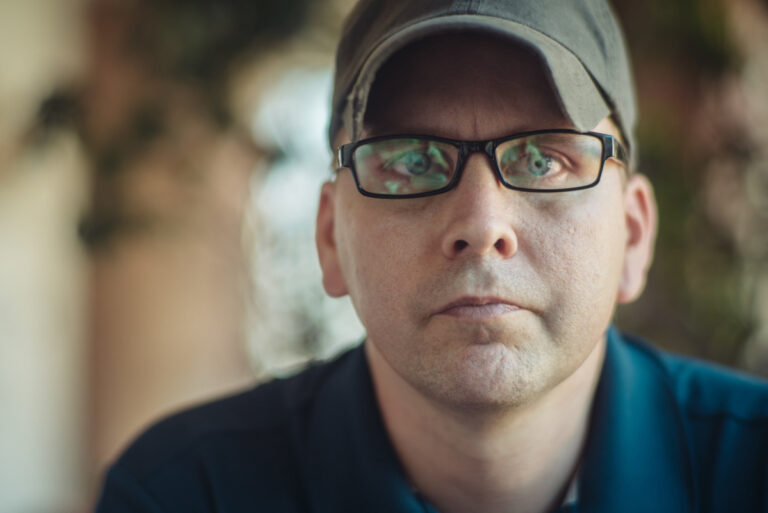
James F. Linzey studied church growth under C. Pete Wagner and signs and wonders under John Wimber at Fuller Theological Seminary. He served on the large ministry team at the Anaheim Vineyard and is the chief editor of the Modern English Version Bible. He has a BA degree in Biblical Studies from Southern California College, and an MDiv degree from Fuller Theological Seminary. He is the author of numerous articles and books, speaker, and recording artist. MilitaryBibleAssociation.com. Wikipedia.org/wiki/James_F._Linzey.
Vulnerable Mission: What it is, and Why we need it When: May 31 – June 2, 2018 Where: All Nations Christian College in Easneye House, Ware, Hertfordshire UK Sponsored by the Alliance for Vulnerable Mission. Jim Harries Jim Harries, PhD (University of Birmingham), is professor of religion with Global University and adjunct faculty with William…
Jordan Seng, Miracle Work: A Down-To-Earth Guide To Supernatural Ministry (Downers Grove, IL: InterVarsity Press, 2013), 224 pages, ISBN 9780830837649. Jordan Seng is the pastor of Bluewater Mission in Honolulu, Hawaii. In this book he addresses the subject of supernatural ministry. However, the book is not primarily a theological text in defense of the present-day miraculous…
Eugene Bach speaks with PneumaReview.com about the amazing things he has seen God doing in China, Iran, North Korea, and other difficult places. What can we learn about the causes of the greatest revival of our age? How can you learn more about these Jesus movements that few others seem to be talking about? …
J. Lee Grady, Set My Heart on Fire: Ignite Your Confidence, Boldness, and Passion for God (Lake Mary, FL: Charisma House, 2016), 240 pages, ISBN 9781629986104. Lee Grady is well known in Pentecostal and Charismatic circles. For a number of years he served as the editor of Charisma magazine, a publication devoted to the Spirit-filled…
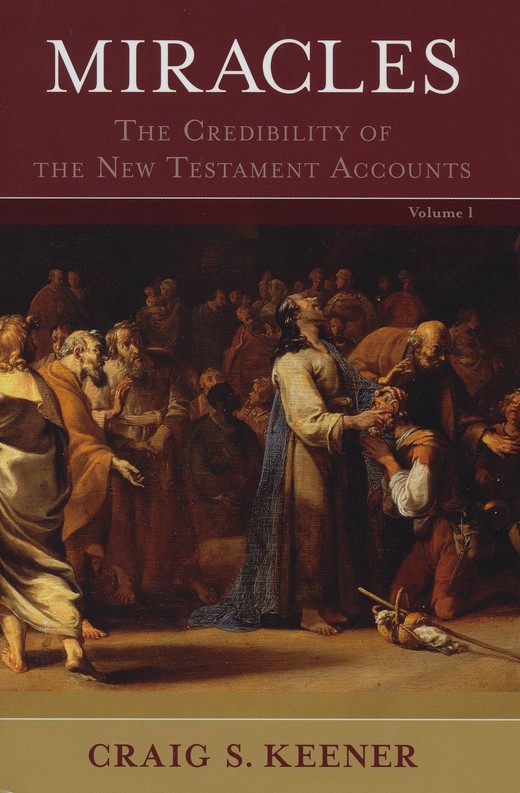
Craig S. Keener discusses his book, Miracles: The Credibility of the New Testament Accounts. Part of the Seedbed series from Asbury Theological Seminary. Craig Keener Craig S. Keener, Ph.D. (Duke University), is F. M. and Ada Thompson Professor of Biblical Studies at Asbury Theological Seminary in Wilmore, Kentucky. He is author of many books, including…
Presented by Craig S. Keener in conjunction with Tactical Faith at the 25th annual Biblical Studies Lectures, Beeson Divinity School, Samford University. Beeson Divinity School is an interdenominational, evangelical divinity school on the campus of Samford University in Birmingham, Alabama. Craig Keener Craig S. Keener, Ph.D. (Duke University), is F. M. and Ada Thompson Professor…
To provide the best experiences, we use technologies like cookies to store and/or access device information. Consenting to these technologies will allow us to process data such as browsing behavior or unique IDs on this site. Not consenting or withdrawing consent, may adversely affect certain features and functions.
Functional
Always active
The technical storage or access is strictly necessary for the legitimate purpose of enabling the use of a specific service explicitly requested by the subscriber or user, or for the sole purpose of carrying out the transmission of a communication over an electronic communications network.
Preferences
The technical storage or access is necessary for the legitimate purpose of storing preferences that are not requested by the subscriber or user.
Statistics
The technical storage or access that is used exclusively for statistical purposes.The technical storage or access that is used exclusively for anonymous statistical purposes. Without a subpoena, voluntary compliance on the part of your Internet Service Provider, or additional records from a third party, information stored or retrieved for this purpose alone cannot usually be used to identify you.
Marketing
The technical storage or access is required to create user profiles to send advertising, or to track the user on a website or across several websites for similar marketing purposes.