In June 1960, the seeds of the New Wine movement began as David and Mary Pytches responded to God’s call to Chile. During time in South America over seventeen years, they experienced earthquakes, a military coup and illness. All of this caused Mary to call on God for the power of his Holy Spirit and she was filled in a way she had not experienced before. As David and Mary began to walk out the Spirit-filled life, they saw manifestations of God’s presence in signs and wonders and began to pray that a similar outpouring would occur in the UK. Returning home in 1977, their church, St Andrews, Chorleywood, invited John Wimber to visit and the Spirit began to manifest God’s presence in ways similar to those witnessed in Chile. News of God’s immanence at St Andrews spread and the church decided to start meeting together as families to holiday; to praise and to worship; and to seek God’s direction.
Uniting Thousands to Worship One
In 1989, families first camped together at a showground in Somerset which has become an annual venue ever since for the thousands who gather today. New Wine also convenes conferences and leaders’ teaching retreats and various ministry training days throughout the year, as well as connecting church leaders for further equipping.
This year’s New Wine Summer Gathering was called ‘Uniting Thousands to Worship One.’ Committing itself to inspiring Bible teaching; seminars; passionate worship; fun for all the family and ministry in the Holy Spirit, it met across two weeks from the 23rd July to the 6th August, 2017. My family and I joined New Wine for Week One.
The conference is attended by Christians from all walks of life and from all over the UK. A large contingent worship in Church of England churches. Bishop David Pytches, its founder, was present this year. Bishop Philip North, one of our relatively new Bishops and from a different tradition within the Church of England, addressed the conference and described the event afterwards as one where ‘there is a powerful sense of the immanence of God … the festival has a powerful energy focused on a passionate belief in the local church as the hope of the world, and a real sense that we can go back home to make a difference.'[1]
Seminars at New Wine were not shy about exploring the culture the church now finds itself in.
Since I last reviewed New Wine for PneumaReview.com, the movement has experienced a change of leadership. Paul and Becky Harcourt are encouraging a new movement of God into the ordinary. Theirs is an emphasis on the fifty weeks rather than the two spent together in worship. Paul’s opening challenge to us was to take New Wine home. I detect, too, a gentler exploration of God’s manifest presence. During ministry time, the expectant crowds are led more carefully into the presence of God. There is more humility and perhaps more nurturing for those unsure about this stepping into the supernatural. New Wine is a caring midwife for our being born again.
There is a tendency to elevate our own story above the shared story, to want to be heard and understood. But we must place scripture over experience.
In some ways, there has had to be a gentler approach. Testimonies were presented to the Church of England’s General Synod this year of woundings which have come through words given in the context of prayer. In days when the church is asking questions about human identity in terms of sexuality and gender, prayer ministry must give due sensitivity to these areas. I believe New Wine is taking note because its leaders are also the leaders of Anglican churches and understand the context into which God is calling them to minister. Our ‘experience’ because now so powerful and emotive when it comes to feelings about identity in the areas of gender and sexuality is having Charismatic Christians become more aware of the power of our testimony. We must not make an idol of our experiences, either. I went to New Wine this year conscious of this backdrop, impacted by a course of reading I have taken up about this tendency of our age to elevate our own story above the shared story; to want to be heard and understood. RT Kendall encouraged us to be Logos and then Rhema people – scripture over experience. He cautioned us to become wise and weigh words of knowledge against scripture. Aware of current debates within the church, what I admire about the New Wine Movement is its exploration of what might otherwise be an elephant in the room. We are equipped to form our own opinions through the teaching of Bishops and theologians who have scrutinised the scriptures and, interestingly, can speak from their own experience, into the issues.
RT Kendall
Seminars at New Wine were not shy about exploring the culture the church now finds itself in. Bishop Richard Jackson described a prevalence of persuasive “pain narratives” from those feeling judged by the church because they do not conform to traditional teaching in the areas of gender and sexuality. He insisted that we need to begin our discernment on issues from theology rather than experience. Sean Doherty, a teacher at an Anglican theological college, led two seminars in which he testified to being same-sex attracted but called to anchor his identity in his biological sex rather than his orientation. Married to a woman and with children, he talked about how God had helped him, during his earlier years commit to a celibate life-style, in order to come to a mature and orthodox position on the issue.
New Wine also speaks into family life, mental health, addiction, raising teens, dementia and keeps up year on year with the most pressing issues. We are truly equipped and I respect the movement’s courage to explore a number of challenging issues openly.
As well as seminars there are evening gatherings which are celebratory in nature with a range of speakers from across denominations: Baptist, Anglican, Vineyard. Gatherings each morning take participants through a theme or are led by the same speaker each day whom we are able to get to know over the week.
This year I came away with a sense of God speaking into my stepping out, speaking up and not hiding away. Dr RT Kendall encouraged us to transition, whilst we have the opportunity from foolish to wise attendants, with the oil of the Spirit in plentiful supply (Mt 25:1-13). He dwelt on the importance of becoming Word and Spirit communities, in equal weight. This appeal to balance appealed to me. I was able to ask God about a call to theological writing and whether this was still his plan for me since finishing my Masters and not feeling called to continue formal study. About what, then, am I to write? So much of my teaching in the context of church life is a prayer for renewal. How much time was I also to invest in writing and particularly writing which explores the issues which divide us: namely gender and sexuality? This, I felt, needed an answer from God.
Kate Coleman
I powerfully met with God in the power of His Spirit. I knew this would mean I should expect something quite immediate and the next day …
Kate Coleman’s preaching was therefore significant for me. Her preaching is expository and she often uncovers new insights in familiar stories. This year she spoke from 1 Samuel 17 and encouraged us to meet, with David’s courage, the ideological giants of our day. Some of these ideological giants are in the very Church itself: theology without the Theo. There are ‘ologies’ instead of pain, experience, and ‘my rights’ which clamber for our attention. She asked whether some of us were called, like David, towards Goliath; to run into the debate rather than away from it. She asked us to join her in a symbolic action, to take scarves or handkerchiefs, if we had them, and swing them like slings (without stones, I hasten to add) over our heads. I couldn’t help thinking about the church’s competing pain narratives, lamenting the wounds we cause each other in this house of friends (Zech 13:6). I sensed a call to continue to write into the context of our issues and debates.
I find myself full of hope.
My own call from God this year, then, at New Wine, had a lot to do with this speaking out and stepping up. As I responded to a call to the front, for leaders who are being asked to be courageous, I went forward. It was then felt to be a call, particularly, for women and I powerfully met with God in the power of His Spirit. I knew this would mean I should expect something quite immediate and the next day I received an email asking me to write for the Church Times about the Church of England and where we find ourselves amidst the debate and pain of all our questions about gender and sexuality. I returned home with one day before my holidays to complete an article in which I went public about my commitment to the Church of England, pleading that our bishops would simply re-affirm traditional teaching and that it is possible to love and to flourish and to serve, to welcome and to include, to declare God’s covenant rainbow love and still believe and practise traditional marriage. I am glad for New Wine’s guidance of my life and ministry this year. So there ends another summer. New Wine has spoken to me over the years and as I take home a mantle to now organize the women of my area for how we might step up and speak out, I find myself full of hope. This year, New Wine had as many women as men speakers who were preaching, teaching and leading. This movement in God has carefully and graciously responded to the church’s empowerment of women in ministry. How it will continue to minister into what I think is God’s vision for human flourishing in singleness and marriage, is what I will now be watching with interest.
Rachel Marszalek is Vicar of All Saints, Ealing, an Anglican Church in London. Revd Marszalek is involved in the New Wine Movement and particularly focussed on women in Anglican ordained ministries within the network. She is married with two girls and two puppy dogs who are all a joy to her. God first called her to the church during the prayer of Humble Access in an Anglican Church’s Book of Common Prayer service when she was 8 years old. She blogs at Revising Reform. Facebook. Twitter: @revisingreform
Every church has an awesome privilege of supporting, encouraging, training, and equipping each person to fulfill their God-given purpose. Party Time? Everyone loves a good party. We all love to celebrate our accomplishments and enjoy our successes—not to mention relishing the flattery of our peers. Relish …That reminds me, we’re going to need almost a dozen…
Becoming agents of reconciliation that glorify Jesus, not compromise His Gospel. Introduction An especially fruitful interfaith dialogue I was recently privileged to participate in released a cooperative statement containing several descriptive suggestions about the nature of religion and the religions. Among other things, it admitted that “religion has often been used, rather misused,…
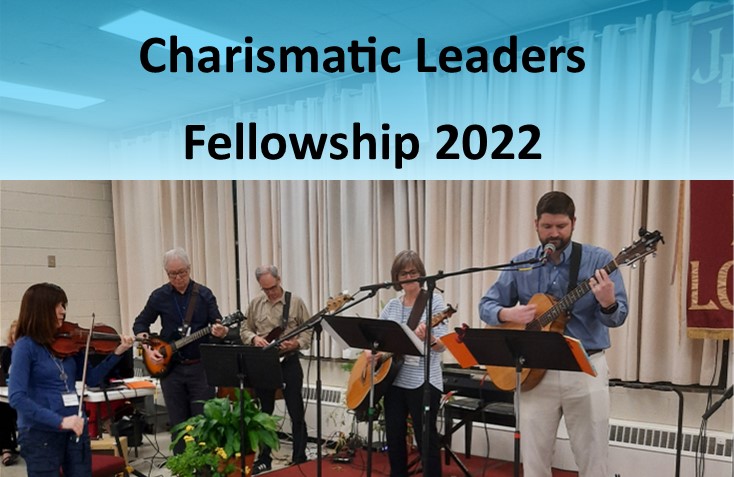
This year’s Charismatic Leaders Fellowship met Monday, February 21st thru Thursday the 24th in Augusta, at the Alleluia Covenant Community. This was our fourth year in a row there.[1] It is a great place to have a meeting as the families of the Community host us for “bed and breakfast,” and the quality of the…
Reflections on the Recent Postmodernism Conversation: Pastor Tony Richie wraps up our discussion on how the church should respond to postmodernism. Introduction and Overview The editorial staff of Pneuma Review (PR) is to be commended for its facilitation of this conversation about “Postmodernism, the Church and the Future” through a series of interactive…
Austin B. Tucker, A Primer for Pastors: A Handbook for Strengthening Ministry Skills (Grand Rapids: Kregel Publications, 2004), 221 pages, ISBN 9780825438868. This book is “A Handbook for Strengthening Ministry Skills,” it is a guide full of good counsel about what pastors will encounter in their careers. Pastor Tucker writes from the perspective of one who…
In former times, some missionary efforts were aligned with militaristic imperialism. Are the terrible expressions of colonialism being promoted by contemporary missionaries? Professor Celucien Joseph reminds us there is a better way. For many years, I have been thinking about the interreligious conflict between Christianity and other religions in the world, and the work…
To provide the best experiences, we use technologies like cookies to store and/or access device information. Consenting to these technologies will allow us to process data such as browsing behavior or unique IDs on this site. Not consenting or withdrawing consent, may adversely affect certain features and functions.
Functional
Always active
The technical storage or access is strictly necessary for the legitimate purpose of enabling the use of a specific service explicitly requested by the subscriber or user, or for the sole purpose of carrying out the transmission of a communication over an electronic communications network.
Preferences
The technical storage or access is necessary for the legitimate purpose of storing preferences that are not requested by the subscriber or user.
Statistics
The technical storage or access that is used exclusively for statistical purposes.The technical storage or access that is used exclusively for anonymous statistical purposes. Without a subpoena, voluntary compliance on the part of your Internet Service Provider, or additional records from a third party, information stored or retrieved for this purpose alone cannot usually be used to identify you.
Marketing
The technical storage or access is required to create user profiles to send advertising, or to track the user on a website or across several websites for similar marketing purposes.



 In June 1960, the seeds of the New Wine movement began as David and Mary Pytches responded to God’s call to Chile. During time in South America over seventeen years, they experienced earthquakes, a military coup and illness. All of this caused Mary to call on God for the power of his Holy Spirit and she was filled in a way she had not experienced before. As David and Mary began to walk out the Spirit-filled life, they saw manifestations of God’s presence in signs and wonders and began to pray that a similar outpouring would occur in the UK. Returning home in 1977, their church, St Andrews, Chorleywood, invited John Wimber to visit and the Spirit began to manifest God’s presence in ways similar to those witnessed in Chile. News of God’s immanence at St Andrews spread and the church decided to start meeting together as families to holiday; to praise and to worship; and to seek God’s direction.
 This year’s New Wine Summer Gathering was called ‘Uniting Thousands to Worship One.’ Committing itself to inspiring Bible teaching; seminars; passionate worship; fun for all the family and ministry in the Holy Spirit, it met across two weeks from the 23rd July to the 6th August, 2017. My family and I joined New Wine for Week One.
 New Wine also speaks into family life, mental health, addiction, raising teens, dementia and keeps up year on year with the most pressing issues. We are truly equipped and I respect the movement’s courage to explore a number of challenging issues openly.