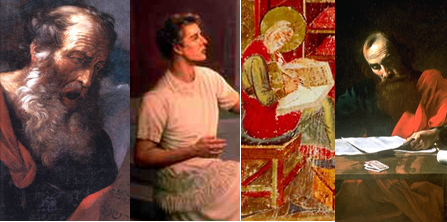

Jesus’ Model of Discipleship

A guest article from Alyssa Lillo, a student at Oral Roberts University.
Introduction
Educational principles in North America reflect the ways in which young people are taught, trained, and developed to become responsible mature adults in society. Similarly, Christian discipleship is the way in which new believers are developed to become mature Christians in the Body of Christ. In Matthew 28:16-20, Jesus commands his disciples to go and make disciples, known as the Great Commission. Jesus spent his entire ministry, which lasted three and a half years, training his disciples.[1] Jesus purposely called his disciples, established relationship with them, travelled with them, taught them to pray, and showed them how to live in light of his message. The Great Commission is an exhortation from Jesus who wanted his disciples to go and do likewise. Jesus’ methods of discipleship were influenced by his Jewish heritage and the Greco-Roman world. Additionally, the Great Commission (Matt 28:16-20) provides an example of how the disciples were to continue training new followers of Christ.

Discipleship
Historical Background to Discipleship in the Greco-Roman and Jewish Society
Jesus was a Jewish man trained in Torah. He also lived in the Greco-Roman world, which influenced the way his disciples perceived discipleship. In ancient Rome, it was a common practice for young men to become students to older or more experienced men for their chosen vocations.[2] Whether it was manual labor or educational, many would spend considerable time to learn in specific areas.[3] To the culture outside of Judaism, the closest form of discipleship was better known as an apprenticeship. A student or the student’s father would seek out and pick a teacher to learn from for an agreed period of time.[4]
Philosophers, such as Socrates, Plato, and Aristotle, championed discipleship in the Greco-Roman period. Socrates, a Greek philosopher, developed the Socratic method, which was teaching by asking questions.[5] He gathered a following of several young men. Plato was one of Socrates’ students and Aristotle was one of Plato’s students. The Greco-Roman teaching method exemplifies master-student relationships that would have been familiar to Jesus. Although the religion was very different, some of the methods of discipleship of the Graco-Roman society was similar to the Jewish culture.
The Discipleship of Jesus
Jesus incorporated similar discipleship methods from the Greco-Roman and Jewish cultures in which he lived. For example, Jesus used the Socratic method in his teaching style on many occasions. In Luke 5, the Pharisees asked Jesus why his disciples did not fast and pray like Johns’ disciples. Jesus answered by asking, “Can you make wedding guests fast while the bridegroom is with them?” He then continued to teach from this question. In Matthew 6, Jesus taught against judging others. He asked, “Why do you see the speck that is in your brother’s eye, but do not notice the log that is in your own eye?” (Matt. 7:3). Jesus used questions to challenge others’ thinking and maximize teaching potential.
The calling of Jesus’ disciples was different from those of the Greco-Roman and Jewish traditions in various ways. The disciples that Jesus chose were not those whom might think would be chosen. Many were not the most learned or well-known. For example, Simon Peter, James, and John were fishermen. Fishermen fell into a distinct social class that dealt with strenuous manual labor. They were usually crude in manner, uneducated, and had unpolished social skills.[11] Others were learned in their areas of vocations. Paul, later chosen as a leader in the church, was taught under the Pharisee, Gamaliel. Matthew had to be good with numbers as a tax collector. Judas had to have financial background as the group’s treasury. With differing educational backgrounds, not to mention socio-economics and family differences, the disciples had a variety of personalities and opinions. LeRoy Eims shows how several contrasted in personalities, “…Simon the Zealot hated the Romans who occupied Palestine, while Matthew the tax collector worked for them.”[12] Each disciple differed in skill and character.[13]
The Great Commission (Matthew 28:16-20)
The Great Commission provides a blueprint for discipleship, “All authority in heaven and on earth has been given to me. Go therefore and make disciples of all nations, baptizing them in the name of the Father and of the Son and of the Holy Spirit, and teaching them to observe all that I have commanded you. And behold, I am with you always, to the end of the age” (Matt. 28:18-20). The following sections focus on the five important aspects Jesus presented relating to discipleship, including 1. Authority Given, 2. Go, 3. Make Disciples, 4. Baptize, and 5. Teach.
“Authority Given”
The opening of the Great Commission passage in Matthew begins with the twelve disciples, minus Judas, going to the mountain in Galilee. Jesus spoke to them, giving them authority over all in heaven and on earth. R. T. France suggests that the entire book has been awaiting this section. This command gives the book an ending and close.[14] The authority given to them is a sealing of all they have seen and learned from Jesus. Now, as Jesus is ready to ascend to the right hand of the Father, he gives the very authority he has to the disciples to do the same works and even greater.[15] Donald Senior posits, “Matthew thus ratifies the authority, content, and scope of the community’s mission by rooting it in the commands and abiding presence of the Risen Jesus.”[16] Even though the disciples are doubtful at first of the authority given to them, they are given their mission. Jesus’ promised to be with the twelve[17] and emboldens them in their faith and solidifies the authority they have been given in the opening passage. The authority given to the disciples is for the purpose of fulfilling the Great Commission. Even though the disciples were feeling overwhelmed, Jesus assured them that they never would be walking alone.
“Go”
The first aspect of the Great Commission is to go. The disciples understood that being a disciple of Christ meant they would be leaving their homes, families, and the security they had previously known. They left behind their jobs and careers to become a full-time follower of Jesus. This was a life decision for the disciples. Hans Kvalbein states, “The call to be a disciple meant in Jesus’ lifetime was to leave family, profession and property.”[18] The disciples understood that this command also regarded who they made contact with. This looks different from person to person as each were called to differing areas. Peter, for example, was called to lead the early church in Jerusalem. Paul, on the other hand, started in a synagogue but was moved to mission work with the Gentiles. Philip, also, exemplifies the evangelistic approach to going out. The call looked different for the disciples, for individuals in the early church, and for each believer now. The point is to realize however one is directly involved in ‘going’—whether going locally, statewide, or across the globe— ‘going’ is part of Jesus’ command given to all his followers.
“Make Disciples of all Nations”
Making disciples was a mandate for Jesus’ disciples. Disciples are to make disciples. Hull comments, “Christ’s command to his church to make disciples provides the scriptural mandate.”[23] Senior shows that the Greek phrase to “‘make disciples’ (matheteusate) is the verb form of Matthew’s favored term ‘disciple.’”[24] The word choice is connected with the commissioning Jesus sent his followers. Jesus used his own example of connecting with a variety of other people groups to demonstrate how the twelve disciples were to do reach out to others in discipleship. He interacted with people from all socio-economic and religious backgrounds. Yet, most of Jesus’ time was spent with those twelve disciples he called to follow him. Jesus required the disciples to follow him with open hearts. Jesus called his disciples not just to hear what he said and agree, but also to live and teach his commandments to others.
Jesus also gave additional instructions in the Great Commission passage. Jesus’ commission included baptism and teaching in the context of discipleship. Hull states, “Disciples are the product, baptizing and teaching to obey are the qualifiers.”[25] These are seen in the category of discipleship. The baptism and teaching of his followers are a part of discipleship.
“Baptize”
Baptizing is a primary command in the Great Commission.[26] In the Graco-Roman period many religions would incorporate ceremonial washing or bathing to prepare for a time of prayer or to rid oneself of wrongdoing. However, when the followers of Christ performed water baptism, one made a confession of faith that signified a cleansing from sin according to Jesus, the perfect sacrifice who atoned for all the sins of the world through the death, burial, and resurrection.[27] Jesus also communicated how the disciples were to baptize, “…baptizing them in the name of the Father and of the Son and of the Holy Spirit.” (Matt 28:19). Throughout the Scriptures, baptism was shown as an outward example of the change and commitment that took place on the inside. Water baptism was a symbol of removing the “old man” and becoming new and Christ like (1 Peter 3:21; Romans 6:4; Colossians 2:12).
One may ask whether the order of teaching and baptism mattered, for Jesus listed baptism first. Hare argues that “the tense of the participles (baptizing, teaching) does not indicate that the Gentiles must be discipled before they are baptized, or baptized before they are discipled, or baptized before they are taught.”[28] From this perspective, the order does not seem to be the focus, but rather the entire process working together is the goal.
“Teach”
Jesus’ style and methods of teaching were exemplified through relationship and the use of story-telling or parables. He gave the disciples insight about his teachings.[29] Jesus’ primary teaching style was through the use of parables. A parable is a simple story used to illustrate a moral or spiritual lesson. I. H. Marshall describes parables as “forms of teaching which present the listener with interesting illustrations from which can be drawn moral and religious truths…usually designed to inculcate a single truth or answer a single question….[30] There are several examples of parables throughout the Gospels. An example occurs in Matthew 13. Jesus tells the Parable of the Sower to a crowd. To summarize the parable, a farmer sows seed in a field. In this parable, there were few seed that fell on fertile soil. The seed that fell on good soil grew well and could be harvested. Only in the privacy of the disciples did Jesus reveal the meaning. As the disciples questioned Jesus about his purpose with parables, Jesus informed them, “To you it has been given to know the secret of the kingdom of heaven, but to them it has not been given” (Matt. 13:11).[31] He continued to reveal the meaning of the passage in its entirety to the twelve disciples. Because Jesus spent more time teaching the disciples, they were able to understand his parables. In this way, discipleship was paramount in understanding the principles that Jesus taught them.
Jesus also commissioned the disciples to teach others to obey all that he commanded them in their time together. The most important command, according to Jesus, is found in Matthew 22. A Pharisee asked which command was the greatest and Jesus responded, “You shall love the Lord your God with all your heart and with all your soul and with all your mind. This is the great and first commandment. And a second is like it: You shall love your neighbor as yourself” (Matt 22:37-39). Loving the Lord their God refers to Deuteronomy 6:4 where the commandment was originally given. This commandment instructed God’s people to love him with their entire being. To the disciples, this command was associated with instilling the mandates on their hearts, teaching them to their children, and speaking of them constantly (Deut 6:6-9). Through the study of the Torah they learned the Lord’s ways. One’s love to the Lord was shown through obedience. Jesus clearly taught, “If you love me, you will keep my commandments” (John 14:15). The Lord required full obedience to his commands. Without full obedience, he could not entirely fulfill what he wanted to do in and through the disciples’ lives. Teaching his commands is of utmost importance in discipleship.
Applying Jesus’ Discipleship Methods in the Contemporary Church
First, every Christian is a disciple and once born of the Spirit is to submit to Jesus’ discipleship (Jn 15:7). Romans 10:9-10 reads, “…if you confess with your mouth that Jesus is Lord and believe in your heart that God raised him from the dead, you will be saved. For with the heart one believes and is justified, and with the mouth one confesses and is saved.” One needs to do more than agree with the values Jesus teaches. Belief is more than a confession made in the believer’s heart. It is an affirming action of following Christ as a disciple and then obeying the Great Commission.
Second, the Great Commission provides the example for how all believers as disciples are to make disciples. The twelve disciples were called to go and establish the kingdom and develop disciples through relationships. Similarly, all contemporary believers are to go and preach the Gospel and establish strong discipleship relationships. Carolyn Arends explains the importance of creating these strong relationships in disciples: “While programs give us ideas, successful spiritual friendships are built upon adaptive, responsive, trusting relationships as unique as the people who inhabit them.”[32] Relationships require focusing on the people themselves instead of categorizing them by age, gender, or interests. Jesus chose people of all socio-economic backgrounds. Although the twelve were men, Jesus also had woman followers. Some of these included Mary Magdalene, Joanna, and Susanna (Luke 8:1-3). Bernard Spooner debates that popular discipleship methods today tend to categorize people: “Much of what has been recently written for Christian educators has been focused on one age group or one aspect of educational ministry.”[33] Jesus did not place his followers in different categories. David Freedman contends that, “Jesus approaches human beings in order to get them to approach others. Jesus ‘sees’ human beings [and] one becomes a disciple not through certain conditions of life but because of the unexpected call of Jesus….”[34] From this perspective, believers cannot effectively build relationships when they categorize people based on their differences.[35] Like Jesus, contemporary believers are to go and make disciples of all people groups whether it is their next-door neighbor, a co-worker, or an unreached people group in a foreign country.
Fourth, the twelve were called to baptize their new converts in the name of the Father, Son, and Holy Spirit. Jesus was baptized and his example provides contemporary believers with a mandate to do likewise. Water baptism is a public profession of faith in Christ as Lord. It was shown as a visible illustration of the transformation and commitment that occurred within.
Lastly, as the original Twelve were taught by their Rabbi, master, and Lord, so also they would be called to go and teach of their Lord’s commandments. Though not every disciple is called to become a teacher, all disciples are called to teach what they have learned. Arias comments on the importance of this command: “Obviously, the way [of making disciples] is through teaching, through what has historically been called catechesis and, more recently, Christian education.”[37] The Great Commission explains what it means to make disciples in the name of Jesus. New converts were not only brought into the kingdom, but they were also instructed in their new life in Christ. Carl Wilson summarizes, “The effectiveness is not only in numerical growth but in quality of life in disciples and effectiveness of leadership.”[38] Jill and Stuart Briscoe show that disciples are followers who have been called out and set apart; they, in turn, help in setting apart the church.[39]
Conclusion
PR
This article was later included in the Summer 2025 issue.
Bibliography
Books
Bonhoeffer, Dietrich. The Cost of Discipleship. New York, NY: Touchstone, 1995.
Briscoe, Jill and Stuart. The Journey of Disciple. Ventura, CA: Regal Books, 1987.
Eims, LeRoy. The Lost Art of Disciple Making. Grand Rapids: Zondervan, 1978.
Hull, Bill. The Disciple Making Church. Old Tappan, NJ: F. H. Revell Co, 1998.
Hull, Bill. The Disciple Making Pastor. Old Tappan, N.J.: F. H. Revell Co, 1988.
Nelson, Leonard. Socratic Method and Critical Philosophy: Selected Essays. New York: Dover Pub, 1956.
Wilson, Carl. With Christ in the School of Disciple Building. Grand Rapids: Zondervan Pub. House, 1976.
Commentaries
Hare, Douglas R. A. Interpretation: A Bible Commentary for Teaching and Preaching. Louisville, KY: John Knox Press, 1993.
France, R.T. The Gospel of Matthew: The New International Commentary on the New Testament. Grand Rapids, MI: William B. Eerdmans Pub, 2007.
Senior, Donald. Abingdon New Testament Commentaries. Nashville, TN: Abingdon Press, 1998.
Articles
Arends, Carolyn. “Duct-tape disciples: what really sticks when leading a friend to Christ. (Wrestling with angels).” Christianity Today 57 (Nov 2013): 31.
Arias, Mortimer, Bp. “Rethinking the Great Commission.” Theology Today 47 (Jan 1991): 410-418.
Kyalbein, Hans. “Go Therefore and Make Disciples: The Concept of Discipleship in the New Testament.” Themelios 13 (1988): 48-59.
Orr, James. “Fisher, Fisherman.” International Standard Bible Encyclopedia 5 (1915).
Spooner, Bernard M. “Christian Education Leadership: Making Disciples in the 21st Century.” Christian Education 10 (Spr 2013).
Smith, William ed. “Baptism.” Smith’s Bible Dictionary 3 (1863).
Westermann, W. L. “Apprentice Contracts and the Apprentice System in Roman Egypt,” Classical Philology 9 (Jul 1914).
Worthington, Everett L. “Think strategically: Some advice for being a great mentor with a great research program.” Journal of Psychology and Christianity 31 (Win 2012).
Lexicons
Freedman, David, ed. Anchor Yale Bible Dictionary, 2 vols. New Haven: Yale University Press, 2007.
Marshall, I. H. New Bible Dictionary. 3 vols. Downers Grove, IL: Intervarsity Press, 1996.
Internet Sources
“Discipleship is Jewish.” Jonathan N. Daugherty, Heart of God Israel. Jan 2013. http://heartofgodisrael.org/messianic-messages/discipleship-is-jewish/
Notes
[1] Luke 3:23 states that Jesus began his ministry at the age of thirty.
[2] W. L. Westermann, “Apprentice Contracts and the Apprentice System in Roman Egypt,” Classical Philology 9 (Jul 1914): 304.
[3] Westermann, “Apprentice Contracts and the Apprentice System in Roman Egypt,” 304.
[4] Westermann, “Apprentice Contracts and the Apprentice System in Roman Egypt,” 306.
[5] Leonard Nelson, Socratic Method and Critical Philosophy: Selected Essays (New York: Dover Pub, 1956), 1.
[6] Jonathan N. Daugherty, “Discipleship is Jewish,” Heart of God Israel. Jan 2013. http://heartofgodisrael.org/messianic-messages/discipleship-is-jewish/.
[7] Daugherty, “Discipleship is Jewish,” http://heartofgodisrael.org/messianic-messages/discipleship-is-jewish/.
[8] Daugherty, “Discipleship is Jewish,” http://heartofgodisrael.org/messianic-messages/discipleship-is-jewish/.
[9] Daugherty, “Discipleship is Jewish,” http://heartofgodisrael.org/messianic-messages/discipleship-is-jewish/.
[10] Luke 9:57-62 shows how these were turned away.
[11] James Orr, “Fisher, Fisherman,” International Standard Bible Encyclopedia 5 (1915).
[12] LeRoy Eims, The Lost Art of Disciple Making (Grand Rapids: Zondervan, 1978), 29.
[13] The disciples displayed many tendencies to pride, selfishness, and unbelief. Luke 22:24-28 relays the account of the disciple’s argument. It is here where Jesus reverses the order of importance when he says, “The kings of the Gentiles exercise lordship over them, and those in authority over them are called benefactors. But not so with you. Rather, let the greatest among you become as the youngest, and the leader as one who serves.”
[14] R.T. France, The Gospel of Matthew: The New International Commentary on the New Testament (Grand Rapids, MI: William B. Eerdmans Pub, 2007), 1107.
[15] In John 14:12, Jesus tells his disciples, “Truly, truly, I say to you, whoever believes in me will also do the works that I do; and greater works than these will he do, because I am going to the Father.”
[16] Donald Senior, Abingdon New Testament Commentaries (Nashville, TN: Abingdon Press), 348.
[17] Matthew 28:20b
[18] Hans Kyalbein, “Go Therefore and Make Disciples: The concept of discipleship in the New Testament,” Themelios 13 (1988) 49.
[19] Jesus’ interactions with the Samarian woman show this closed off perspective of the Jewish culture. Jews did not associate with Samarians. After Jesus introduced her to the living water, the twelve return, surprised: “They marveled that he was talking with a woman…” (John 4:27). This was astonishing for the day for two reasons. Women were not equal to men. For Jesus to accept and honor a woman was uncommon in the culture. This woman was also a Samarian, whom the Jews did not associate with as they were outside their culture.
[20] Senior, Abingdon New Testament Commentaries, 347.
[21] Douglas R. A. Hare, Interpretation: A Bible Commentary for Teaching and Preaching (Louisville, KY: John Knox Press, 1993), 333-334.
[22] Mortimer Arias, “Rethinking the Great Commission,” Theology Today 47 (1991): 416.
[23] Bill Hull, The Disciple Making Pastor (Old Tappan, N.J.: F.H. Revell Co, 1988): 50.
[24] Senior, Abingdon New Testament Commentaries, 346.
[25] Hull, The Disciple Making Pastor, 52.
[26] Hull, The Disciple Making Pastor, 52.
[27] William Smith ed., “Baptism,” Smith’s Bible Dictionary 3 (London: John Murray, 1863).
[28] Hare, Interpretation: A Bible Commentary for Teaching and Preaching, 334.
[29] Eims, The Lost Art of Disciple Making, 34.
[30] I. H. Marshall, “Parables,” New Bible Dictionary 3: 867.
[31] Luke 8 also recounts the purpose of parables. The disciples inquired as to the purpose of his parable. Jesus replies in verse 10, “To you it has been given to know the secrets of the kingdom of God…” We see that both secrets and mysteries are revealed to the disciples.
[32] Carolyn Arends, “Duct-tape disciples: what really sticks when leading a friend to Christ (Wrestling with angels),” Christianity Today 57 (Nov 2013): 31.
[33] Bernard M Spooner, “Christian Education Leadership: Making Disciples in the 2st Century,” Christian Education 10 (Spr 2013).
[34] Freedman, David, ed. “Disciple, Discipleship,” Anchor Yale Bible Dictionary, 2: 207-210.
[35] Worthington, Everett L. “Think strategically: Some advice for being a great mentor with a great research program,” Journal of Psychology and Christianity 31 (Win 2012): 334-344.
[36] Bill Hull, The Disciple Making Church (Old Tappan, NJ: F. H. Revell Co, 1998), 20.
[37] Arias, “Rethinking the Great Commission,” 412.
[38] Wilson, With Christ in the School of Disciple Building (Grand Rapids: Zondervan Pub. House, 1976), 52.
[39] Jill and Stuart Briscoe, The Journey of Disciple (Ventura, CA: Regal Books, 1987), 43.
[40] Dietrich Bonhoeffer, The Cost of Discipleship (New York, NY: Touchstone, 1995)