Clifford R. Clarke, ed., Pentecostal Theology in Africa, African Christian Studies Series (Eugene, Oregon: Pickwick Publications, 2014).
This compendium of articles put together by Clifton Clarke excels in being a clear, carefully presented and carefully argued account, taking a variety of different theologically-rooted angles on AP (African Pentecostalism). As would be expected, the tone is optimistic and positive to the effect that AP has important significant contributions to make to the wider field of theology, both within Africa, and in the world at large. Being a compendium that includes a variety of work by different authors makes it hard to draw too many conclusions about the whole. I will endeavour to give an enticing flavour of the book below.
The claim aptly made and articulated by Gallegos, that APs being rooted in ‘primal’ ways of thinking gives them advantages in Biblical interpretation over perhaps highly educated but ‘modern’ people, rings true. Pentecostalism in Africa is in some respects a ‘coming of age’. This is a very valuable comment: theological theorists’ search for indigeneity in African Christianity can find many of their answers in AP. AP churches are, in many instances, self-governing, and ready to be outspoken beyond what they have been told by their Western instructors must be right. AP is a part of a great revolution for Africa!
African Pentecostalism is a part of a great revolution for Africa!
Ngong points us to a key need for AP to leave space for the modern world. What good, after all, is a theology that cannot recognise or advocate for science and technology that profoundly dominate modern times? Landfair considers APs orientation to eschatology. Some scholars consider AP to be very this-worldly, despite its emphasis on God’s Spirit. Landfair unpacks apparent contradictions to such presuppositions. Gifford’s contribution is primarily cynical. That is a welcome compliment, giving us a non-believers’ perspective, challenging scholars on AP to consider how practices rooted in the countering of witchcraft can at the same time lead to socio-economic progress. A chapter by Ogungbile on the prosperity gospel points to ways in which what may seem ‘clearly wrong’ from the West, is not necessarily so for APs, for whom poverty after all is a kind of sickness, and who read frequent accounts of Jesus’ healing in the Gospels. This discussion highlights a set of evident contradictory relationships between AP and modernity.
How do Africans see the ‘prosperity gospel’ differently than Westerners?
Frahm-Arp gives us a refreshing and articulate account of AP view on gender. Her straightforward laying out of AP views related to gender could be of great help to people in the West wondering why the behaviour of women and men in AP contexts differs from Western norms. In the latter part of the book, Fleming and Ngong throw new insights onto social action and religious pluralism with respect to APs. A weakness in the approach of both of them, is that they seem to take a dominant Western view and to ‘Africanise’ it, rather than to explore AP practice on its own terms.
Editor Clifton R. Clarke is the Assistant Provost for the William E. Pannell Center for African American Church Studies and Associate Professor of Black Church Studies and World Christianity at Fuller Theological Seminary.
By way of conclusion, this selection of essays is a very readable cataloguing of key issues pertaining to APs. Different depths of exploration of the issues concerned means that this book contains some evaluation and scholarly analysis of matters raised. It successfully gives a reader a flavour of much that is going on in Africa today. Weaknesses of the book include its failure to engage sufficiently with AP’s rooting in indigenous contexts: much evaluation of AP is as if it is a variant on Western Christianity. At times too positive for a scholarly text, and too much rooted in a perspective from the West, the above weaknesses arise from an underestimation of the impact of African languages (barely mentioned as an issue: most of the book seems to assume AP is entirely rooted in Western English) and cultures on the subjects under question. The book is a suitable stimulation to discussion on AP at undergraduate level. It provides a broad background to issues in AP. It makes a good introduction to a breadth of issues that can enable a reader interested in knowing more to later explore AP in more contextual detail.
Is the Church in China Predominantly Pentecostal? Part 3: Gaining Perspective: A Contextual Assessment The strong Pentecostal orientation of the Church in China is striking, but it should not surprise us. In fact, when the recent revival of Christianity in China is viewed against the backdrop of its historical, global, and sociological contexts, this…
Gregory A. Boyd and Paul R. Eddy, Across the Spectrum: Understanding Issues in Evangelical Theology, 2nd ed. (Grand Rapids: Baker Academic, 2009), 352 pages, ISBN 9780801037931. Across the Spectrum contains seventeen short chapters which give a good introduction to a variety of debates spanning across the topics of systematic theology including: biblical inerrancy, divine…
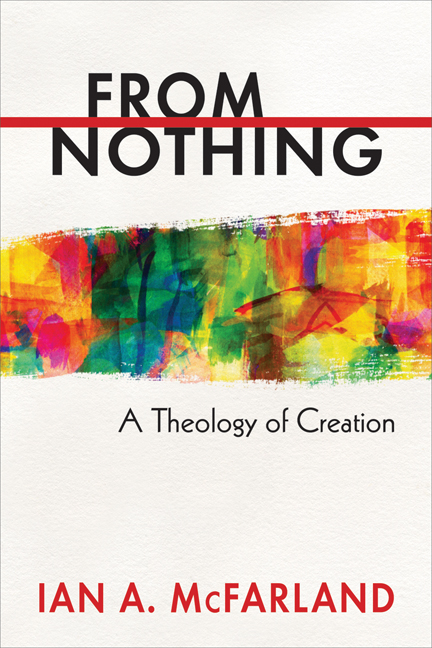
Ian McFarland, From Nothing: A Theology of Creation (Louisville: Westminster John Knox Press, 2014), 212 pages. In the recent work, From Nothing: A Theology of Creation, Ian McFarland aims to defend and develop the classic doctrine of creation ex nihilo by arguing that the doctrine of creation from nothing is best understood in a Trinitarian framework. The…
Editor’s note: With a Doctorate of Ministry in Preaching, a Doctorate of Theology in Pentecostal Preaching, and extensive experience training preachers in the Majority World, Aldwin Ragoonath is uniquely gifted to help today’s church leaders around the world. PneumaReview.com asked Dr. Ragoonath to tell us about the series of twenty-five lectures he had made available…
Kristina LaCelle-Peterson, Liberating Tradition: Women’s Identity and Vocation in Christian Perspective (Grand Rapids, MI: Baker, 2008), 253 pages, ISBN 9780801031793. Kristina LaCelle-Peterson proposed that the church can be faithful to scripture, to Christ-centered faith, and embracing of biblical feminism with an egalitarian perspective. The stated purpose of the book is “about listening to each…
Todd D. Still and David E. Wilhite, eds., The Apostolic Fathers and Paul, Pauline and Patristic Scholars in Debate (London: Bloomsbury T&T Clark, 2017), 256 pages, ISBN 9780567672308. Todd Still and David Wilhite are editing a series of books on Paul’s reception among the church fathers. The point of the series appears to be that…
To provide the best experiences, we use technologies like cookies to store and/or access device information. Consenting to these technologies will allow us to process data such as browsing behavior or unique IDs on this site. Not consenting or withdrawing consent, may adversely affect certain features and functions.
Functional
Always active
The technical storage or access is strictly necessary for the legitimate purpose of enabling the use of a specific service explicitly requested by the subscriber or user, or for the sole purpose of carrying out the transmission of a communication over an electronic communications network.
Preferences
The technical storage or access is necessary for the legitimate purpose of storing preferences that are not requested by the subscriber or user.
Statistics
The technical storage or access that is used exclusively for statistical purposes.The technical storage or access that is used exclusively for anonymous statistical purposes. Without a subpoena, voluntary compliance on the part of your Internet Service Provider, or additional records from a third party, information stored or retrieved for this purpose alone cannot usually be used to identify you.
Marketing
The technical storage or access is required to create user profiles to send advertising, or to track the user on a website or across several websites for similar marketing purposes.



 Clifford R. Clarke, ed., Pentecostal Theology in Africa, African Christian Studies Series (Eugene, Oregon: Pickwick Publications, 2014).