
Denominations

Jesus prayed that His followers would be one. Yet today Christianity is divided into thousands of denominations, traditions, and movements. So what happened? Was this God’s plan, or have Christians failed Christ’s vision for His Church?
The apostle Paul addressed a similar problem nearly two thousand years ago. Writing to the church at Corinth, he asked a pointed rhetorical question:
“Is Christ divided?”
— 1 Corinthians 1:13
The Corinthians were forming factions around their favorite teachers. Some said, “I am of Paul,” others “I am of Apollos,” others “I am of Peter,” and some even claimed a spiritual superiority by saying, “I am of Christ.” While these divisions were likely more about personalities than doctrine, Paul still rebuked the tribalism behind them. Human nature has not changed much since then.
The truth is, God has always worked through imperfect people in imperfect situations.
The Rise of Denominations
Many modern Christians reject denominational labels altogether. The trend toward “non-denominational” churches reflects a sincere desire to focus on Jesus rather than organizational names.
That sentiment is understandable and often admirable.
Ironically, even churches that reject denominations often end up developing their own traditions, identities, and unwritten expectations.
The roots of the anti-denominational movement in America can be traced partly to the nineteenth-century Restoration Movement led by Alexander Campbell and others. Campbell believed Christians should cast aside denominational divisions and simply return to the New Testament pattern of Christianity. On paper, that sounds compelling, but there were drawbacks.
In her book Total Truth, Nancy Pearcey notes that this approach sometimes encouraged believers to ignore the wisdom and theological reflection of church history. If every Christian starts from scratch, pretending no one before them has seriously studied Scripture, the Church loses the accumulated insight of thinkers like Augustine, Thomas Aquinas, Martin Luther, and John Calvin. In other words, the Church did not begin with us.
The Reformation and Fragmentation
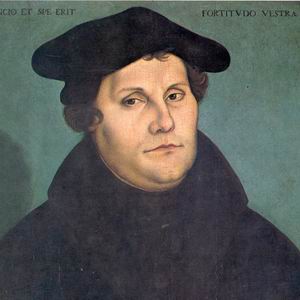
To understand the denominational division, we must understand the Protestant Reformation. Martin Luther did not originally intend to start a new church. His goal was to reform the medieval church from within. Yet his challenge to corruption and false teaching eventually led to excommunication and separation.
The Reformation emphasized what became known as the Five Solas:
- Grace alone
- Faith alone
- Christ alone
- Scripture alone
- For the glory of God alone
Those truths were desperately needed.
Some divisions were unfortunate and unnecessary. Others emerged because believers were attempting to recover neglected biblical truths.
Not All Traditions Are Evil
The word “tradition” often receives a bad reputation among Christians. Jesus rebuked religious leaders for making “the word of God of none effect” through their traditions. But He was not condemning all tradition universally.
Tradition becomes dangerous when it replaces Scripture.
Scripture is master. Tradition is servant.
Here is a truth many Christians overlook: Every church has traditions.
Even churches that proudly claim to have “no tradition” usually develop traditions of their own. Tradition simply refers to what is handed down from one generation to another. Some traditions are biblical and helpful. Others are merely cultural habits. The key is keeping traditions in their proper place.
How Different Movements Restored Important Truths

Throughout church history, different groups have helped recover neglected biblical emphases.
The Anabaptists and later the Baptists strongly emphasized believer’s baptism by immersion. For this conviction, many suffered intense persecution and even death.
John Wesley and the early Methodists emphasized holiness, discipleship, and the work of the Holy Spirit in everyday life. Wesley also pioneered taking ministry outside church walls to reach ordinary people where they lived and worked.
There is no such thing as “new truth.” God’s truth has always existed in His Word. But truths can become neglected, obscured, or de-emphasized over time, making reform and rediscovery necessary.
Often, those who restored neglected truths were strongly opposed by the religious establishment of their day.
Unity Without Uniformity
Christians should reject both sectarian arrogance and doctrinal indifference.
“In essentials, unity; in non-essentials, liberty; in all things, charity.”
Christians from different traditions can often learn valuable things from one another. Baptists have historically emphasized the Gospel and biblical preaching. Catholics often stress the importance of historic continuity and church life. Pentecostals frequently emphasize spiritual vitality and expectancy. Reformed believers have contributed deeply to theological precision and biblical study.
Truth does not belong to one denomination.
As Justin Martyr reportedly said, “Whatever things were rightly said among all men are the property of us Christians.”
Why I Prefer “Interdenominational”
Personally, I prefer the term “interdenominational” over “non-denominational.”
No brother or sister in Christ should be treated as the enemy merely because they belong to a different tradition.
That does not mean abandoning conviction. It means approaching one another with humility, wisdom, and love.
Jesus prayed for unity, not uniformity. The Church is healthiest when it remains centered on Christ, grounded in Scripture, and filled with charity toward fellow believers. And perhaps that begins when we stop asking, “How can I defend my tribe?” and start asking Paul’s question again: “Is Christ divided?”