
Amy Peeler: Women and the Gender of God
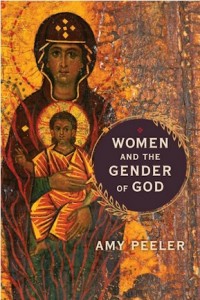 Amy Peeler, Women and the Gender of God (Grand Rapids, MI: Eerdmans, 2022), xi + 274 pages, ISBN 9780802879097.
In this work, Amy Peeler presents a robust reading of the New Testament incarnation narratives, arguing for a view of God that transcends gender. She energetically exposes the presuppositions undergirding the traditional claim that God is male. Peeler draws from her well-rounded experience as an associate professor of New Testament at Wheaton College and associate rector at St. Mark’s Episcopal Church in Geneva, Illinois.
Peeler’s argument proceeds in three steps—elaborating on the meaning of sex, gender, and roles. First, she draws from Israelite history and New Testament writings to tackle the claim that God is male. Through an analysis of the purity laws of Judaism and the Gospels’ portrait of Mary’s pregnancy and birthing of Jesus, she uncovers the shortcomings of traditional assumptions. The work proceeds by reaching beyond the ordinary conception that God is masculine because of attributes such as sovereignty and divine initiative. Peeler challenges the usual trope of the oppressed feminine woman, underscoring how Mary represents strength. The third move of the argument addresses the controversial subject of gender “roles.” Peeler builds her position around the doctrine of the virginal conception, implying that the nature of the dogma makes Jesus’ maleness one of a kind.
Peeler’s argument against the alleged maleness of God engages Hebrew and NT scripture interpretations. She concedes that the OT scriptures characteristically represent God as male but maintains that they never depict God as a “sexual” male deity. She argues that the frequent Hebrew scripture allusions to God as Israel’s Father or King remain purely figurative, “contained within the ideas of founding or care, never procreation” (p. 13). Although NT depictions are more direct—God causes the birth of a baby—Peeler emphasizes that God’s maleness remains one of analogy. God is like a father. He is not a “sexual” male that impregnated a human woman (p. 19). Peeler’s most impactful argument is a pneumatological one, drawing on the linguistic representation of the Holy Spirit. In the OT, the Spirit is referred to using the feminine Hebrew ruakh. In the NT, the Spirit is neither masculine nor feminine, but referred to using the neuter Greek pneuma. In Trinitarian perspective, the agent of birth in the Gospels is the Holy Spirit who is responsible for Mary’s pregnancy (Matt. 1:18, 20) and the one whose power overshadows her making the child the holy babe of God (Luke 1:35).
The masculinity of God the Father is not a sexual one. When we call God “Father” we harken to scriptural language that encompasses the divine character.
Reviewed by Paul J. Palma
Publisher’s page: https://www.eerdmans.com/9780802879097/women-and-the-gender-of-god/

Category: Biblical Studies, Winter 2026

 Followers
 Fans
Fans